
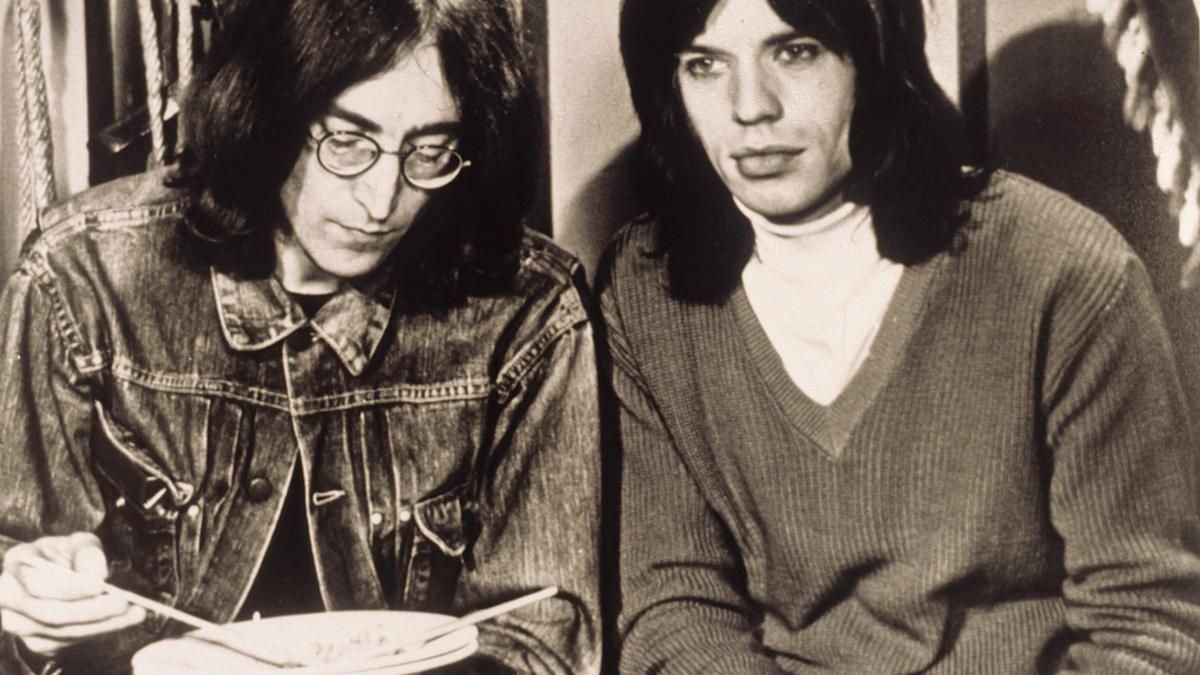
Few rivalries in rock history have sparked as much fascination as the one between The Beatles and The Rolling Stones. Were they friendly competitors who privately respected each other, or was there real tension simmering beneath the surface? A 1971 interview with John Lennon suggests the answer leaned closer to the latter — at least from Lennon’s perspective at that particular moment in time.
The topic continues to captivate music fans decades later, partly because both bands sit at the very peak of rock history, and partly because the truth of their relationship was never quite as simple as either camp let on publicly.
What we know for certain is this: the Beatles-Rolling Stones dynamic was one of the most closely watched inter-band relationships of the 20th century, and Lennon’s own words in 1971 added real fuel to the fire of that ongoing debate.
The Beatles and the Rolling Stones: A Rivalry Rooted in the 1960s
Both bands emerged from the British music scene in the early 1960s and almost immediately found themselves compared to each other. The Beatles were widely cast as the polished, melodically sophisticated outfit — the lovable mop-tops who conquered America. The Rolling Stones, by contrast, built their identity around a rawer, bluesier edge, positioning themselves as the rebellious alternative for fans who wanted something a little more dangerous.
That contrast was partly organic and partly manufactured. The music press loved the narrative, and both bands’ management teams understood the commercial value of a good rivalry. But behind the scenes, the relationship between individual members was more complicated — marked by genuine admiration at times, and pointed competitive tension at others.
The two groups actually shared connections early on. The Beatles’ own Brian Epstein and the Stones’ manager Andrew Loog Oldham were both operating in the same London circles, and the bands crossed paths regularly during the mid-1960s at the height of the British Invasion. Lennon and McCartney even gifted the Rolling Stones an early song, “I Wanna Be Your Man,” which the Stones released as a single in 1963.
What Lennon’s 1971 Interview Revealed
By 1971, the Beatles had officially broken up, and Lennon was speaking with the kind of unfiltered candor that defined his solo-era interviews. It was a period in which he had little patience for diplomatic softening — he was equally blunt about his former Beatles bandmates, about the music industry, and about the wider cultural landscape around him.
His comments about the Rolling Stones in that period reflected a competitive streak that had clearly not faded with the end of Beatlemania. The rivalry, at least in Lennon’s mind, was real — not just a press invention. He viewed the Stones through a lens shaped by years of parallel careers, chart battles, and the constant critical comparison that both bands had lived with throughout the 1960s.
It is worth noting that Lennon’s feelings toward the Stones appeared to be genuinely mixed. There was respect — he was too musically astute to dismiss what Mick Jagger, Keith Richards, and the rest had built. But there was also a sharp competitive edge that surfaced when he spoke about them candidly.
The Complexity Behind the Public Image
One of the more interesting dimensions of the Beatles-Stones dynamic is how deliberately both bands managed their public personas in relation to each other. The Stones benefited enormously from being framed as the anti-Beatles — darker, more dangerous, the band your parents didn’t want you listening to. That framing helped them carve out a massive audience that overlapped with, but was distinct from, the Beatles’ fanbase.
Lennon was perceptive enough to see through some of that image-making. His 1971 comments reflected a man who had spent a decade watching the Stones carefully — as competitors, as peers, and as a band whose public identity was partly constructed in contrast to his own.
The rivalry also played out musically. Both bands pushed each other creatively throughout the 1960s, with landmark albums from one often arriving in close proximity to landmark albums from the other. Whether that was coincidence or conscious competition, it produced some of the most enduring music of the 20th century.
Key Facts About the Beatles-Rolling Stones Rivalry
| Factor | The Beatles | The Rolling Stones |
|---|---|---|
| Public Image | Polished, melodic, mainstream appeal | Raw, blues-driven, rebellious edge |
| UK Debut Era | Early 1960s | Early 1960s |
| Early Connection | Gifted “I Wanna Be Your Man” to the Stones (1963) | Released “I Wanna Be Your Man” as a 1963 single |
| Band Status by 1971 | Officially broken up | Still active and recording |
| Lennon’s Tone in 1971 | Unfiltered, candid, competitive | Subject of pointed rivalry comments |
- Both bands emerged from the British music scene in the early 1960s
- Their contrasting public images were partly organic, partly industry-shaped
- Lennon’s post-Beatles interviews were known for blunt, undiplomatic honesty
- The rivalry was not simply a media invention — real competitive tension existed
- By 1971, Lennon was speaking freely in a way he rarely had during the Beatles years
Why This Rivalry Still Matters to Music Fans Today
Decades after both bands peaked, the Beatles versus Rolling Stones debate remains one of the most reliably passionate conversations in popular music. Ask any serious rock fan which band they prefer, and you will rarely get a shrug — people tend to have strong feelings, and those feelings often say something about how they relate to music more broadly.
Lennon’s 1971 comments matter because they offer a rare unguarded window into how one of the central figures of that era actually felt about his closest competitors. Most public statements from that period were carefully managed. Lennon, in 1971, was not in a careful management phase of his life. He was angry, honest, and willing to say things that other artists wouldn’t.
That honesty is precisely what makes the interview compelling more than fifty years later. It confirms that the rivalry fans sensed was real — it wasn’t just clever marketing from two record labels looking to sell more singles.
Frequently Asked Questions
Were the Beatles and the Rolling Stones actually rivals?
Yes — while they had moments of genuine connection, real competitive tension existed between them, something Lennon’s 1971 interview helped confirm.
What did John Lennon say about the Rolling Stones in 1971?
Did the Beatles and Rolling Stones ever collaborate?
Lennon and McCartney gifted the Rolling Stones the song “I Wanna Be Your Man,” which the Stones released as a single in 1963.
Why was 1971 significant for John Lennon?
By 1971, the Beatles had officially broken up and Lennon was entering a notably candid phase of his public life, speaking openly in interviews about topics he had previously been more guarded about.
Which band came first — the Beatles or the Rolling Stones?
Both bands emerged from the British music scene in the early 1960s, with the Beatles forming slightly earlier, though both rose to prominence during roughly the same era.
Is the Beatles versus Rolling Stones debate still relevant?
Very much so — it remains one of the most enduring debates in rock music, with fans continuing to argue passionately about which band left the greater legacy.

Leave a Reply