
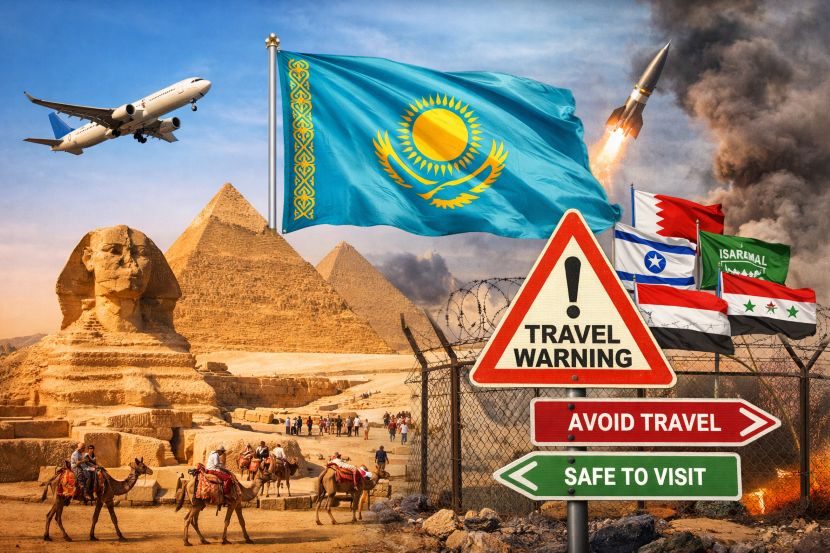
Kazakhstan’s Ministry of Foreign Affairs has officially removed Egypt from its list of travel-restricted countries — a meaningful shift for Kazakh travelers who have been watching the region closely. The decision follows a reassessment of conditions on the ground in Egypt, with officials pointing to the stability of civil infrastructure, key tourist destinations, and international airports as factors behind the updated stance.
For anyone in Kazakhstan who has been holding off on booking a trip to Cairo or Sharm El Sheikh, this is a significant green light. But the broader travel advisory picture across the Middle East remains mixed, with caution still firmly in place for several neighboring countries in the region.
Here’s what travelers need to understand about the updated advisory and what it means practically for anyone planning a trip.
Why Kazakhstan Changed Its Position on Egypt
Egypt had previously been included on Kazakhstan’s travel advisory list due to concerns tied to the broader regional security situation in the Middle East. The listing wasn’t a reflection of Egypt-specific instability so much as a precautionary measure during a period of heightened regional tension.
The updated assessment takes a more granular look at actual conditions within Egypt itself. Officials noted that major tourist infrastructure — including international airports and high-traffic destinations like Cairo and Sharm El Sheikh — has remained functional and stable. That distinction matters. It signals that Kazakhstan’s foreign ministry is now differentiating between countries where conditions have genuinely stabilized and those where risks remain elevated.
The move also reflects a broader pattern of governments revisiting pandemic- and conflict-era travel restrictions as situations on the ground evolve. Egypt’s tourism sector, which depends heavily on international visitors, will likely welcome the signal from Central Asia.
What the Updated Kazakhstan Travel Advisory Actually Covers
The core change is straightforward: Egypt has been removed from the restricted list, meaning Kazakh citizens can now travel there without the formal advisories that previously applied. The key destinations specifically assessed as stable include:
- Cairo — Egypt’s capital and primary international gateway, home to major cultural and historical attractions
- Sharm El Sheikh — A major Red Sea resort destination and one of the most visited tourist hubs in the country
- International airports across Egypt, which have been assessed as operationally stable
However, the broader Middle East picture remains cautious. Kazakhstan’s advisory still applies caution to several other countries in the region, meaning Egypt’s removal is a country-specific decision rather than a wholesale relaxation of Middle East travel guidance.
| Destination | Advisory Status | Key Consideration |
|---|---|---|
| Egypt | Restrictions Lifted | Stable tourist infrastructure and airports confirmed |
| Cairo | Accessible | Major hub assessed as functional for international travel |
| Sharm El Sheikh | Accessible | Key Red Sea resort destination included in reassessment |
| Several other Middle Eastern countries | Caution Still Applies | Regional security concerns remain in place |
What This Means for Kazakh Travelers Heading to Egypt
The practical impact is real. Travelers who previously faced official discouragement — or outright advisories — against visiting Egypt can now plan trips with a cleaner slate from their government’s perspective. That includes everything from booking flights through Cairo’s international airport to arranging resort stays in Sharm El Sheikh.
It also matters for travel insurance and tour operators. In many cases, active government travel advisories affect whether insurance policies will cover trips to a listed destination. With Egypt removed from Kazakhstan’s restricted list, that barrier should ease for travelers seeking standard coverage.
For tour operators and travel agencies based in Kazakhstan, the change opens up Egypt as a fully marketable destination again — something that carries commercial weight given Egypt’s enduring popularity as a winter sun destination for travelers from Central Asia and beyond.
That said, travelers should still approach any trip with standard due diligence. The removal of a formal advisory doesn’t mean risks disappear entirely — it means the government has assessed conditions as sufficiently stable for general travel. Checking for any location-specific updates before departure remains a sensible step.
- Egypt was included on Kazakhstan's travel advisory list due to concerns over regional security in the Middle East.
- Kazakh citizens faced official discouragement from traveling to Egyptian destinations including Cairo and Sharm El Sheikh.
- Travel insurance coverage for Egypt-bound Kazakh travelers may have been affected by the active advisory status.
- Kazakhstan's Ministry of Foreign Affairs has officially removed Egypt from its list of travel-restricted countries.
- Key tourist destinations including Cairo and Sharm El Sheikh have been assessed as stable and accessible for travelers.
- International airports across Egypt were reviewed and confirmed as operationally stable in the government reassessment.
The Bigger Picture: Middle East Travel Caution Remains
Egypt’s removal from the list is notable precisely because it stands out against a backdrop of continued caution. Kazakhstan’s foreign ministry has not issued a broad clearance for Middle Eastern travel — several countries in the region remain under advisory, reflecting ongoing concerns about security conditions elsewhere.
This selective approach is consistent with how most governments manage travel advisories. Rather than treating an entire region as a single risk category, the updated guidance distinguishes between countries based on their specific conditions. Egypt, with its established tourist infrastructure and relatively stable internal environment, met the threshold for removal. Others in the region have not yet reached that point.
For Kazakh travelers, the message is clear: Egypt is open, but the surrounding region still warrants careful attention before booking.
What Travelers Should Do Before Booking
Even with the advisory lifted, a few practical steps are worth taking before finalizing any trip to Egypt:
- Check the latest version of Kazakhstan’s Ministry of Foreign Affairs travel advisory directly, as conditions can change
- Confirm that your travel insurance policy reflects the updated advisory status for Egypt
- Review entry requirements for Egypt, including any visa or documentation needs for Kazakh passport holders
- Stay informed about conditions at your specific destination within Egypt, particularly if traveling beyond Cairo and Sharm El Sheikh
- Register with Kazakhstan’s consular services if traveling for an extended period
Frequently Asked Questions
Has Kazakhstan officially removed Egypt from its travel advisory list?
Yes. Kazakhstan’s Ministry of Foreign Affairs has officially lifted travel restrictions on Egypt, citing stable conditions at key tourist destinations and international airports.
Which Egyptian destinations were specifically assessed as stable?
The reassessment specifically noted Cairo and Sharm El Sheikh, along with international airports across Egypt, as part of the stable infrastructure review.
Does the advisory change apply to all Middle Eastern countries?
No. The removal applies specifically to Egypt. Kazakhstan’s advisory still includes caution for several other countries in the Middle East region.
Why was Egypt originally placed on Kazakhstan’s travel advisory list?
Egypt was included due to broader concerns over the regional security situation in the Middle East, not necessarily due to Egypt-specific instability.
Should Kazakh travelers still take precautions when visiting Egypt?
Yes. While the formal advisory has been lifted, travelers are still advised to monitor conditions, confirm travel insurance coverage, and stay informed about any location-specific developments before and during their trip.
Will this change affect travel insurance for Kazakh citizens visiting Egypt?
The lifting of the advisory should ease insurance-related barriers, though travelers should confirm coverage details directly with their provider, as policies vary.


Leave a Reply