
▶ Read transcript
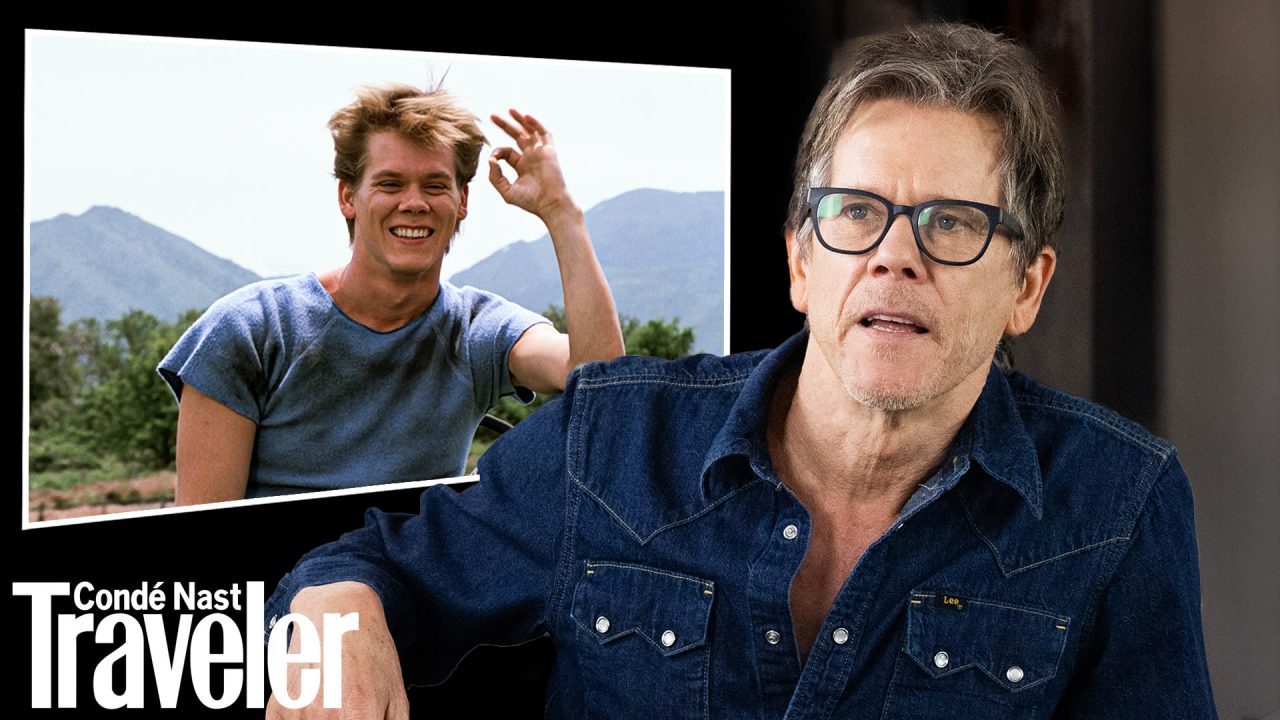
Here’s what you need to know about visiting Kevin Bacon’s real filming locations for free. First, Lone Pine, California, where Tremors was shot in 1990, sits about 200 miles north of Los Angeles along US-395, and the Alabama Hills surrounding it are federal Bureau of Land Management land, meaning you can drive through and explore all day at absolutely no cost. Second, the Lehi Roller Mills in Lehi, Utah, the actual warehouse where Bacon danced in Footloose, is still a working mill built back in 1906, and you can visit and even buy stone-ground flour made on the same equipment used in the film. Third, Camp No-Be-Bo-Sco in Warren County, New Jersey, the real Boy Scout camp from Friday the 13th, remains largely intact and accessible through scheduled tours, sitting just 70 miles from Manhattan. These aren’t recreations or theme parks. They’re functioning, living places. Your takeaway: before your next road trip, search the filming locations for one of your favorite movies and route your drive through it.
What if the most honest portrait of working-class America isn’t in a museum or a textbook — but in a cornfield outside Lehi, Utah, or a Boy Scout camp buried in the New Jersey hills? Kevin Bacon spent decades filming in towns that Hollywood forgot the moment the crew trucks left. Those towns are still there. Some are thriving. Some are frozen in amber. All of them are worth arguing about.
Film-location tourism is the fastest-growing niche in American travel — but not every pilgrimage is created equal. The towns that honor their cinematic past offer genuine, affordable experiences. The ones that ignore it can still be found, raw and unpolished, for travelers willing to look.
The Question Every Film Pilgrim Asks First
Read more: 20 Hidden U.S. Towns With No Crowds and Free Parking
Is visiting a filming location a meaningful cultural act — or an expensive way to stand in a parking lot and feel nothing? The debate is real. It splits travelers, film scholars, and small-town mayors alike. And Kevin Bacon, of all people, has become its unlikely center of gravity.
His résumé reads like a map of forgotten America. Footloose () shot in Lehi and Payson, Utah — farming communities that didn’t ask to become symbols of teenage rebellion. Friday the 13th () used a real Boy Scout camp in Hardwick Township, Warren County, New Jersey. Tremors () planted him in Lone Pine, California, population roughly 2,000, deep in Inyo County’s high desert. These weren’t sets. They were real places with real people — and they’re still out there.
Side A: These Places Are Worth Every Mile
The strongest argument for film-location travel is that it forces you off the interstate and into the real country. Take Camp No-Be-Bo-Sco in Hardwick Township, New Jersey. It’s a functioning Boy Scout camp — not a theme park, not a replica. The cabins, the waterfront, the specific tree lines that appeared in the opening frames of Friday the 13th are genuinely intact.
[Camp No-Be-Bo-Sco has become one of the most documented horror-film pilgrimage sites in the Northeast, with tour operators offering scheduled access to the property’s filming locations.] For horror fans, this is sacred ground. For everyone else, it’s a surprisingly beautiful Appalachian ridge camp that most New Yorkers have driven past without ever knowing existed.
The same logic applies to Lehi, Utah (population approximately 85,000 in , a dramatic jump from its modest size during the Footloose shoot). The Lehi Roller Mills, built in , is the actual mill from the film’s iconic warehouse dance sequence. It still operates. You can buy flour ground on the same equipment Bacon danced around. That’s not nostalgia tourism — that’s living history with a $9 bag of stone-ground wheat attached.
[A movie doesn’t need the backing of a major studio to become famous — a small-budget cult classic can be just as iconic — it just needs to speak to audiences.] Footloose cost roughly $8 million to make and earned over $80 million. Tremors was a modest theatrical performer that became a VHS legend. Neither film needed a blockbuster budget to permanently alter the identity of the towns they filmed in.
In Lone Pine, California, the economic case is unambiguous. The Lone Pine Film History Museum (admission around $5 per adult — about what a coffee costs in Los Angeles) anchors a film-tourism economy that keeps motels and diners alive in a town that has no other major industry. The Alabama Hills — federal Bureau of Land Management land — are free to access, and the rock formations that doubled as Nevada desert in Tremors are unchanged. You can park, hike, and stand exactly where Kevin Bacon ran from underground worm monsters. That’s a bargain at any price.
Side B: The Disappointment Is Real, and It’s Expensive
Here’s the honest counterargument: most filming locations are profoundly, almost comically anticlimactic. The magic in any Kevin Bacon film lives in the lens, the score, and the edit — none of which travel with the location.
Drive to Lehi, Utah — population roughly 85,000 today, barely 6,000 when cameras rolled in — and search for the Footloose warehouse where Ren McCormack danced out his rage. What you find is an industrial corridor along State Route 73 that has been rezoned, repaved, and largely forgotten. The grain elevator used for that iconic solo dance scene no longer stands in its original form. Utah County swallowed Lehi into suburban sprawl. The disappointment costs you a full tank of gas from Salt Lake City — roughly $18 each way — and the emotional residue of a film that meant something to you at age twelve.
That is the honest tax on nostalgia tourism. Nobody warns you about it in the travel blogs.
Payson, Utah: Where Footloose Actually Survived
Lehi gets the credit. Payson, Utah — population 22,000, located 55 miles south of Salt Lake City in Utah County — quietly kept the receipts. The Payson First Baptist Church exterior, used for the film’s central congregation scenes, still stands on 100 North in downtown Payson. It has not been converted or demolished. Locals know it. They will tell you, if you ask.
Payson was founded in by Mormon settlers. Its architecture still feels like a 1950s American small town — which is exactly why location scouts chose Utah County over Elmore City, Oklahoma, where the real no-dancing ordinance existed. Film truth and geographic truth rarely overlap. Payson charges nothing to walk its streets. Parking on Center Street costs zero dollars.
The Spanish Fork Canyon drive to reach Payson from Provo is worth the detour even without the film history. That costs you one hour and some gasoline.
Blairstown, New Jersey: Friday the 13th’s Forgotten Main Street
Kevin Bacon died in Friday the 13th () — an arrow through the neck, one of horror cinema’s defining images. He spent his living screen time in Blairstown, New Jersey, a Warren County village of roughly 5,700 residents that doubles as the nearest town to Camp Crystal Lake. The production filmed actual Blairstown storefronts for the opening sequences. They are still there.
Main Street in Blairstown has changed minimally since . The diner exterior used in the film operates today as a local eatery. A burger and coffee will run you under $16. The town sits at the junction of Routes 94 and 521, approximately 65 miles west of Manhattan. Horror fans make the pilgrimage every October. Some come in April and have the street entirely to themselves.
The actual camp — Camp No-Be-Bo-Sco, operated by the Boy Scouts of America in neighboring Hardwick Township — is a working scout camp. It occasionally opens for organized horror film tours. Check directly with the BSA’s Patriots’ Path Council for current access. Admission for organized tours has historically run around $30 per person. Walking onto the property uninvited is trespassing, not pilgrimage.
Lone Pine, California: The Town That Lives on Film History
Return to Lone Pine, Inyo County, because it deserves a second pass beyond the Tremors connection. This town of 1,900 people on U.S. Highway 395 has been in more films than most actors. The Museum of Western Film History on South Main Street charges $5 admission and documents over a century of productions shot in the Alabama Hills. It is accredited, staffed by locals, and genuinely excellent.
The Dow Villa Motel — built in , rates starting around $110 per night — housed John Wayne, Roy Rogers, and reportedly the Tremors crew during production. You can sleep in the same building. That is either thrilling or meaningless, depending entirely on your relationship with movies.
The Alabama Hills themselves are managed by the Bureau of Land Management. No fees. No reservations. The Movie Road loop — a 2.6-mile dirt road clearly marked off Movie Road — passes the key Tremors formations. A standard sedan handles it fine in dry conditions.
How to Actually Plan One of These Trips
The single most useful tool for serious film location travel is the Library of Congress film archive, which preserves production records that can confirm actual shoot locations versus commonly cited ones. Secondary sources online are frequently wrong. Fans repeat myths. Official studio records — when accessible — are definitive.
Call local chambers of commerce before driving. Blairstown’s chamber has fielded these calls for forty years. Payson’s city offices know the Footloose questions by heart. Lone Pine’s museum staff can tell you which rock formation appears in which scene. Local knowledge is free and beats any travel blog written by someone who never left their desk.
Practical cost summary: Alabama Hills (Lone Pine, CA) — $0 access, ~$110/night lodging. Blairstown, NJ — free street access, ~$16 diner meal, ~$30 camp tour when available. Payson, UT — $0 street access, ~55-mile drive from SLC. None of these trips require a significant budget. They require intention.
What Kevin Bacon’s Filmography Actually Reveals About America
The pattern across these locations is not accidental. Bacon’s most iconic roles — rebellious outsider in a closed community, survivor in an isolated landscape, ordinary man under extraordinary pressure — required actual small towns. Los Angeles backlots do not carry the weight that Payson’s real church or Blairstown’s real diner do.
These places existed before the cameras arrived. They exist after. The film crew left. The residents stayed. That continuity is what makes the trip worth taking — not the movie itself, but the proof that the world the movie borrowed from is still standing.
Lone Pine will be there when you arrive. The rock formations are 700 million years old. A Kevin Bacon film has been screening for forty years at most. The Alabama Hills have seen worse and will outlast everything.
Frequently Asked Questions

You Might Also Like
4 Hidden U.S. Towns Saving Travelers $935 in 2026
4 underreported U.S. towns—Saint Joe Beach, Jamaica Beach, Indian Beach & Marfa—are absorbing displaced tourism…
Why These 15 Tiny Towns Are the Real America (Under $195/Night)
15 small American towns bypassed by interstates offer zero crowds, real connections, and hotel rates…
25 Hidden US Towns With Hotels From $89 a Night
25 under-the-radar US towns offer hotels from $89–$175/night and meals under $25 while Sedona and…
Leave a Reply