
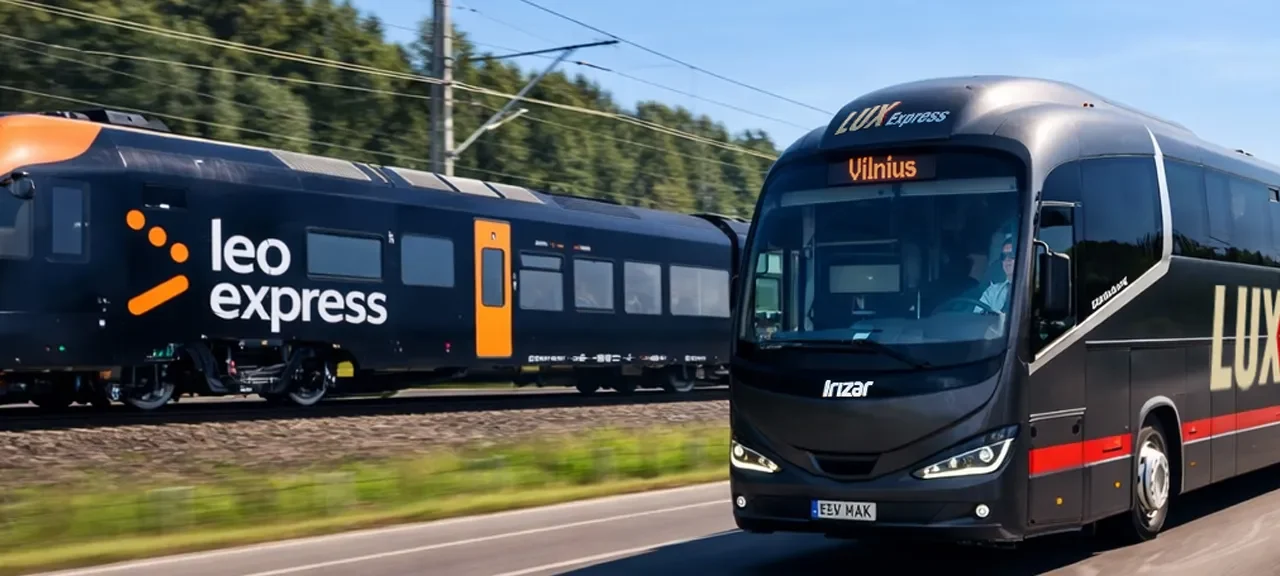
A 439-kilometer rail corridor connecting Prague and Munich is set to open for passengers in December 2026 — and it could reshape how people move between the Czech Republic and Germany for years to come.
Leo Express, the Czech private rail operator, has confirmed plans to launch the new Prague–Munich service later this year, running through Pilsen and linking two of Central Europe’s most economically significant cities. The route is designed to offer a practical, lower-emission alternative to flying or driving, with frequent departures and coordinated cross-border operations.
For business travelers, tourists, and daily commuters alike, this represents one of the most significant new international rail connections in the region in recent memory.
What Leo Express Is Actually Building — and Why It Matters
The new service will operate under the EX36 contract, awarded by the Czech Ministry of Transport. That contract runs until 2031, giving the route a five-year operational guarantee from its launch date — a meaningful signal that this isn’t a short-term experiment.
The corridor itself covers 439 kilometers, running from Prague through Pilsen before crossing into Germany and terminating in Munich. Both cities are major economic and cultural hubs, and the route is specifically designed to serve the growing demand for international rail travel between the two countries.
Supporters of the project argue that the connection strengthens business and tourism links between the Czech Republic and Germany, two economies that are deeply intertwined. Officials have noted that the service is intended to make train travel a genuinely practical option — not just a scenic alternative, but a competitive one in terms of convenience and frequency.
The environmental angle matters here too. Rail travel produces significantly fewer emissions per passenger than either short-haul flights or private car journeys, and the Prague–Munich route is being positioned explicitly as a greener way to make the cross-border trip.
Key Route Details at a Glance
Here’s what is confirmed about the new service based on available information:
- The route runs Prague – Pilsen – Munich, covering the full 439-kilometer corridor
- Launch is scheduled for December 2026
- Operations are governed by the EX36 contract from the Czech Ministry of Transport
- The contract runs through 2031
- The service is designed for both business and leisure travelers
- Frequent departures and coordinated cross-border operations are planned
- The route is positioned as an environmentally friendly alternative to road and air travel
| Detail | Information |
|---|---|
| Operator | Leo Express |
| Route | Prague – Pilsen – Munich |
| Total Distance | 439 kilometers |
| Launch Date | December 2026 |
| Contract Reference | EX36 |
| Contracting Authority | Czech Ministry of Transport |
| Contract Duration | Until 2031 |
| Primary Purpose | International passenger rail — business and leisure |
Who This Service Will Actually Affect
The most obvious beneficiaries are the hundreds of thousands of people who regularly travel between Prague and Munich for work, study, or tourism. Right now, that journey typically means either a flight — which involves airports far from city centers, security lines, and significant carbon output — or a long road trip through the Bavarian countryside.
A direct rail connection changes that equation. Trains depart from city centers, require no lengthy check-in process, and allow passengers to work, rest, or move around freely during the journey. For business travelers especially, that’s a meaningful difference.
Tourism is another major factor. Both Prague and Munich draw millions of visitors each year, and a seamless rail link between them opens up new itinerary possibilities — travelers could realistically visit both cities in a single trip without renting a car or booking separate flights.
The route through Pilsen also matters for residents of western Bohemia, who gain a direct international connection they currently lack. Pilsen is the Czech Republic’s fourth-largest city and a significant industrial center, and its inclusion in the corridor reflects the route’s broader economic logic.
Advocates point out that the service also aligns with wider European Union goals around sustainable transport — shifting passenger traffic from roads and short-haul aviation onto rail is a stated policy priority across the bloc, and new private-operator routes like this one help move that needle.
What Happens Between Now and December 2026
With the launch still several months away, the coming period will be critical for Leo Express as it finalizes operations on both sides of the border. Running an international rail service requires coordination between Czech and German rail infrastructure managers, alignment on timetabling, and — for passengers — a ticketing system that works seamlessly across both countries.
The EX36 contract framework provides the regulatory foundation on the Czech side, but the German leg of the journey involves its own operational requirements. Cross-border rail services in Europe have historically required careful negotiation between national rail authorities, and Leo Express will need to demonstrate it can deliver on both fronts.
What is already clear is that the December 2026 target is firm enough to be publicly confirmed, and the contract structure running to 2031 suggests the groundwork is well advanced. Travelers interested in the route should expect ticketing and scheduling details to emerge in the months ahead as the launch approaches.
For anyone who regularly makes the Prague–Munich journey, it’s worth watching this space closely. A reliable, frequent rail option on this corridor — if it delivers on its promise — would be a genuinely useful addition to the region’s transport options.
Frequently Asked Questions
When will the Leo Express Prague–Munich service launch?
The service is scheduled to launch in December 2026.
Which cities does the route connect?
The service runs along the Prague–Pilsen–Munich corridor, covering 439 kilometers and connecting major cities in the Czech Republic and Germany.
Who awarded Leo Express the contract to operate this route?
The EX36 contract was awarded by the Czech Ministry of Transport.
How long will Leo Express operate the Prague–Munich service?
The EX36 contract runs until 2031, giving the service a minimum operational period of approximately five years from its December 2026 launch.
Is this service aimed at tourists or business travelers?
The route is designed to serve both groups, as well as commuters, and is positioned as an environmentally friendly alternative to road and air travel.
Will ticket prices and timetables be available before December 2026?
Specific ticketing and scheduling details have not yet been confirmed publicly — these are expected to emerge as the launch date approaches.



Leave a Reply