
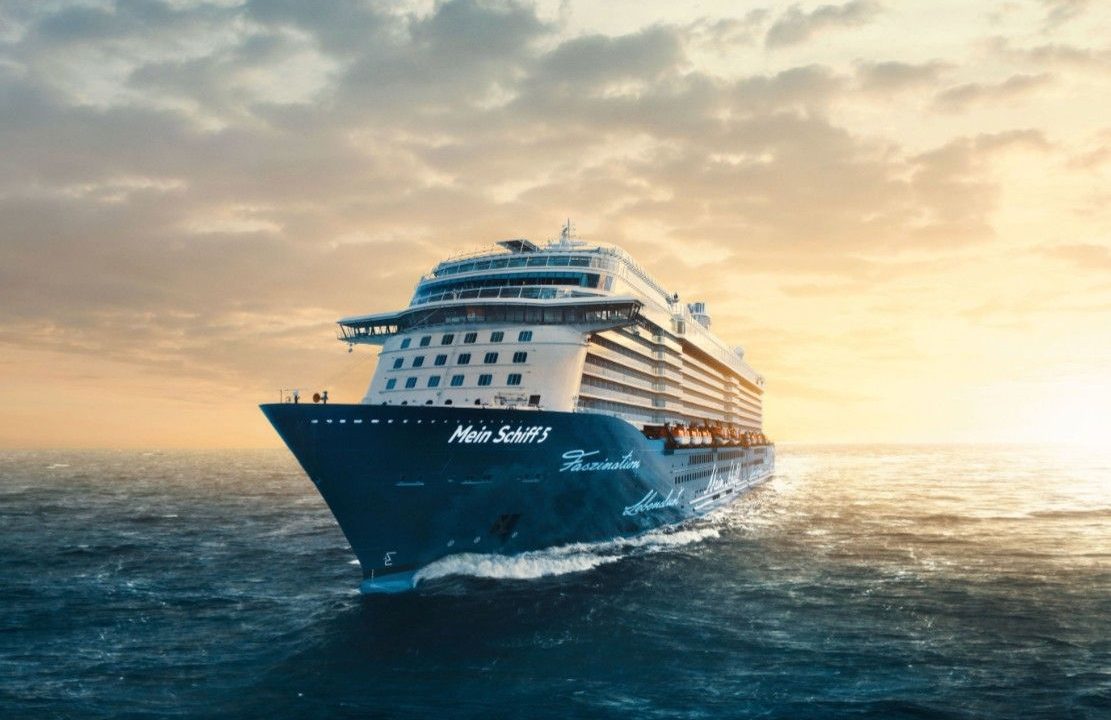
A luxury cruise voyage spanning nineteen nights — connecting African adventure with Mediterranean leisure — has been cancelled, leaving passengers redirected and port economies across multiple continents recalibrating. TUI Cruises has scrapped the second leg of Mein Schiff 5’s repositioning voyage, a decision driven by ongoing regional conflicts that have effectively blocked safe transit through the Strait of Hormuz.
The cancellation affects a carefully planned route that would have taken passengers from Cape Town through Namibia, Cape Verde, the Canary Islands, and United Kingdom ports before arriving in Palma de Mallorca. Instead, both Mein Schiff 4 and Mein Schiff 5 remain confined in the Arabian Gulf — Mein Schiff 4 in Abu Dhabi and Mein Schiff 5 in Doha — with no immediate passage out of the region.
German Foreign Office travel advisories are directly shaping TUI’s response, with the company placing guest safety above schedule. The ripple effects stretch far beyond disappointed passengers, touching port economies, regional tourism boards, and the broader global cruise industry.
Why TUI Cancelled the Voyage and What Triggered the Decision
The Strait of Hormuz is one of the world’s most strategically critical waterways, and when regional conflict renders it impassable, the consequences for global shipping and cruise operations are immediate. TUI Cruises determined that routing Mein Schiff 5 through the strait posed an unacceptable risk to passengers and crew, leading to the cancellation of the repositioning leg that was meant to bring the ship back to European waters.
German Foreign Office advisories have been central to this call. TUI has framed the decision as a safety-first response, consistent with official government guidance rather than a purely commercial calculation. The timeline runs through March 2026, meaning the disruption is not a short-term blip but a sustained operational challenge with no quick resolution in sight.
Repositioning voyages like this one carry particular significance in the cruise world. They are not simple point-to-point sailings — they bridge seasons and regions, carrying passengers who specifically seek that blend of destinations. Cancelling one doesn’t just inconvenience travelers; it dismantles a carefully assembled tourism ecosystem across multiple countries simultaneously.
The Ports and Destinations Most Affected by the TUI Cruises Cancellation
The cancellation creates a tourism vacuum at both ends of the disrupted route, and several destinations are feeling the strain in different ways.
| Location | Role in Voyage | Impact of Cancellation |
|---|---|---|
| Doha, Qatar | Current berth for Mein Schiff 5 | Ship confined at Grand Cruise Terminal with no departure planned |
| Abu Dhabi, UAE | Current berth for Mein Schiff 4 | Ship confined at port; Mina Rashid terminal faces tourism shortfall |
| Cape Town, South Africa | Planned voyage departure point | Loss of cruise arrivals; pivoting to enhanced land-sea packages |
| Namibia | Planned en-route stop | Loss of passenger spending from scheduled port call |
| Cape Verde | Planned en-route stop | Loss of passenger spending from scheduled port call |
| Canary Islands | Planned en-route stop | Loss of cruise traffic ahead of Mediterranean season |
| Palma de Mallorca | Planned final destination | Anticipated luxury arrivals redirected to European alternatives |
Dubai’s Mina Rashid terminal and Doha’s Grand Cruise Terminal are confronting immediate shortfalls. These Gulf ports had built their seasonal cruise calendars around TUI’s presence, and the sudden absence of two major ships leaves a gap that is difficult to fill on short notice.
How This Affects Travelers, Port Economies, and the Broader Tourism Picture
For passengers who had booked the nineteen-night sailing, the cancellation means their carefully planned itinerary — blending African coastal destinations with the Mediterranean — simply will not happen. TUI is redirecting affected travelers toward European alternatives, but those alternatives cannot replicate the specific experience of a voyage that moved through Namibia, Cape Verde, and the Canary Islands in a single journey.
The economic consequences extend well beyond disappointed holidaymakers. Gulf port economies that rely on cruise traffic are absorbing a direct hit. Dubai has responded by pivoting its tourism strategy toward air arrivals, leaning on its established aviation infrastructure to compensate for lost maritime visitors. Cape Town, meanwhile, is enhancing its land-sea packages to attract the type of affluent traveler who would have arrived via Mein Schiff 5.
The broader implication is that regional conflict doesn’t just affect the countries directly involved — it reshapes tourism flows across multiple continents. A security situation in the Arabian Gulf disrupts a South African port, cancels stops in West Africa, and alters the arrival numbers at a Spanish Mediterranean island. That interconnection is rarely visible until something breaks.
What TUI and Affected Destinations Are Doing Next
TUI’s immediate priority is managing the situation for guests already in the region and those who had bookings on the cancelled voyage. The company is operating within the framework of German Foreign Office advisories, which effectively set the safety threshold for when operations can resume.
Tourism authorities across the affected regions are not waiting passively. Dubai is actively recalibrating toward air-based arrivals, a strategy that plays to the emirate’s strength as a global aviation hub. Cape Town’s approach — building out land-sea packages — signals a recognition that the loss of a major cruise itinerary requires a different product to fill the void, not just a marketing push.
The situation with both ships in Gulf ports is unlikely to resolve until the regional security picture changes meaningfully. Until Strait of Hormuz transit becomes viable again, TUI’s operational options in the region remain constrained. Passengers and travel agents booking future sailings that involve Gulf departure points or repositioning routes through the strait should factor that uncertainty into their planning.
What this episode underscores is how quickly a geopolitical event can reorder the global cruise calendar — and how many destinations, from southern Africa to the Mediterranean, sit downstream of decisions made in distant waters.
Frequently Asked Questions
Which TUI Cruises ships are currently affected by this situation?
Both Mein Schiff 4, currently in Abu Dhabi, and Mein Schiff 5, currently in Doha, are confined in the Arabian Gulf due to the inability to transit the Strait of Hormuz safely.
What was the original Mein Schiff 5 repositioning route?
The cancelled second leg was planned to run from Cape Town through Namibia, Cape Verde, the Canary Islands, and United Kingdom ports, finishing in Palma de Mallorca — a nineteen-night voyage.
Why did TUI cancel the voyage rather than find an alternative route?
Ongoing regional conflicts blocking the Strait of Hormuz, combined with German Foreign Office travel advisories, led TUI to prioritise guest safety over maintaining the scheduled sailing.
What are affected passengers being offered instead?
TUI is redirecting passengers to European alternative sailings, though the source does not specify the exact options or compensation arrangements being offered.
How are Gulf port economies responding to the loss of cruise traffic?
Dubai is pivoting toward attracting air arrivals to offset the shortfall, while Cape Town is developing enhanced land-sea packages to appeal to travelers who would have arrived by cruise ship.
When might normal TUI Cruises operations in the region resume?
This has not been confirmed. TUI’s response is guided by German Foreign Office advisories, and resumption depends on the regional security situation improving enough to allow safe Strait of Hormuz transit.



Leave a Reply