
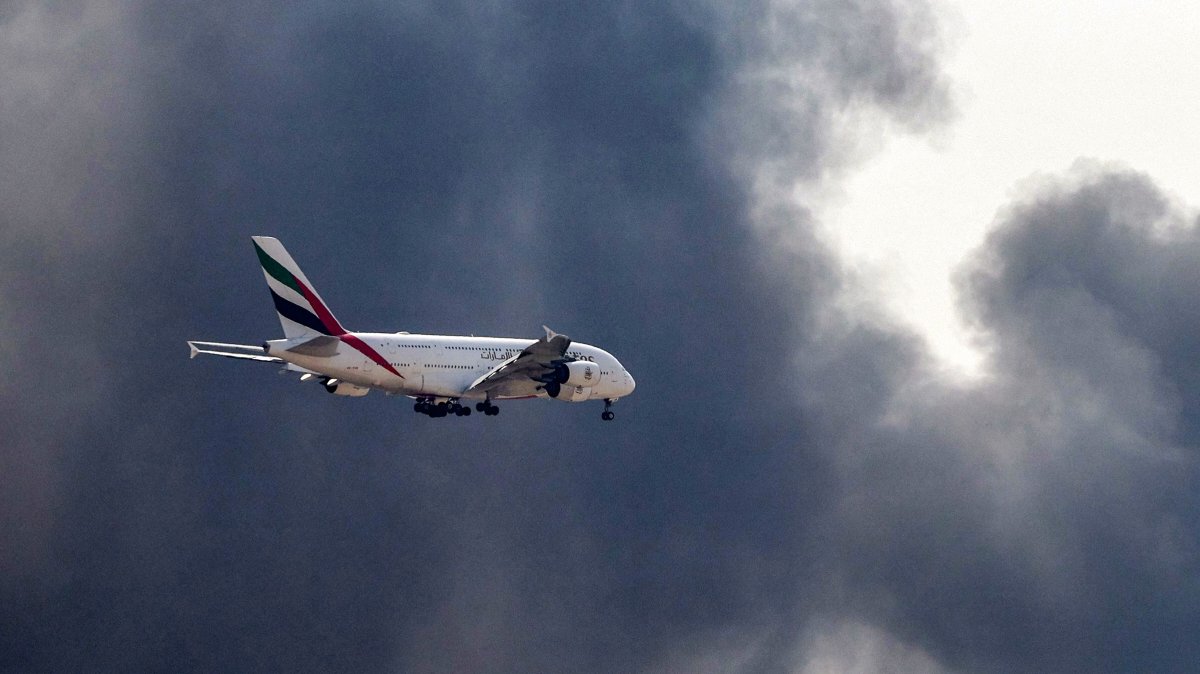
Two of the world’s most recognized airlines had their aircraft pulled from service after lightning struck the tarmac at Dubai International Airport — one of the busiest aviation hubs on the planet — forcing immediate structural inspections and raising fresh questions about how extreme weather events are managed at high-traffic airports.
The incident involved aircraft belonging to Emirates and Saudia, both of which were struck by lightning while positioned on the ground during an intense storm. The electrical discharges were severe enough that both carriers temporarily withdrew the affected planes from active duty pending thorough maintenance checks and safety evaluations.
For passengers and aviation watchers, the episode is a reminder that even the most advanced aircraft and airports are not immune to the raw force of nature — and that the protocols designed to handle these situations matter enormously when something goes wrong.
What Happened at Dubai International Airport
Dubai International Airport experienced a period of severe weather that brought a series of intense lightning strikes to the airfield. The storm was described as extraordinary in its severity, which is notable given that Dubai is not typically associated with dramatic electrical storms.
During the height of the weather event, aircraft from both Emirates and Saudia were struck while sitting on the tarmac. The physical integrity of the planes was challenged by the electrical discharges, according to reports, and both carriers moved quickly to pull the affected units from service.
The decision to ground the aircraft was not precautionary in the routine sense — it was a direct response to confirmed lightning impacts. Structural assessments were launched immediately, with maintenance teams tasked with conducting thorough inspections before either aircraft could be cleared to return to operation.
One of the aircraft confirmed to be involved in the Emirates incident is a Boeing 777-300ER, one of the flagship wide-body jets in the Emirates fleet and among the most widely operated long-haul aircraft in the world.
Why Lightning Strikes on Aircraft Are Taken So Seriously
Commercial aircraft are engineered to withstand lightning strikes. In fact, the aviation industry estimates that the average commercial jet is struck by lightning at least once a year. Aircraft are built with bonding systems and conductive pathways designed to channel electrical energy safely around the fuselage and away from critical systems.
But that engineering tolerance does not mean a strike can be ignored. Every lightning impact requires a formal inspection process. Technicians must check the airframe, avionics, fuel systems, and structural components for any signs of damage — visible or hidden — before the aircraft is deemed airworthy again.
The fact that both aircraft in this incident were on the ground at the time, rather than in flight, does not necessarily simplify the inspection process. Ground strikes can behave differently from in-flight strikes, and the structural evaluation protocols remain rigorous regardless of circumstances.
Aviation safety observers have noted that incidents like this highlight why maintenance infrastructure at major hubs needs to be equipped to handle rapid assessments — particularly at airports like Dubai International, where any grounded aircraft creates ripple effects across a dense global network of routes.
Key Facts About the Incident
| Detail | Confirmed Information |
|---|---|
| Location | Dubai International Airport |
| Airlines Affected | Emirates and Saudia |
| Circumstances | Aircraft struck by lightning while on the tarmac |
| Emirates Aircraft Type | Boeing 777-300ER |
| Immediate Response | Temporary withdrawal from active service; structural assessments initiated |
| Inspection Focus | Physical integrity and structural evaluation following electrical discharge |
- Both aircraft were grounded immediately following the lightning impacts
- The storm was described as intense and severe relative to typical Dubai weather conditions
- Structural assessments were launched as a direct result of confirmed strikes — not as a routine precaution
- Dubai International Airport is one of the world’s busiest aviation centers, making any disruption operationally significant
What This Means for Passengers and the Broader Network
For passengers booked on the affected aircraft, the immediate consequence was disruption — whether through delays, rebooking, or schedule adjustments while the planes underwent inspection. The scale of that disruption depends on how quickly the structural assessments could be completed and whether the aircraft were cleared or required further repair.
At an airport of Dubai International’s scale, a grounded wide-body jet like a Boeing 777-300ER represents significant capacity. Emirates operates one of the largest fleets of 777s in the world, and any reduction in available aircraft — even temporarily — puts pressure on scheduling across its extensive long-haul network.
For Saudia, the impact similarly touches a carrier that operates a broad regional and international network, with connections across the Middle East, Africa, Asia, and Europe.
More broadly, the incident has brought aviation safety protocols back into the spotlight. Industry observers have pointed out that the swift response by both carriers — immediately withdrawing aircraft and initiating formal inspections — reflects the kind of conservative safety culture that aviation regulators and passengers alike expect from major international airlines.
What Comes Next for the Affected Aircraft
The structural evaluations that have been launched will determine the path forward for both aircraft. Inspections of this nature typically involve a systematic review of the airframe for burn marks, puncture points, or damage to composite materials, as well as checks of avionics systems and fuel tank integrity.
If inspections reveal no structural compromise, the aircraft can be returned to service following sign-off from qualified maintenance personnel. If damage is found, repairs must be completed and re-inspected before the planes fly again.
No timeline for the return of either aircraft to active service has been confirmed based on available information. The duration of such assessments can vary widely depending on the extent of damage found and the complexity of any required repairs.
What is clear is that both Emirates and Saudia responded according to established aviation safety protocols — grounding the aircraft, initiating inspections, and prioritizing structural integrity over operational convenience. In an industry where public trust in safety is everything, that response matters as much as the outcome of the inspections themselves.
Frequently Asked Questions
Which airlines had aircraft struck by lightning at Dubai International Airport?
Emirates and Saudia both reported that their aircraft were struck by lightning while positioned on the tarmac during the storm.
What type of aircraft was the Emirates plane involved in the incident?
The Emirates aircraft confirmed to be involved is a Boeing 777-300ER.
Were the aircraft in the air when they were struck?
No — both aircraft were on the ground, positioned on the tarmac at Dubai International Airport at the time of the lightning strikes.
Were any passengers or crew injured?
This has not been confirmed in the available source material. The reports focus on the structural impact to the aircraft rather than any personnel injuries.
How long will the aircraft be out of service?
No confirmed timeline has been provided. The duration depends on the findings of the ongoing structural assessments and whether any repairs are required.
Is it common for aircraft to be struck by lightning?
Yes — commercial aircraft are designed to withstand lightning strikes and are statistically struck at least once per year on average, but formal inspections are required after every confirmed strike before the aircraft can return to service.



Leave a Reply