
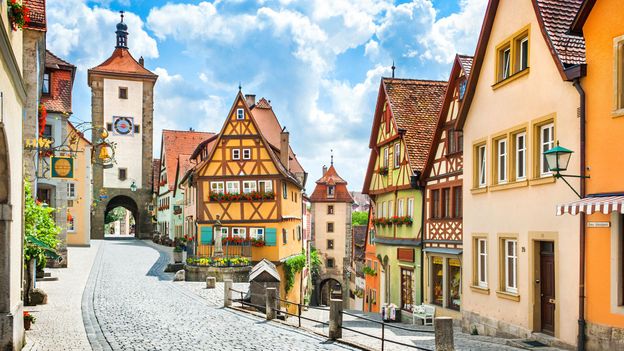
Germany’s tourism sector employs around 2.8 million people and generates nearly four percent of gross value added — figures that put it in the same economic league as the country’s celebrated automotive and engineering industries. That scale gives sustainable travel policy in Germany a weight and urgency that few other nations can match.
What makes Germany’s approach particularly striking is the argument at its core: that protecting nature and growing tourism are not competing goals, but the same goal. Officials have consistently framed natural landscapes not as obstacles to economic development, but as the very asset that makes long-term regional prosperity possible.
That philosophy is now shaping federal policy, conservation commitments, and the way millions of visitors experience the country each year.
(function(){var wrp=document.getElementById(“paap_stat_69c7b7d786bc55.03940739”);if(!wrp)return;var ids=[“paap_stat_69c7b7d786bc55.03940739_c0″,”paap_stat_69c7b7d786bc55.03940739_c1”];var dur=1800;function ease(t){return 1-Math.pow(1-t,3);}function anim(){ids.forEach(function(id){var el=document.getElementById(id);if(!el)return;var tgt=parseFloat(el.getAttribute(“data-target”))||0;var pfx=el.getAttribute(“data-prefix”)||””;var sfx=el.getAttribute(“data-suffix”)||””;var dec=parseInt(el.getAttribute(“data-decimals”))||0;var st=null;function step(ts){if(!st)st=ts;var p=Math.min((ts-st)/dur,1);var v=ease(p)*tgt;el.textContent=pfx+v.toFixed(dec)+sfx;if(p<1)requestAnimationFrame(step);}requestAnimationFrame(step);});}if("IntersectionObserver" in window){var obs=new IntersectionObserver(function(e){e.forEach(function(en){if(en.isIntersecting){anim();obs.disconnect();}});},{threshold:0.2});obs.observe(wrp);}else{anim();}})();
How Germany Frames Sustainable Tourism as an Economic Imperative
Germany’s environment ministry has been explicit about the connection between natural areas and travel demand. The ministry’s position is that landscapes, forests, and ecosystems offer genuinely attractive travel options — and that well-managed tourism can actively support conservation rather than undermine it.
This isn’t idealism. It’s a policy calculation. When tourism revenue depends on clean rivers, intact forests, and functioning ecosystems, the economic incentive to protect those systems becomes concrete and measurable. Officials argue that harmony with nature creates long-term regional value in ways that extractive or careless tourism simply cannot sustain.
The sector is presented in federal communications as both a major economic pillar and a guardian of natural heritage — a dual role that sets the tone for the specific policies and initiatives that follow.
Federal Commitments Anchoring Germany’s Sustainable Travel Strategy
At the national level, Germany’s approach to sustainable tourism is embedded in broader climate commitments. The country’s coalition agreement and the Federal Climate Change Act both frame tourism within the wider obligation to reduce greenhouse gas emissions and protect natural systems.
Key policy themes include:
- Resource efficiency — reducing energy and water consumption across the hospitality and travel sector
- Climate action — aligning tourism infrastructure and transport with national emissions targets
- Conservation integration — treating protected natural areas as tourism assets that require active stewardship
- Regional value creation — directing tourism spending toward communities that manage landscapes sustainably
Officials have noted that policies stressing resource efficiency and climate action are not a constraint on the tourism economy — they are an investment in its future competitiveness.
| Policy Area | Mechanism | Goal |
|---|---|---|
| Climate targets | Federal Climate Change Act | Greenhouse gas reduction across all sectors including tourism |
| Coalition commitments | Government coalition agreement | Frame tourism within national sustainability obligations |
| Resource efficiency | Environment ministry guidelines | Reduce energy and water use in travel and hospitality |
| Natural heritage protection | Conservation-tourism integration | Use tourism revenue to support ecosystem stewardship |
Why This Model Matters Beyond Germany’s Borders
Germany’s sustainable travel framework is drawing attention across Europe precisely because it treats the issue at scale. This isn’t a niche eco-tourism programme for a handful of national parks. It’s a national economic strategy that touches an industry employing nearly three million people.
The core insight — that tourism and conservation reinforce each other when policy is designed correctly — has implications for any country where natural landscapes are a significant draw for visitors. Advocates argue that Germany’s model demonstrates how government can align economic incentives with environmental protection without forcing a trade-off between the two.
The emphasis on regional value is also significant. Rather than concentrating tourism benefits in major cities or large resort operators, the German approach points toward distributing economic gains through communities that are actively managing the natural environments visitors come to see.
What Comes Next for Germany’s Sustainable Travel Ambitions
The direction of travel in Germany points toward deeper integration between tourism planning and environmental policy. With the Federal Climate Change Act providing a binding legislative framework, tourism operators, regional governments, and conservation bodies are all working within a system that treats emissions reduction and natural heritage protection as baseline requirements — not optional extras.
Cultural initiatives sit alongside policy commitments in this picture. The framing of natural areas as both an economic asset and a source of national identity creates public support for conservation that purely regulatory approaches often struggle to generate.
For travellers, the practical consequence is a destination that is actively investing in the quality and integrity of the landscapes they come to experience. For policymakers elsewhere in Europe, Germany’s approach offers a working model of how to make sustainable tourism a structural feature of a national economy rather than a marketing afterthought.
Frequently Asked Questions
How large is Germany’s tourism sector?
Germany’s tourism industry employs around 2.8 million people and generates close to four percent of gross value added, placing it alongside the automotive and engineering sectors in economic importance.
What is the main argument behind Germany’s sustainable tourism policy?
German officials argue that natural landscapes are a core tourism asset, and that protecting those environments through conservation-aligned policies creates long-term regional economic value.
Which laws underpin Germany’s sustainable travel commitments?
The Federal Climate Change Act and the government’s coalition agreement both frame tourism within Germany’s broader obligations to reduce greenhouse gas emissions and protect natural systems.
Does Germany treat tourism and conservation as competing priorities?
No — the environment ministry’s position is that tourism and conservation reinforce each other when policy is designed to align economic incentives with environmental stewardship.
What policy themes does Germany emphasise in sustainable tourism?
Key themes include resource efficiency, climate action, conservation integration, and directing tourism spending toward communities that actively manage sustainable landscapes.
Is Germany’s model relevant to other European countries?
Advocates argue that Germany’s approach — embedding tourism within binding climate law and treating natural heritage as an economic asset — offers a scalable framework applicable across Europe.



Leave a Reply