
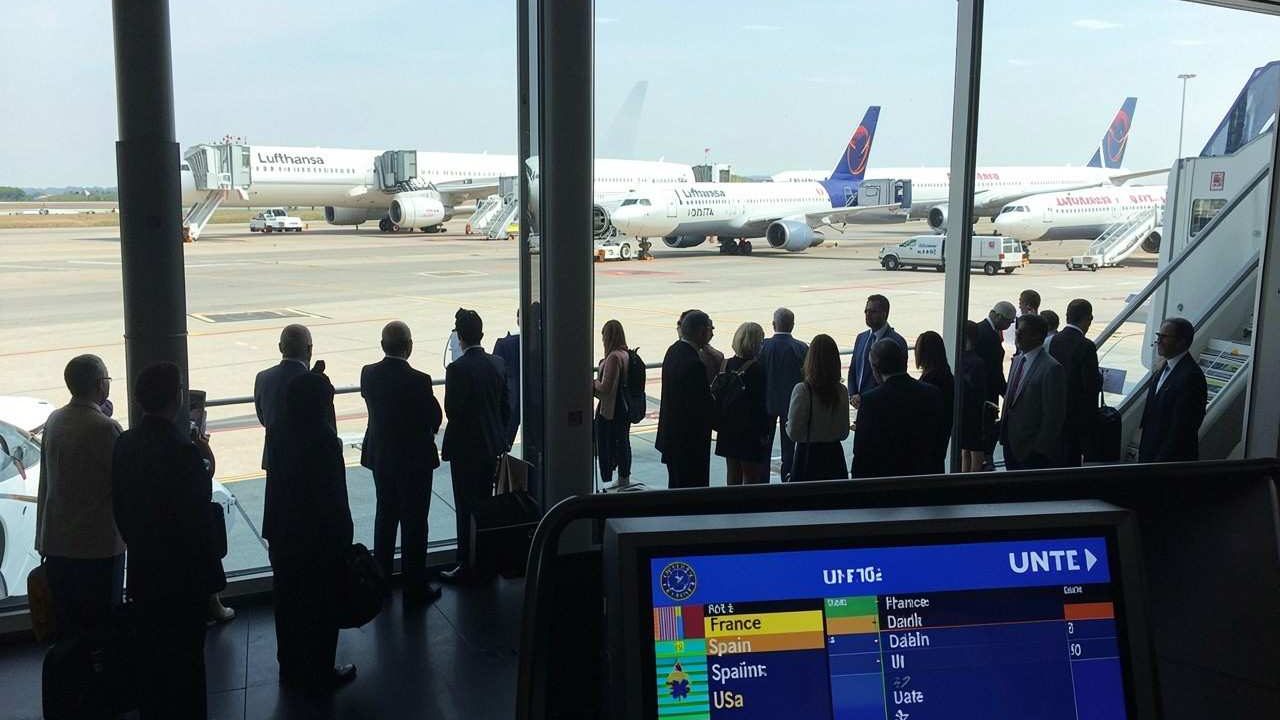
Three of the world’s most recognizable airlines — Lufthansa, Delta, and United Airlines — are reshaping global travel in 2026 by embracing what the industry is calling the hybrid airline model. The approach is straightforward but powerful: keep fares competitive on shorter routes while delivering premium comfort on long-haul flights. The result is a surge in international tourism that hotels across France, Spain, and the United States are scrambling to keep up with.
This isn’t a minor trend. The hybrid model is drawing millions of international travelers to some of the world’s most visited destinations, pushing hotel booking demand to levels that industry observers describe as unprecedented. For anyone planning a trip — or working in hospitality — understanding what’s driving this boom matters more than ever right now.
The timing is significant. As air travel continues its post-pandemic recovery, these three carriers aren’t just filling seats. They’re actively expanding their network reach and redefining what passengers expect from a flight, whether it’s a two-hour hop or a transatlantic crossing.
What the Hybrid Airline Model Actually Means for Travelers
The term “hybrid airline” gets used loosely, but here it describes something specific. These carriers are no longer purely budget-focused or purely premium. They’re operating both ends of the spectrum simultaneously — offering low-cost options where travelers want them and full-service luxury where passengers are willing to pay for it.
For the traveler, this means more choices at more price points on the same airline. You can book an affordable seat on a regional route and then connect to a long-haul flight where lie-flat beds and premium dining are part of the package. The friction between budget travel and comfort travel is starting to dissolve.
For destinations like France, Spain, and the United States, the effect is a wider funnel of incoming tourists. More accessible fares bring in travelers who might previously have stayed home. More premium options attract high-spending visitors who book luxury hotels and spend heavily on local experiences.
How Hotels in France, Spain, and the USA Are Responding
The hospitality sector in all three regions is feeling the impact directly. As hybrid airlines expand routes and make travel more accessible, hotel operators are reporting stronger demand across multiple categories — from budget accommodations to five-star properties.
| Destination Region | Primary Airline Driver | Tourism Impact |
|---|---|---|
| France | Lufthansa, Delta | Increased international arrivals driving hotel demand |
| Spain | Lufthansa, United Airlines | Surge in bookings across accommodation categories |
| United States | Delta, United Airlines | Boosted domestic and inbound tourism spending |
Hotels aren’t just seeing more bookings — they’re seeing more diverse bookings. Budget travelers arriving on affordable short-haul connections are filling mid-range properties, while premium long-haul passengers are driving occupancy at higher-end hotels. The hybrid airline model is effectively widening the economic base of tourism in each destination.
Tourism-related services beyond accommodation are also benefiting. Local transport operators, restaurants, tour companies, and cultural attractions are all experiencing spillover demand as more international visitors arrive with money to spend.
Why Lufthansa, Delta, and United Airlines Are Driving This Together
It’s worth asking why these three carriers specifically are at the center of this shift. All three have the scale, the route networks, and the brand recognition to influence travel behavior at a global level. When all three move in the same direction at roughly the same time, the market effect is amplified significantly.
Their combined reach covers the major transatlantic corridors that connect North America to Europe — including the routes feeding directly into France and Spain. As they expand their hybrid offerings on these corridors, more travelers on both continents find it easier and more affordable to cross the Atlantic.
- Lufthansa connects Central and Western Europe to North America with an expanding range of fare options
- Delta operates some of the busiest transatlantic routes, with a growing mix of economy and premium cabin products
- United Airlines covers major US gateway cities with connections into key European leisure destinations
- All three carriers are expanding network reach as part of their hybrid strategy
- The combined effect is making international travel more accessible to a broader range of income levels
- Airlines operated as either budget carriers or full-service premium carriers, rarely both at once.
- Travelers had to choose between affordability and comfort, with little middle ground available.
- Hotel demand in key destinations was driven by narrower traveler demographics and spending ranges.
- Lufthansa, Delta, and United Airlines now offer affordable fares on short routes alongside premium long-haul services.
- Millions of international tourists are accessing France, Spain, and the USA at a wider range of price points.
- Hotels across all categories are reporting unprecedented demand as a broader mix of travelers arrives.
What Happens Next for Travelers and the Hospitality Industry
The trajectory in 2026 points toward continued expansion. As Lufthansa, Delta, and United Airlines deepen their hybrid strategies, the expectation is that route networks will keep growing and fare options will become even more varied. That means the tourism boom feeding into France, Spain, and the USA is unlikely to slow down anytime soon.
For travelers, the practical implication is that planning a trip to any of these destinations — whether for leisure or business — is becoming easier and more financially flexible. The old assumption that transatlantic or long-haul travel requires either a budget sacrifice or a premium outlay is being replaced by something more nuanced.
For the hospitality industry, the challenge is keeping pace. Hotels that can adapt their offerings to serve both budget-conscious and premium travelers will be best positioned to capture the full benefit of what these airlines are generating. Properties that remain rigidly positioned at one end of the market risk missing a significant share of the incoming demand.
The broader economic impact on key tourist regions — particularly in France and Spain, where tourism represents a substantial portion of national income — could be considerable as the hybrid airline model continues to mature through the rest of 2026 and beyond.
Frequently Asked Questions
What is a hybrid airline model?
The hybrid airline model refers to carriers like Lufthansa, Delta, and United Airlines offering affordable fares on shorter routes while maintaining premium comfort and luxury services on long-haul flights.
Which destinations are seeing the biggest tourism boost from this trend?
France, Spain, and the United States are identified as the key destinations experiencing increased international tourist arrivals and hotel demand as a result of the hybrid airline expansion.
Which airlines are leading the hybrid airline revolution in 2026?
Lufthansa, Delta, and United Airlines are the three carriers identified as the primary drivers of the hybrid airline model and the resulting global travel boom.
How are hotels benefiting from the hybrid airline trend?
Hotels across France, Spain, and the USA are experiencing unprecedented demand for accommodations as more international tourists — across a wider range of budgets — arrive via expanded hybrid airline routes.
Will this travel boom continue beyond 2026?
Does the hybrid model only affect international travelers?
While the international tourism impact is most highlighted, the hybrid model also affects domestic travel within the United States, where Delta and United Airlines operate extensive networks.




Leave a Reply