
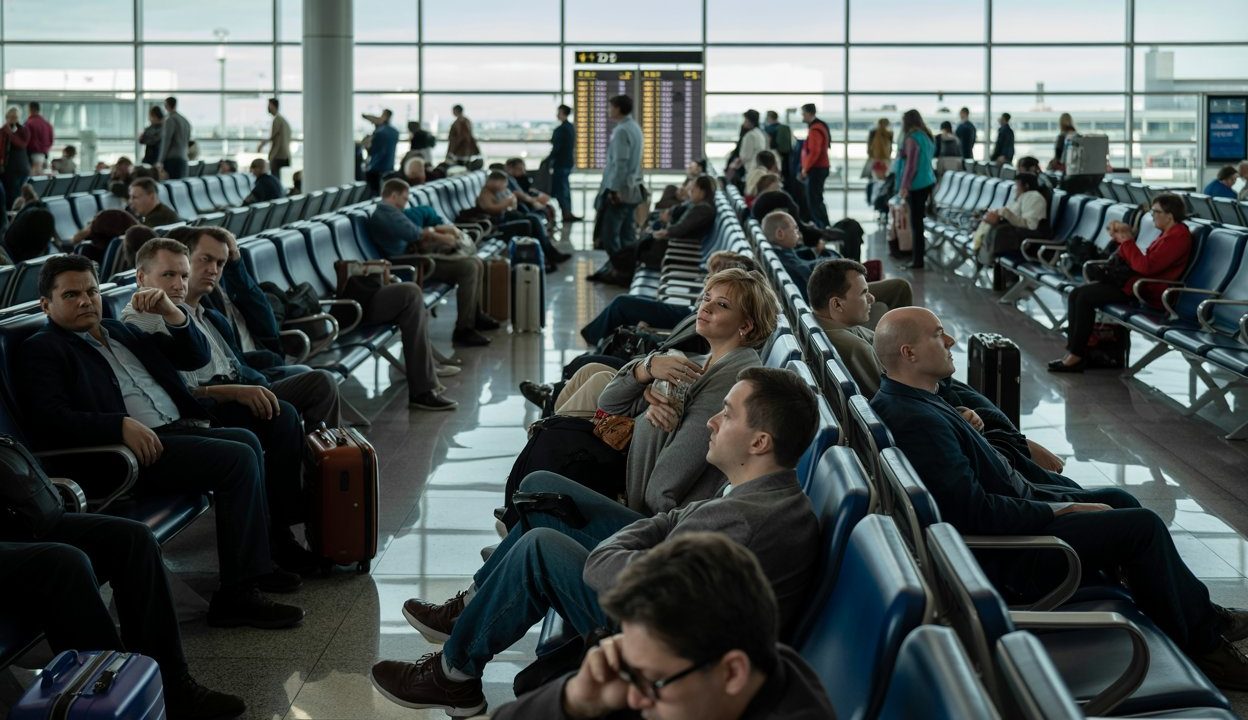
Nineteen flights have been canceled across Germany’s major airports, leaving travelers bound for destinations ranging from Paris and Delhi to Copenhagen and Barcelona scrambling to rebook — and the disruption shows no sign of resolving quickly.
The cancellations are hitting five of Germany’s busiest airports simultaneously: Frankfurt, Munich, Berlin, Dusseldorf, and Hamburg. Lufthansa and GFA are among the carriers affected, and the sheer spread of impacted routes — spanning Europe, the Middle East, and South Asia — means the ripple effects are being felt far beyond Germany’s borders.
If you have a flight through any of these airports in the coming days, here is everything confirmed so far and what you should do next.
What Is Causing the Germany Flight Cancellations
The disruption is widespread and involves multiple airlines operating out of multiple German hubs at the same time. Frankfurt International Airport — one of Europe’s busiest transit points — has been particularly hard hit, with several key routes brought to a halt.
GFA and Lufthansa are the named carriers tied to the cancellations, though the scale of the disruption across five airports simultaneously suggests broader operational or external pressures affecting the German aviation network as a whole.
Airlines have not yet provided a single unified explanation for the wave of cancellations. Passengers are being advised to check directly with their carriers for the latest schedule updates, as the situation remains fluid.
Which Airports and Routes Are Affected
The cancellations span a wide geographic footprint. Here is a breakdown of what is confirmed:
| Airport | Airport Code | Affected Destinations |
|---|---|---|
| Frankfurt International Airport | EDDF | Multiple routes — including Bahrain, Keflavik, Delhi, Madrid, Brussels, Barcelona, Stockholm, Copenhagen, Paris |
| Munich Airport | MUC | Affected — specific routes under disruption |
| Berlin Airport | BER | Affected — specific routes under disruption |
| Dusseldorf Airport | DUS | Affected — specific routes under disruption |
| Hamburg Airport | HAM | Affected — specific routes under disruption |
The full list of impacted destinations includes: Bahrain, Keflavik, Delhi, Madrid, Dresden, Brussels, Barcelona, Munich, Stockholm, Copenhagen, and Paris. That is a mix of short-haul European routes and longer intercontinental connections — which means the disruption is not limited to regional travelers.
Who Is Getting Hit Hardest
The sheer range of affected destinations tells you something important: this is not a localized inconvenience. Passengers traveling on intercontinental routes — particularly those flying to or from Delhi — face significantly longer delays and more complex rebooking challenges than someone hopping between European cities.
Frankfurt, as a major global hub, tends to amplify disruptions. A canceled flight out of Frankfurt does not just strand one group of passengers — it can delay connecting travelers arriving from other continents, creating a cascade of missed connections across multiple airlines and routes.
Travelers with tight itineraries connecting through any of the five affected German airports are at particular risk. Even if your outbound flight is not on the canceled list, an inbound delay into one of these hubs could still leave you stranded.
Business travelers and those on fixed-schedule trips — conference attendees, families traveling for events, medical travelers — are facing the sharpest consequences, with little flexibility to absorb sudden schedule changes.
What Travelers Should Do Right Now
The most important step is straightforward: check your flight status directly with your airline before heading to the airport. Do not rely on third-party apps alone — go to the official airline website or call the carrier’s customer service line.
If your flight has been canceled, you are generally entitled to rebooking on the next available service or a full refund, depending on the airline’s policy and the regulations that apply to your ticket. European Union air passenger rights rules — which cover flights departing from EU airports — provide specific protections in cancellation scenarios.
Travelers connecting through German airports on non-German carriers should also check with their airline, as downstream delays can affect onward legs even when the initial flight is not directly canceled.
Those with travel insurance should review their policy for cancellation and delay coverage. Keep all documentation — cancellation notices, rebooking confirmations, receipts for additional expenses — as these will be needed for any claim.
What Happens Next and How Long This Could Last
Airlines have not provided a clear timeline for when normal operations will resume across all five affected airports. The situation is described as ongoing, and schedules remain uncertain over the coming days — which suggests travelers should treat any flight through Germany as potentially at risk until further notice.
Frankfurt, as Europe’s third-busiest airport by passenger volume, typically has the resources to absorb disruptions faster than smaller hubs. However, when cancellations hit multiple airports at once, recovery timelines become harder to predict, as aircraft and crew positioning across the entire network needs to be recalibrated.
Passengers booked on affected routes in the near term should monitor airline communications closely and consider whether flexible rebooking options are available on their tickets. Airlines often open up fare-class flexibility during major disruption events, allowing passengers to change dates without penalty — but you typically need to request this proactively.
Frequently Asked Questions
How many flights have been canceled in Germany?
A total of 19 flights have been canceled across Frankfurt, Munich, Berlin, Dusseldorf, and Hamburg airports.
Which airlines are involved in the cancellations?
Lufthansa and GFA are among the carriers confirmed to be affected by the disruptions.
Which destinations are impacted by the Germany flight cancellations?
Confirmed affected destinations include Bahrain, Keflavik, Delhi, Madrid, Dresden, Brussels, Barcelona, Munich, Stockholm, Copenhagen, and Paris.
Is Frankfurt Airport the worst affected?
Frankfurt International Airport has been specifically highlighted as experiencing significant disruptions, though all five German airports named are affected.
How long will the disruptions last?
Airlines have not confirmed a resolution timeline — schedules remain uncertain over the coming days, so travelers should monitor updates closely.
What should I do if my flight through Germany is canceled?
Check directly with your airline for rebooking options, keep all cancellation documentation, and review your travel insurance policy for coverage on delays and cancellations.



Leave a Reply