
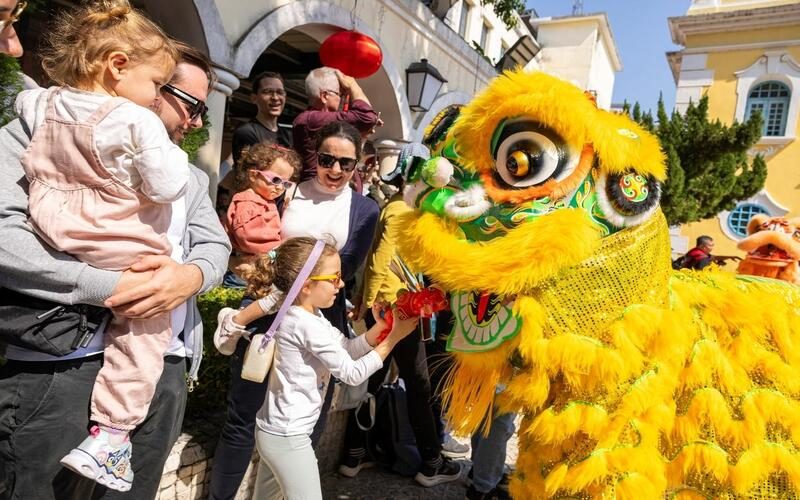
Macao rang in the Year of the Horse with a burst of festivity so large it redefined what a Lunar New Year celebration can look like. The 2026 Chinese New Year period saw the city stage an extraordinary trifecta of mega-events that ignited tourism, energised local businesses, and left both residents and visitors with memories that will last well beyond the holiday season.
Organised by the Macao Government Tourism Office (MGTO) alongside the community-centred ZAPE Gallop Gala, the festivities were officially recognised by China’s Ministry of Culture and Tourism as key attractions under the national “Happy Chinese New Year” campaign. That recognition alone signals just how significant Macao’s celebrations have become on the broader cultural tourism map.
For a city that already carries the title of World Centre of Tourism and Leisure, this year’s Lunar New Year was a statement — proof that Macao is not content to rest on its reputation.
What Made Macao’s 2026 Lunar New Year So Different
The centrepiece of the celebrations was the “Parade for Celebration of the Year of the Horse”, which unfolded across two major days — February 19 and February 28. The parades wound through the scenic Sai Van Lake area and the city’s northern districts, drawing enormous crowds with an explosion of colour, performance, and cultural expression.
What set this year apart was the deliberate combination of scale and community involvement. Rather than a single centralised event, the festivities spread across multiple locations and days, drawing visitors deeper into Macao’s neighbourhoods and giving locals a genuine stake in the celebrations. The ZAPE Gallop Gala, which played a central organising role, reflects exactly that community-first philosophy.
Officials have noted that this model — blending government-backed spectacle with grassroots community energy — is precisely what helped the 2026 celebrations reach a new standard for cultural tourism events in the region.
The Events That Drove the Tourism Explosion
Three major pillars defined the 2026 Lunar New Year programme in Macao, each contributing to what observers are calling an unprecedented tourism surge.
- Float Parades: Staged on February 19 and 28, the “Parade for Celebration of the Year of the Horse” brought elaborate floats, performers, and cultural displays to the Sai Van Lake area and northern districts, drawing seas of spectators across both days.
- Exhibitions: Complementing the street parades, exhibitions gave visitors a chance to engage more closely with the cultural themes of the Year of the Horse, offering a deeper layer of experience beyond the outdoor spectacle.
- ZAPE Gallop Gala: This community-driven event added a neighbourhood dimension to the celebrations, rooting the festivities in local identity rather than purely in large-scale tourism infrastructure.
Together, these three strands created what the MGTO positioned as an unmissable cultural tourism experience — one that resonated far beyond Macao’s usual visitor base.
Key Facts About Macao’s 2026 Lunar New Year Celebrations
| Event | Dates | Location | Organiser |
|---|---|---|---|
| Parade for Celebration of the Year of the Horse (Day 1) | February 19, 2026 | Sai Van Lake area | MGTO |
| Parade for Celebration of the Year of the Horse (Day 2) | February 28, 2026 | Northern Districts | MGTO |
| ZAPE Gallop Gala | Lunar New Year period, 2026 | ZAPE area, Macao | Community / ZAPE organisers |
| National Campaign Recognition | 2026 | National (China) | China’s Ministry of Culture and Tourism |
Why This Matters Beyond the Celebrations Themselves
For travellers and the tourism industry, Macao’s 2026 Lunar New Year is a signal worth paying attention to. The city has long been known as a destination that blends East and West, heritage and modernity — but this year’s celebrations showed that it can also compete at the very top tier of cultural event tourism.
The recognition from China’s Ministry of Culture and Tourism under the “Happy Chinese New Year” campaign is not a minor footnote. It places Macao’s events alongside some of the most prominent festive attractions across the entire country, giving the city a platform that reaches audiences well beyond its immediate regional market.
For local businesses — restaurants, hotels, retailers, transport operators — the surge in visitors during the Lunar New Year window represents a significant economic boost. Supporters of the event model argue that spreading activities across multiple days and multiple neighbourhoods helps distribute that economic benefit more evenly, rather than concentrating it in a single area.
For travellers planning future trips, the message is clear: if you want to experience Chinese New Year at a scale and quality that is genuinely hard to match, Macao has moved firmly into the conversation alongside more traditionally prominent destinations.
What Comes Next for Macao’s Cultural Tourism Calendar
The 2026 Lunar New Year celebrations appear to have set a new benchmark that both the MGTO and the broader Macao tourism ecosystem will be expected to meet — or exceed — in future years. The involvement of China’s Ministry of Culture and Tourism suggests a continued national-level interest in positioning Macao as a flagship destination for cultural festivity.
The ZAPE Gallop Gala model, with its emphasis on community participation, could also point toward how future events are structured — leaning into Macao’s unique identity as a place where local culture and international tourism genuinely coexist, rather than compete.
Whether the 2027 Year of the Goat celebrations will attempt to build on this momentum remains to be seen, but the 2026 edition has firmly raised the bar.
Frequently Asked Questions
When did Macao’s 2026 Lunar New Year parade take place?
The “Parade for Celebration of the Year of the Horse” was held on two days: February 19 and February 28, 2026.
Where were the parades held in Macao?
The parades took place in the Sai Van Lake area and in Macao’s northern districts.
Who organised the 2026 Lunar New Year celebrations in Macao?
The events were organised by the Macao Government Tourism Office (MGTO) and the community-centred ZAPE Gallop Gala.
Was Macao’s celebration officially recognised at a national level?
Yes. China’s Ministry of Culture and Tourism recognised Macao’s events as key attractions under the national “Happy Chinese New Year” campaign.
What is the ZAPE Gallop Gala?
The ZAPE Gallop Gala is a community-centred event that formed part of Macao’s Lunar New Year programme, adding a local neighbourhood dimension to the broader celebrations.
How many visitors attended the 2026 Lunar New Year events in Macao?
Specific visitor attendance figures have not been confirmed in the available source material, though officials described the events as drawing extraordinary crowd numbers across multiple days and locations.

Leave a Reply