
▶ Read transcript
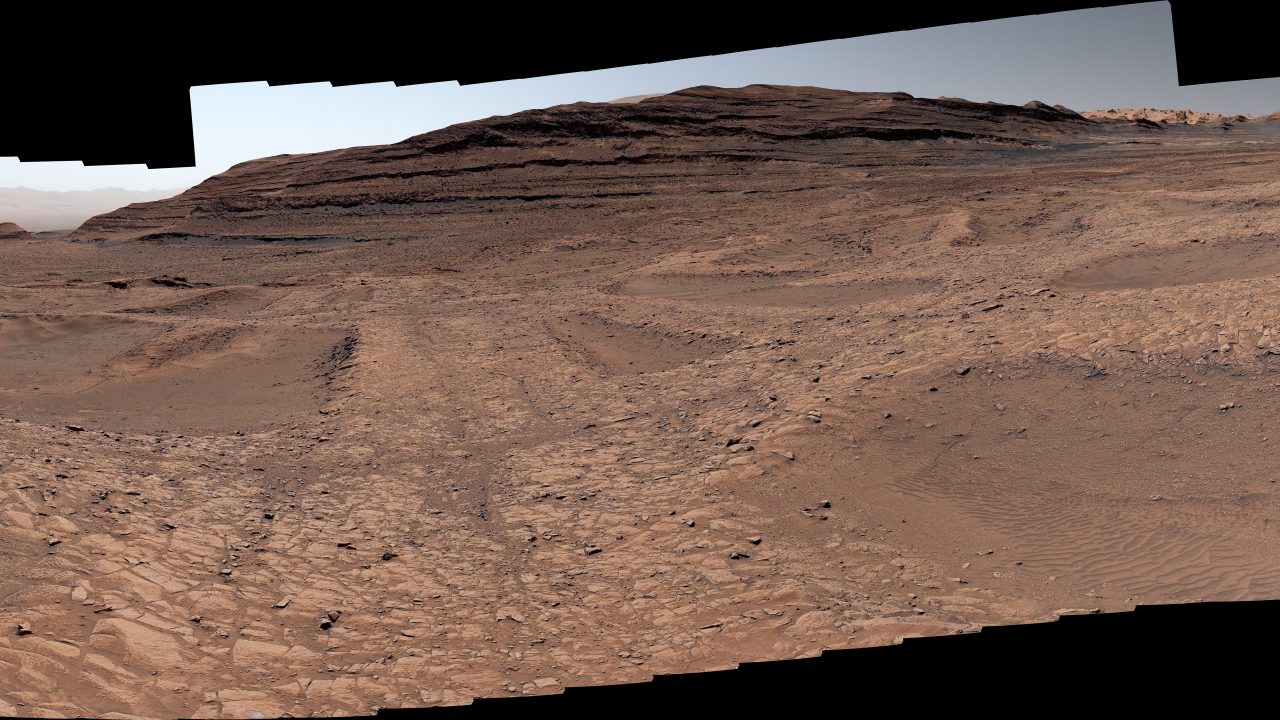
Here’s what you need to know about the mystery of Mars’ so-called spiderwebs. For nearly nineteen years, scientists puzzled over strange geometric ridge patterns spotted from orbit on the Martian surface. They looked almost biological, like giant spider silk stretched across the slopes of Mount Sharp inside Gale Crater. In September 2025, NASA’s Curiosity rover finally got close enough to see them properly. What it found were boxwork formations, ridges created when mineral-rich groundwater seeped into ancient cracks in bedrock, hardened there, and then the softer surrounding rock eroded away over millions of years. This tells us liquid water persisted on Mars far longer and more extensively than scientists previously believed. Curiosity also spotted small pea-sized nodules along the ridges that researchers openly admit they cannot yet explain. If this story has you curious about Mars, follow NASA’s Jet Propulsion Laboratory for updates as scientists continue analyzing what Curiosity is sending back.
Here is the uncomfortable truth most people miss about Mars exploration: the most important discoveries are rarely the ones that answer questions. They are the ones that make our old questions look embarrassingly small.
For nineteen years, a set of bizarre geometric patterns etched across the Martian surface sat at the edge of our understanding. Scientists called them “spiderwebs.” They spotted them from orbit in 2006, mapped them obsessively, and argued over their origin with the kind of polite ferocity that only planetary scientists can sustain for nearly two decades.
Then, on September 26, 2025, NASA’s Curiosity rover rolled close enough to finally see them properly. And what it found did not just solve one mystery. It cracked open another, older, more consequential one.
What Curiosity Saw on Mount Sharp in September 2025
The images came through Curiosity’s Mastcam in late September 2025, and they stopped researchers cold. Stretching across the lower slopes of Mount Sharp, a mountain rising from the center of Gale Crater, were low interlocking ridges arranged in patterns that looked, unmistakably, like the silk architecture of a spider.
These were not small features. The web-like mazes stretched for miles across the terrain, with individual ridges rising three to six feet tall. Sandy hollows sat between the raised formations, creating a texture that looked almost biological in its regularity.
Then Curiosity’s cameras caught something else. Scattered along the ridges were small, rounded structures, roughly the size of peas. Scientists at NASA’s Jet Propulsion Laboratory reviewed the images and used a phrase that does not appear often in peer-reviewed science: they said these egg-like structures were something they “can’t quite explain.”
The formations are called boxwork. They form when groundwater flows through fractures in bedrock and deposits minerals along those cracks. Over time, the softer rock surrounding those mineral veins erodes away, leaving the harder, mineral-filled fractures standing proud of the surface like the raised threads of a web.
On Earth, boxwork formations exist inside Wind Cave in South Dakota, one of the most intricate cave systems on the planet. On Mars, they exist in the open air, exposed across the flanks of a mountain, visible from orbit, and now photographed at ground level for the first time.
| Feature | Mars Boxwork | Earth Boxwork (Wind Cave) |
|---|---|---|
| Formation process | Groundwater minerals in bedrock fractures | Groundwater minerals in bedrock fractures |
| Scale | Miles wide, 3–6 feet tall | Centimeters to meters, underground |
| Exposure | Open surface, visible from orbit | Enclosed cave environment |
| First observed | 2006 (orbital imagery) | 1881 (human exploration) |
| Unexplained structures | Pea-sized “egg” nodules along ridges | None reported |
Nineteen Years of Orbital Confusion Before Curiosity Arrived
The story of the Martian spiderwebs is, in part, a story about the limits of looking at something from very far away. When Mars Reconnaissance Orbiter first captured these patterns in 2006, scientists had no rover positioned close enough to investigate. They had high-resolution images from above, but no ground truth.
For years, competing hypotheses circulated. Some researchers suggested the patterns were related to carbon dioxide ice activity, a process that does create spider-like features in Mars’ polar regions through a completely different mechanism. Others argued the geometry pointed to ancient lava flows. The debate remained unresolved because the evidence available from orbit simply could not discriminate between possibilities.
“Scientists have proposed that groundwater once flowed through large fractures in the bedrock, leaving behind minerals” as the explanation for the web-like ridge formations photographed by Curiosity.
— NASA Jet Propulsion Laboratory, 2025
Curiosity was not originally sent to Gale Crater to investigate boxwork formations. The rover’s primary mission, which began when it landed in August 2012, focused on determining whether Mars ever had the environmental conditions necessary to support microbial life. That mission has always been about chemistry, geology, and time.
Spiderweb Ridges (Gale Crater)
Typical Martian Geology
Pre-2025 Scientific Understanding
| Metric | Spiderweb Ridges (Gale Crater) | Typical Martian Geology | Pre-2025 Scientific Understanding |
|---|---|---|---|
| Formation Scale |
82 |
55 |
40 |
| Water Evidence |
91 |
34 |
28 |
| Surface Age |
78 |
65 |
50 |
| Structural Complexity |
88 |
42 |
35 |
| Scientific Significance |
95 |
58 |
45 |
| Terrain Coverage |
74 |
61 |
38 |
| Preservation Quality |
85 |
70 |
52 |
But science rarely follows a tidy itinerary. As Curiosity climbed the lower slopes of Mount Sharp over more than a decade of operation, it moved through geological layers representing billions of years of Martian history. The boxwork region was simply the next layer in that record.
Unknown — debated for 19 years since first spotted in 2006
Competing theories: wind erosion, volcanic activity, or frost sublimation
Estimated from orbital imagery only, true height uncertain
Liquid water believed to have disappeared roughly 3 billion years ago
Considered a dried lakebed with limited post-lake geological activity
Orbital observation via satellite imagery — no ground-level confirmation
Fragmented — no dominant explanation commanded broad agreement
Confirmed as sedimentary ridges formed by ancient water-driven mineral deposition
Groundwater or surface water repeatedly flowing through fracture networks, depositing harder minerals
Ridges confirmed at 3 to 6 feet tall, stretching miles across lower Mount Sharp slopes
Liquid water persisted significantly longer than previously thought, extending the habitable window
Evidence of prolonged, complex water cycling long after initial lake period ended
Ground-level Mastcam imaging by Curiosity rover providing direct surface confirmation
Unified around extended water activity — and new questions about Martian habitability timelines
The Water Question That Refuses to Stay Answered
Here is where the story shifts from geological curiosity to something with genuinely profound implications. Boxwork formations require liquid water. Not surface water, not ice, but groundwater actively moving through rock, dissolving minerals, depositing them in fractures, and doing so over extended periods of time.
The presence of these formations in the geological layer Curiosity is currently exploring suggests that liquid water persisted underground on Mars more recently than the scientific consensus had previously accepted. Earlier models placed the end of significant liquid water on Mars at roughly 3 billion years ago. The boxwork evidence suggests water flowed more recently than that, though the precise timeline remains under investigation.
This matters enormously for the question of life. Microbial organisms on Earth have demonstrated a remarkable ability to survive in subsurface environments, shielded from radiation, sustained by chemical energy from rock-water interactions. If Mars had active groundwater systems operating later than scientists thought, the window during which life could theoretically have existed, or perhaps persisted, expands considerably.
The pea-sized nodules scattered along the boxwork ridges add another layer of uncertainty. On Earth, small rounded mineral concretions sometimes form through biological processes, though they also form through purely chemical ones. Scientists are careful not to overinterpret their presence on Mars. But they are equally careful not to dismiss them without investigation.
What Comes Next for Curiosity and the Boxwork Region
Curiosity is not a young rover. It landed in 2012, making it more than thirteen years into a mission originally designed to last two years. Its wheels show significant wear. Its instruments have been recalibrated multiple times. And yet it keeps producing science that reshapes our understanding of Mars.
The rover will continue moving through the boxwork region, collecting chemical data from the ridge material and the nodules. Scientists want to know what minerals make up the ridges, because the specific chemistry of those minerals can reveal the conditions under which the groundwater deposited them, including temperature, acidity, and salinity. Each of those variables constrains the habitability question further.
Meanwhile, the NASA Mars Science Laboratory team is analyzing the full September 2025 panorama alongside data from Curiosity’s Chemistry and Camera instrument, which can fire a laser at rock targets and read the resulting plasma to determine elemental composition. That data, combined with the visual record, should help constrain when and how the boxwork formed.
The broader Mars exploration program is watching closely. NASA’s Mars Sample Return mission, though facing significant budget pressures and schedule uncertainty, is designed to bring physical rock samples back to Earth where they can be analyzed with instruments far more powerful than anything a rover can carry. If samples from the boxwork region eventually make it to terrestrial laboratories, scientists could potentially date the groundwater activity directly.
For now, the spiderweb mystery has an answer. Groundwater carved those ridges. Minerals filled the fractures. Erosion did the rest over millions of years. It is a clean, satisfying explanation built on solid geological principles.
But the answer sits inside a larger question that has no clean resolution yet: Mars had liquid water underground, moving through rock, depositing minerals, shaping landscapes, and doing so for longer than we assumed. Something was happening down there in the dark. Whether anything was alive to notice it remains, as of April 2026, entirely unknown.
That uncertainty is not a failure of science. It is science doing exactly what it is supposed to do, replacing one mystery with a better one.
Frequently Asked Questions
Frequently Asked Questions

You Might Also Like
Hubble Catches Comet K1 Shattering Into 4 Pieces
Hubble tracked Comet C/2025 K1 splitting into four fragments, exposing 4.6-billion-year-old ice. A 48-hour brightness…

The Hidden Magnet Flaw That Could Stall the EV Revolution
95% of EVs use permanent magnet motors with a dangerous heat vulnerability. The real EV…

The Loneliest Person in the Room Is Often the Strongest One
Psychology reveals the loneliest people aren't outcasts — they're the capable, always-available ones everyone values…
Leave a Reply