
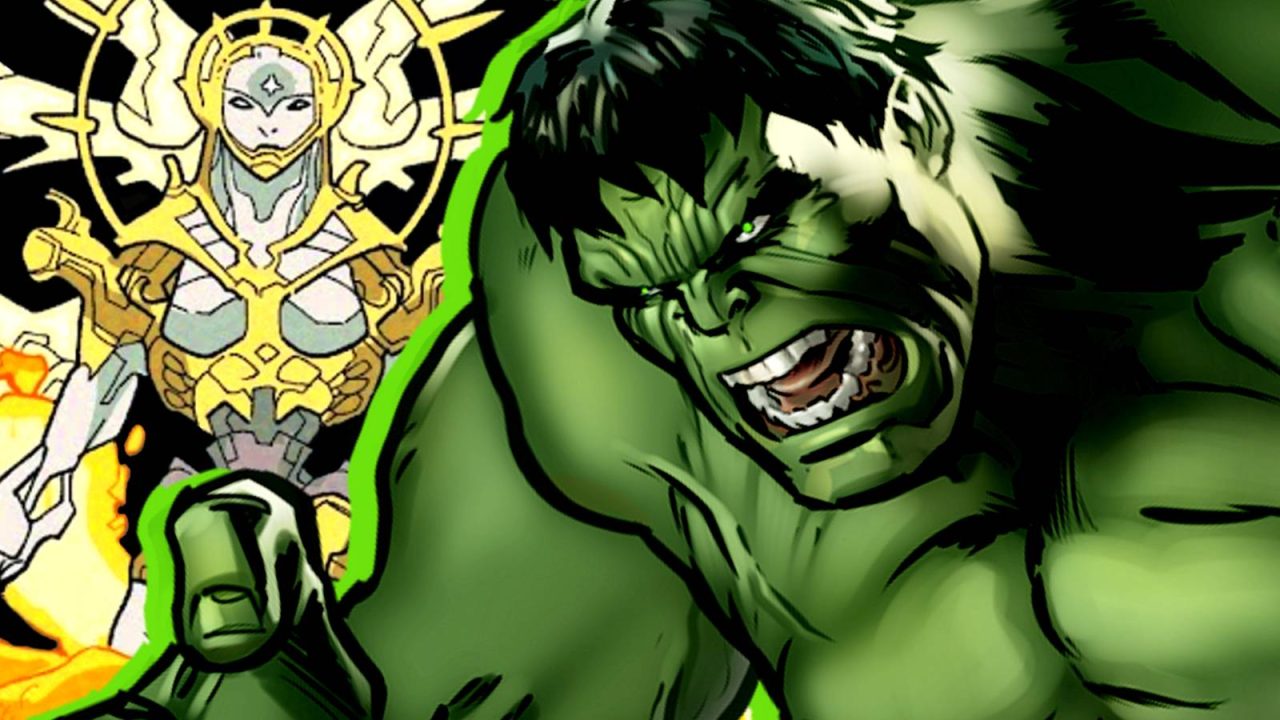
Marvel’s cosmic mythology just got a permanent new addition — and it reaches all the way down to one of the publisher’s oldest and most debated corners of lore.
The Hulk’s connection to the One Below All, the One Above All, and the gamma-powered hierarchy of Marvel’s universe has been a source of fascination and occasional confusion for readers for years. Now, a new development in Hulk storytelling has introduced what appears to be a lasting new god-tier figure into that framework — one with real implications for how Marvel’s most fundamental cosmic lore is understood going forward.
Given that
The Cosmic Architecture Behind the Hulk
Most casual Marvel fans know the Hulk as Bruce Banner’s rage-fueled alter ego. But for readers who follow the comics closely, the character sits at the center of a surprisingly elaborate metaphysical structure.
At the top of Marvel’s cosmic hierarchy sits the One Above All — widely understood to be the Marvel Universe’s equivalent of a supreme creator deity, existing above even the Living Tribunal. Below that, in a kind of dark mirror position, sits the One Below All: a destructive, entropic force that exists beneath the Below-Place, Marvel’s version of a lowest possible hell.
The Hulk — specifically the Green Scar and Devil Hulk incarnations — has been narratively linked to this structure in ways that make him uniquely significant in Marvel’s metaphysical landscape. Gamma radiation, in this telling, is not just a scientific accident. It is a conduit for something far older and more fundamental.
Writer Al Ewing’s celebrated run on The Immortal Hulk did the most to codify this mythology, establishing gamma as a form of “green door” energy tied to life, death, and transformation at a cosmic level. That run ended, but the lore it built has continued to ripple outward.
Why Adding a New God-Level Figure Matters
Introducing a permanent new deity into an established cosmic framework is not a small thing in superhero comics. These structures — once set — tend to define storytelling possibilities for decades.
Marvel’s cosmic tier has historically been treated with a degree of editorial caution. Characters like the Beyonder, the Living Tribunal, and the One Above All appear sparingly, partly because overuse risks deflating the sense of scale that makes them meaningful. When a new figure is added at that level and treated as canonical rather than a one-story construct, it signals that editorial intends the change to stick.
For Hulk specifically, this kind of addition does several things at once:
- It deepens the character’s cosmic significance beyond what was established in Immortal Hulk
- It creates new storytelling architecture that future writers can build on
- It raises questions about the balance between the One Above All and the One Below All — and where this new figure fits between or alongside them
- It potentially reframes Bruce Banner’s transformations as something with divine or metaphysical stakes, not merely personal psychological ones
What Makes Hulk Lore Distinct in the Marvel Universe
The Hulk occupies a genuinely unusual position in Marvel’s publishing history. He is one of the oldest characters, introduced in 1962, and yet his mythology has been radically reimagined multiple times — arguably more than any other A-list Marvel character.
Where Spider-Man’s core identity has remained relatively stable and Iron Man’s has evolved through technology and politics, the Hulk has been remade at a conceptual level. The shift from “man turns into monster” to “man is host to a gamma-powered cosmic force with ties to the architecture of existence itself” is a dramatic one — and it happened gradually enough that many readers absorbed it without fully registering how strange it is.
| Era | Dominant Hulk Concept | Key Writers |
|---|---|---|
| 1962–1980s | Monster / rage metaphor | Stan Lee, Len Wein, Bill Mantlo |
| 1980s–1990s | Psychological dissociation, multiple personalities | Peter David |
| 2000s–2010s | Warrior / gladiator / planetary threat | Greg Pak |
| 2019–2022 | Cosmic horror / metaphysical mythology | Al Ewing |
| 2022–present | Ongoing cosmic lore expansion | Multiple |
Each of these eras left something permanent behind. Peter David’s psychological framework never fully went away. Al Ewing’s cosmic architecture is now embedded in the character’s DNA. A new god-level addition builds on that foundation.
The Broader Stakes for Marvel’s Cosmic Lore
It is worth stepping back and considering what it means when Hulk’s corner of Marvel begins touching the same metaphysical territory as the Celestials, the Beyonders, or the One Above All.
Marvel’s cosmic mythology has traditionally been compartmentalized. The Hulk’s world and the world of Eternity, Infinity, and the Living Tribunal rarely overlapped in meaningful ways before Ewing’s run. Now that overlap has become structural. A new permanent deity in Hulk lore is not just a Hulk story — it is a Marvel Universe story.
That has implications for crossovers, for how other writers approach gamma-powered characters like She-Hulk, Red Hulk, and Skaar, and for the long-term shape of Marvel’s published cosmology.
What Readers Should Watch For Next
When a new figure is introduced at this level of the mythology, the immediate question is always: how will other books respond? Will writers outside the Hulk titles acknowledge this new cosmic presence, or will it remain siloed?
The answer to that question will determine whether this development truly reshapes Marvel’s lore or remains a fascinating footnote in one character’s publishing history. Given the trajectory of Hulk storytelling since Immortal Hulk, there is real reason to believe the former is more likely.
Frequently Asked Questions
What is the One Below All in Marvel Comics?
The One Below All is a destructive cosmic entity in Marvel’s mythology, positioned as a dark counterpart to the One Above All, and has been closely tied to the Hulk’s gamma-powered lore, particularly during Al Ewing’s Immortal Hulk run.
Who established the Hulk’s connection to Marvel’s cosmic hierarchy?
Writer Al Ewing is most credited with building the framework that links the Hulk and gamma radiation to Marvel’s deepest metaphysical structures, primarily through his run on The Immortal Hulk beginning in 2018.
Does adding a new god to Hulk lore affect other Marvel characters?
Potentially yes — gamma-powered characters like She-Hulk, Red Hulk, and Skaar all exist within the same lore framework, meaning a change at the cosmic level could have implications across multiple characters and titles.
Is the One Above All the same as the Hulk’s new god figure?
The One Above All is Marvel’s pre-existing supreme deity figure. Whether the newly introduced god-level character is related to, separate from, or in opposition to the One Above All has not been confirmed based on available source material.
Will this change affect the Marvel Cinematic Universe?
This has not been confirmed. Comic book lore changes do not automatically translate to the MCU, which follows its own continuity and development timeline.
Where is the best place to start reading Hulk’s cosmic mythology?
Al Ewing’s The Immortal Hulk — which began in 2018 — is widely regarded as the essential starting point for understanding the gamma mythology and cosmic framework that underpins current Hulk storytelling.


Leave a Reply