
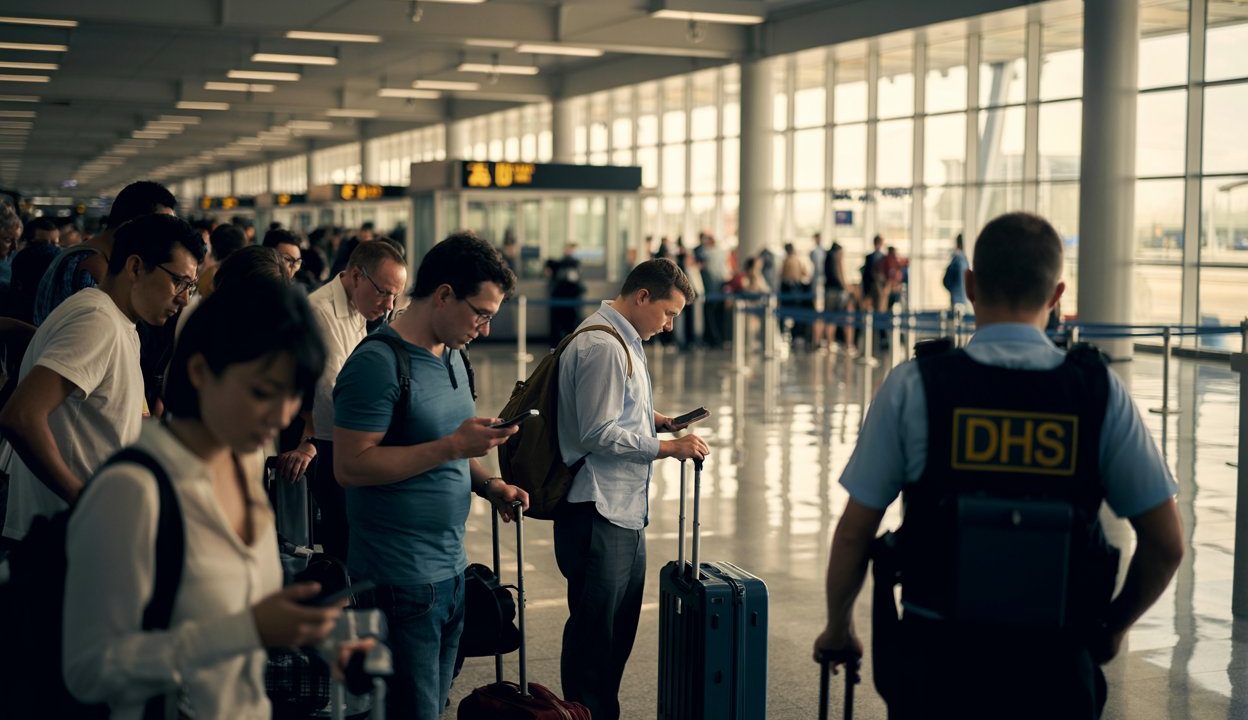
More than 400 TSA workers have resigned since the current partial government shutdown began — and the security lines snaking through Miami International Airport and Fort Lauderdale-Hollywood International Airport are showing exactly what that number means in practice.
South Florida’s two busiest airports are now at the center of a growing travel crisis, with a workforce shortage threatening one of the most congested air travel corridors in the country. And the proposed fix — deploying Immigration and Customs Enforcement agents to fill the gap — is raising as many questions as it answers.
For the millions of travelers who pass through MIA and FLL each year, this is no longer an abstract political story. It’s a real disruption with real consequences for anyone with a ticket, a connection, or a spring travel plan.
How the Shutdown Became a TSA Crisis
Government shutdowns always carry ripple effects, but the current stalemate in Washington has hit airport security with particular force. The Department of Homeland Security has reported that over 400 TSA workers have resigned since the shutdown began — a figure that reflects both financial pressure and morale collapse among workers asked to report to duty without a paycheck.
For those who remain on the job, it’s a daily calculation: show up and work without pay, or stay home and risk their employment status. Many have chosen to walk away entirely, and the cumulative effect on staffing levels is now visible in real time at checkpoints across the country.
South Florida is feeling this acutely. Miami International and Fort Lauderdale-Hollywood are among the busiest airports in the United States, serving international routes, Caribbean connections, and a steady stream of domestic travelers. Even a modest reduction in TSA staffing at either facility can cascade quickly into hours-long wait times and missed flights.
The ICE Agent Proposal — What’s Actually Being Discussed
The proposal now under consideration would deploy ICE agents to major U.S. airports to supplement the thinning TSA workforce. The logic is straightforward on paper: ICE is a federal law enforcement agency under the same Department of Homeland Security umbrella, and its agents are trained, badged, and already operating within the federal security apparatus.
But the practical and legal questions are significant. TSA agents are specifically trained and certified for airport security screening — a function that involves not just physical presence but specialized protocols, equipment operation, and passenger processing procedures. Whether ICE agents can legally or effectively step into that role without additional certification is a point of genuine debate.
Critics of the proposal contend that the two agencies serve fundamentally different functions, and that deploying enforcement-focused immigration agents into a passenger screening environment could create confusion, slow processing further, or raise civil liberties concerns among travelers — particularly international visitors and those from communities with heightened concerns about immigration enforcement.
Supporters argue that any trained federal law enforcement presence is better than understaffed checkpoints, and that a temporary stopgap measure is preferable to the alternative: longer lines, flight delays, and potential security vulnerabilities.
What This Means for Travelers at MIA and FLL Right Now
| Airport | Current Situation | Primary Concern |
|---|---|---|
| Miami International (MIA) | Reduced TSA staffing amid shutdown | Extended security wait times, international connection delays |
| Fort Lauderdale-Hollywood (FLL) | Reduced TSA staffing amid shutdown | Checkpoint bottlenecks, domestic and Caribbean route disruptions |
If you’re flying through either airport in the coming days or weeks, the practical advice is the same: arrive significantly earlier than you normally would. The staffing shortfall means that even a typical mid-morning or early afternoon departure could involve waits that would have been unthinkable before the shutdown.
- Build in at least two to three extra hours for security at major South Florida airports during this period
- Enroll in TSA PreCheck if you haven’t already — dedicated lanes may move faster even with reduced overall staffing
- Check your airline’s app and airport status pages frequently for real-time updates
- Have a plan for missed connections, and know your airline’s rebooking policies in the event of shutdown-related delays
Spring travel season makes the timing particularly painful. Late March through early May is one of the highest-volume periods for South Florida airports, with spring break travelers, families, and international tourists all converging on the same terminals.
The Broader Stakes Beyond South Florida
Miami and Fort Lauderdale are two high-profile examples, but the staffing crisis is playing out at airports across the country. The proposal to use ICE agents as a supplement reflects how few immediate options the government appears to have when its dedicated airport security workforce begins to fracture under financial pressure.
Officials have noted that the shutdown places essential workers in an untenable position — expected to perform critical public safety functions while their own financial stability is undermined. The more than 400 resignations reported by DHS represent people who made a rational economic decision, not a dereliction of duty.
Whether the ICE deployment proposal moves forward, gets modified, or is abandoned in favor of another solution remains an open question. What is not in question is that the current situation is unsustainable — and that travelers are already paying the price while Washington works toward a resolution.
What Happens If the Shutdown Continues
The longer the shutdown persists, the worse the staffing math becomes. Every resignation makes it harder to maintain adequate screening capacity, and the pool of available federal workers who could be redirected to airport security is not unlimited. The ICE proposal, controversial as it is, signals that policymakers are looking at increasingly unconventional options.
For now, the situation at MIA and FLL sits in an uncomfortable holding pattern — enough staff to keep checkpoints open, but not enough to prevent the kind of delays that can derail an entire travel day. Travelers should plan accordingly and watch for updates as the shutdown situation evolves.
Frequently Asked Questions
How many TSA workers have resigned because of the shutdown?
According to the Department of Homeland Security, more than 400 TSA workers have resigned since the partial government shutdown began.
Which airports in South Florida are most affected?
Miami International Airport (MIA) and Fort Lauderdale-Hollywood International Airport (FLL) are the two airports identified as being significantly impacted by the TSA staffing shortage.
What is the proposal to fix the TSA shortage at these airports?
A proposal under consideration would deploy Immigration and Customs Enforcement (ICE) agents to major U.S. airports, including those in South Florida, to help supplement the reduced TSA workforce.
Are ICE agents trained to do TSA screening work?
This has not been confirmed in available reporting. ICE agents are federal law enforcement officers but are trained for a different function than TSA airport security screening, and the feasibility of the crossover is a subject of active debate.
Should I arrive earlier than usual if I’m flying through MIA or FLL?
Yes — given the reduced staffing levels, travelers are advised to allow significantly more time than usual for security screening at both airports during the shutdown period.
Is this shutdown travel disruption limited to South Florida?
No. While Miami and Fort Lauderdale are highlighted as major affected airports, the TSA staffing crisis tied to the shutdown is a nationwide issue affecting airports across the United States.




Leave a Reply