
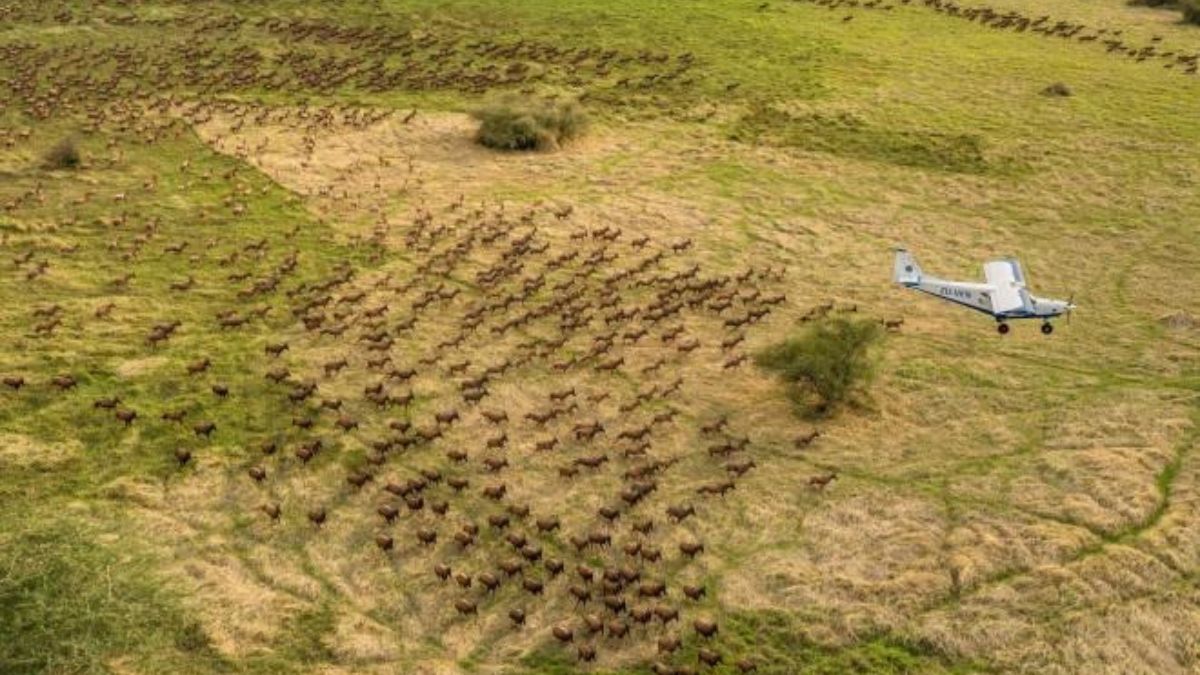
The world’s largest land animal migration — bigger than Africa’s famous Great Wildebeest Migration — has long unfolded in near-total obscurity across the plains of South Sudan. Now, for the first time, the country has opened a community-based tourist camp designed to let visitors witness it firsthand.
On March 27, 2026, South Sudan’s Ministry of Wildlife, Conservation and Tourism officially launched the Maruwa Hills Tourist Camp in Boma County, within the Greater Pibor Administrative Area. The ribbon-cutting ceremony was presided over by Minister Denay Jock Chagor, marking what officials describe as a historic first for the country’s tourism sector.
The camp sits inside the Great Nile Migration Landscape — a vast, largely untouched ecosystem that hosts the largest land animal migration on Earth. That the camp represents South Sudan’s first-ever community-based tourism project makes the opening even more significant, not just for wildlife enthusiasts, but for local communities and conservation efforts across the region.
Why the Maruwa Hills Tourist Camp Matters Beyond the Headlines
South Sudan is not a country most travelers have on their radar — and that’s precisely the point. The nation has faced decades of conflict and instability, and its wildlife and natural landscapes have remained largely unknown to the outside world as a result. The opening of Maruwa Hills signals a deliberate, coordinated effort to change that narrative.
The camp was developed through a formal partnership between the Ministry of Wildlife, Conservation and Tourism (MWCT) and African Parks, a nonprofit conservation organization that manages protected areas across the continent. That partnership is central to the project’s philosophy — this isn’t simply a tourism development dropped into a remote landscape. It’s built around community empowerment and long-term conservation goals.
The Great Nile Migration Landscape itself is a compelling draw. While the Serengeti’s wildebeest migration draws hundreds of thousands of tourists annually, the migration that sweeps through this part of South Sudan — involving massive herds of white-eared kob, tiang antelope, and Mongalla gazelle — remains one of the planet’s best-kept wildlife secrets. Estimates have placed the number of animals involved in the millions, dwarfing its East African counterpart.
Key Facts About the Camp and the Landscape
- Location: Boma County, Greater Pibor Administrative Area, South Sudan
- Opening date: March 27, 2026
- Presiding official: Minister Denay Jock Chagor, Ministry of Wildlife, Conservation and Tourism
- Development partners: South Sudan’s MWCT and African Parks
- Significance: First-ever community-based tourism project in South Sudan
- Setting: The Great Nile Migration Landscape, home to the largest land animal migration on Earth
- Focus areas: Sustainable tourism, community empowerment, and wildlife conservation
| Feature | Detail |
|---|---|
| Camp Name | Maruwa Hills Tourist Camp |
| Location | Boma County, Greater Pibor Administrative Area |
| Official Opening | March 27, 2026 |
| Government Partner | Ministry of Wildlife, Conservation and Tourism (MWCT) |
| Conservation Partner | African Parks |
| Tourism Model | Community-based sustainable tourism |
| Landscape | Great Nile Migration Landscape |
| Migration Status | Largest land animal migration on Earth |
What This Means for Local Communities and Wildlife
Community-based tourism, when done well, creates a direct financial incentive for local populations to protect — rather than exploit — the wildlife around them. By embedding the camp within a community empowerment framework, the project aims to ensure that the people of Boma County and the surrounding Greater Pibor Administrative Area are active participants in the tourism economy, not bystanders to it.
For conservation, the implications are equally significant. South Sudan’s wildlife has suffered enormously from years of instability. Poaching, habitat disruption, and the collapse of formal wildlife management structures have all taken a toll. A functioning, community-supported tourism operation creates both funding streams and local buy-in for conservation — two things that are very hard to sustain without each other.
For the wider region, the camp positions South Sudan as an emerging destination within the broader African safari and ecotourism market. Travelers who have already explored the more established circuits of East and Southern Africa may find South Sudan’s raw, unfiltered landscapes and extraordinary migration an entirely different kind of wildlife experience.
Supporters of the project argue that the combination of government commitment, an experienced conservation partner in African Parks, and the sheer natural spectacle of the Great Nile Migration Landscape gives Maruwa Hills a strong foundation — provided the political and logistical infrastructure can support growth over time.
What Comes Next for South Sudan’s Tourism Sector
The opening of Maruwa Hills is a beginning, not an endpoint. The camp represents a proof-of-concept for what sustainable, community-anchored tourism can look like in one of the world’s least-visited countries. If it succeeds — in drawing visitors, generating income for local communities, and demonstrating that conservation and economic development can coexist — it could serve as a template for further projects across South Sudan’s vast and largely unexplored protected areas.
African Parks brings significant experience to the partnership, having managed some of the continent’s most challenging conservation landscapes. Their involvement suggests a long-term commitment rather than a short-term development exercise.
For adventurous travelers, wildlife photographers, and conservation-minded tourists, South Sudan’s Maruwa Hills has just put itself on the map. The migration it overlooks has been called the greatest wildlife spectacle most people have never heard of. That may be about to change.
Frequently Asked Questions
What is the Maruwa Hills Tourist Camp?
It is South Sudan’s first-ever community-based tourist camp, located in Boma County within the Greater Pibor Administrative Area, officially opened on March 27, 2026.
Who developed the Maruwa Hills Tourist Camp?
The camp was developed through a partnership between South Sudan’s Ministry of Wildlife, Conservation and Tourism (MWCT) and African Parks, a nonprofit conservation organization.
What is the Great Nile Migration Landscape?
It is the landscape in which the camp is situated, and it hosts the largest land animal migration on Earth — surpassing even the famous wildebeest migration of East Africa.
Who officially opened the camp?
Minister Denay Jock Chagor of the Ministry of Wildlife, Conservation and Tourism presided over the ribbon-cutting ceremony on March 27, 2026.
What is the goal of the project beyond tourism?
The project is designed around community empowerment and conservation initiatives, aiming to give local communities a direct stake in protecting the wildlife and landscape around them.
Can travelers visit Maruwa Hills Tourist Camp now?
The camp has been officially opened as of March 27, 2026, though specific booking and access details have not yet been confirmed in available information.

Leave a Reply