
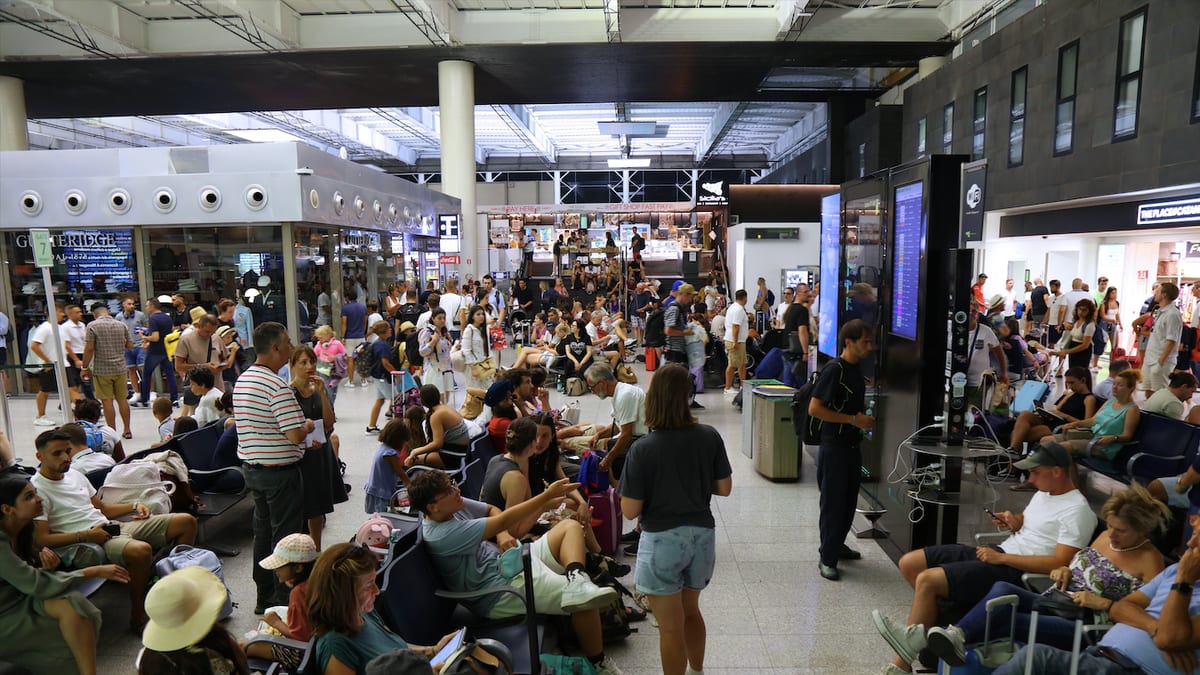
A total of 246 flights were cancelled and 1,475 more were delayed across the Middle East in a single day, leaving thousands of passengers stranded at some of the region’s busiest airports. The disruption hit Saudi Arabia, the UAE, Qatar, Bahrain, Israel, and beyond — turning routine travel days into hours of uncertainty, missed connections, and unanswered questions about rebooking and compensation.
The scale of this breakdown is hard to overstate. Major carriers including EgyptAir, Emirates, Gulf Air, and Saudia all faced significant operational disruptions, with the chaos spreading across hub airports in Jeddah, Dubai, Riyadh, and Cairo. For anyone who was mid-journey or due to fly on the day, the experience was a sharp reminder of just how quickly regional air travel can unravel.
Authorities and airlines have pointed to a combination of operational difficulties, air traffic management issues, and high passenger volumes as the driving factors behind what has been described as an unprecedented level of disruption across the region.
(function(){var wrp=document.getElementById(“paap_stat_69c52ddbadc980.18923257”);if(!wrp)return;var ids=[“paap_stat_69c52ddbadc980.18923257_c0″,”paap_stat_69c52ddbadc980.18923257_c1”];var dur=1800;function ease(t){return 1-Math.pow(1-t,3);}function anim(){ids.forEach(function(id){var el=document.getElementById(id);if(!el)return;var tgt=parseFloat(el.getAttribute(“data-target”))||0;var pfx=el.getAttribute(“data-prefix”)||””;var sfx=el.getAttribute(“data-suffix”)||””;var dec=parseInt(el.getAttribute(“data-decimals”))||0;var st=null;function step(ts){if(!st)st=ts;var p=Math.min((ts-st)/dur,1);var v=ease(p)*tgt;el.textContent=pfx+v.toFixed(dec)+sfx;if(p<1)requestAnimationFrame(step);}requestAnimationFrame(step);});}if("IntersectionObserver" in window){var obs=new IntersectionObserver(function(e){e.forEach(function(en){if(en.isIntersecting){anim();obs.disconnect();}});},{threshold:0.2});obs.observe(wrp);}else{anim();}})();
What Caused the Middle East Flight Disruptions
The disruption wasn’t the result of a single event. According to available information, three overlapping pressures converged to overwhelm the region’s air travel system: operational difficulties at airline level, air traffic management problems, and unusually high passenger volumes.
When any one of these factors spikes, airports and airlines can usually absorb the strain. When all three hit at once, the ripple effect is rapid and wide. A delay at one hub creates a knock-on for connecting flights across multiple countries. Crews and aircraft end up out of position. Ground staff face queues they aren’t resourced to handle. The system stalls.
The Middle East’s aviation network is particularly vulnerable to this kind of cascading failure because so many of its major airports — Dubai, Riyadh, Jeddah, Doha — serve as global transit hubs. Passengers from dozens of countries pass through them daily. When those hubs slow down, the consequences reach far beyond the region itself.
Which Airlines and Airports Were Hit Hardest
The disruption cut across multiple carriers and multiple countries simultaneously. Here’s a breakdown of what the available information confirms:
| Country | Key Airport(s) Affected | Airlines Disrupted |
|---|---|---|
| Saudi Arabia | Jeddah, Riyadh | Saudia, others |
| United Arab Emirates | Dubai | Emirates, others |
| Qatar | Doha (region) | Regional carriers |
| Bahrain | Bahrain International | Gulf Air, others |
| Egypt | Cairo | EgyptAir, others |
| Israel | Regional airports | Various carriers |
(function(){function loadChartJs(cb){if(window.Chart){cb();return;}var s=document.createElement(“script”);s.src=”https://cdn.jsdelivr.net/npm/chart.js@4.4.0/dist/chart.umd.min.js”;s.onload=cb;document.head.appendChild(s);}function initChart(){var cv=document.getElementById(“paap_chart_69c52ddbadd237.25600985”);if(!cv)return;var dv=[“246″,”1,475″];new Chart(cv,{type:”bar”,data:{labels:[“Flights Cancelled”,”Flights Delayed”],datasets:[{data:[246,1475],backgroundColor:[“#3b82f6″,”#10b981″],borderRadius:6,borderSkipped:false}]},options:{indexAxis:”y”,responsive:true,maintainAspectRatio:false,animation:{duration:1200,easing:”easeOutQuart”},plugins:{legend:{display:false},tooltip:{callbacks:{label:function(ctx){return dv[ctx.dataIndex]||ctx.formattedValue;}}}},scales:{x:{grid:{color:”#e5e7eb”},ticks:{color:”#6b7280″}},y:{grid:{display:false},ticks:{color:”#1a1a1a”,font:{weight:600}}}}}});}var cv=document.getElementById(“paap_chart_69c52ddbadd237.25600985”);if(!cv)return;if(“IntersectionObserver” in window){var obs=new IntersectionObserver(function(e){e.forEach(function(en){if(en.isIntersecting){loadChartJs(initChart);obs.disconnect();}});},{threshold:0.1});obs.observe(cv);}else{loadChartJs(initChart);}})();
The breadth of the disruption — spanning six or more countries and affecting both regional and international airlines — makes this episode stand out from typical weather-related or single-carrier delays. This was a system-wide event.
What This Actually Means for Stranded Passengers
For the thousands of travellers caught in the middle of this, the immediate reality was long queues, limited information from airline staff, and growing uncertainty about what came next. Passengers faced the difficult task of navigating rebooking processes while already at the airport, often with little clarity on timelines or their rights to compensation.
Travellers connecting through Dubai, Riyadh, or Cairo on their way to destinations in Europe, Asia, or further afield would have been particularly exposed. A delay at a transit hub doesn’t just mean a later arrival — it can mean missed onward flights, hotel costs, and a cascade of disrupted plans with no guaranteed resolution timeline.
Those travelling for time-sensitive reasons — business meetings, medical appointments, family events — faced the sharpest consequences. And with multiple airlines affected simultaneously, the usual fallback of rebooking onto a competing carrier became harder to execute when those carriers were dealing with their own backlogs.
What Happens Next for Affected Travellers
For passengers still working through the aftermath, the priority is understanding their rights under the relevant airline’s conditions of carriage and the consumer protection rules of the country they departed from or were flying into. EU regulations, for example, provide specific compensation frameworks for long delays and cancellations — but those protections apply based on where the flight originated and which airline operated it.
Airlines typically offer rebooking on the next available flight at no extra charge when a cancellation is their responsibility. For delays beyond a certain threshold — usually three hours or more under applicable regulations — passengers may also be entitled to meals, accommodation, and in some cases financial compensation.
The broader question of what systemic changes might follow this level of disruption remains open. Regional aviation authorities and airline operators will likely face pressure to review air traffic management coordination and contingency planning, particularly given the interconnected nature of the Middle East’s hub airports.
For now, anyone planning travel through the region in the near term is advised to check their flight status directly with their airline, allow additional time at transit hubs, and keep documentation of any expenses incurred as a result of delays or cancellations.
Frequently Asked Questions
How many flights were cancelled during the Middle East disruption?
A total of 246 flights were cancelled, with an additional 1,475 flights delayed across the region.
Which airlines were affected by the cancellations and delays?
EgyptAir, Emirates, Gulf Air, and Saudia were among the major carriers disrupted, along with other regional airlines.
Which airports and countries were impacted?
The disruption affected airports in Saudi Arabia, the UAE, Qatar, Bahrain, Israel, and Egypt — including key hubs in Jeddah, Dubai, Riyadh, and Cairo.
What caused the widespread flight disruptions?
A combination of operational difficulties, air traffic management issues, and high passenger volumes was identified as the cause of the widespread disruption.
Are affected passengers entitled to compensation?
Compensation eligibility depends on the airline, the departure country, and applicable aviation regulations — passengers should contact their carrier directly and retain all expense documentation.
Is the disruption expected to continue?
This has not yet been confirmed. Travellers are advised to check their flight status directly with their airline before heading to the airport.



Leave a Reply