
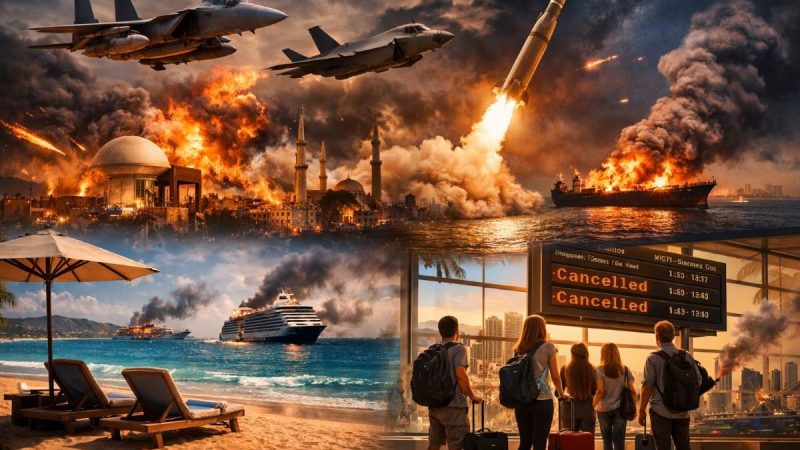
A conflict thousands of miles away is quietly reshaping how the world moves, eats, and travels — and the effects are landing hard on airlines, shipping companies, farmers, and tourists all at once.
The escalating Middle East war in 2026 has set off a chain reaction that extends far beyond the region itself. What began as an energy price shock has rapidly expanded into a full-spectrum economic disruption, touching aviation fuel costs, global shipping routes, agricultural supply chains, and the luxury travel market simultaneously.
For anyone planning to fly, ship goods, or book a high-end vacation this year, the consequences are already visible — and analysts warn the situation is still evolving.
How One Regional Conflict Became a Global Economic Crisis
The crisis did not unfold in a single moment. It began with energy price spikes — the kind that follow any major conflict in the Middle East, a region that sits at the center of global oil supply. But this time, the disruption did not stop there.
The Strait of Hormuz and the Suez Canal — two of the most critical maritime corridors on the planet — have experienced a near-collapse in normal operations. These are not minor shipping lanes. Together, they handle an enormous share of the world’s seaborne trade, including oil, consumer goods, and agricultural inputs. With those corridors severely disrupted, vessels have been forced to reroute around the Cape of Good Hope, adding thousands of miles, days of transit time, and significant cost to nearly every major shipping route.
That logistical friction is not staying contained to the shipping industry. It is feeding directly into agriculture, where fertilizer supply shortages and rising input prices are now threatening global food security. The ripple effects are widening with each passing week.
Flight Cancellations and the Jet Fuel Crisis Hitting Aviation Hard
For the aviation sector, the impact has been particularly severe. The initial energy price surge translated almost immediately into a dramatic rise in jet fuel costs — one of the largest operating expenses any airline carries. When fuel prices spike sharply and suddenly, carriers face an impossible choice: absorb the losses, raise ticket prices, or cancel routes altogether.
Many have chosen a combination of all three. Flight cancellations have become a defining feature of the current disruption, with routes that pass through or near the Middle East most directly affected. Hub airports that serve as major connection points for international travel are experiencing significant operational strain.
The rewriting of aviation economics is not a short-term adjustment. If jet fuel costs remain elevated and regional airspace remains restricted or unstable, airlines will be forced to restructure their networks in ways that affect travelers far outside the conflict zone.
| Sector | Primary Disruption | Knock-On Effect |
|---|---|---|
| Aviation | Severe jet fuel cost surge | Flight cancellations, route restructuring |
| Maritime Shipping | Near-collapse of Strait of Hormuz and Suez Canal corridors | Mass rerouting around Cape of Good Hope |
| Agriculture | Fertilizer supply shortages and rising input prices | Threat to global food security |
| Tourism and Luxury Travel | Hub disruptions and shifting global travel patterns | Dramatic cooling of luxury spending |
Why Luxury Tourism Is Taking a Disproportionate Hit
The tourism and luxury travel markets are experiencing what observers are calling a dramatic cooling effect. This is partly about safety perceptions — affluent travelers tend to reroute away from regions perceived as unstable, even when the actual risk to their specific destination is low. But it is also about access.
When major aviation hubs are disrupted and flight options shrink, premium travel becomes harder to execute even for those willing to spend. The combination of hub disruptions and a broader shift in global travel patterns is deterring exactly the kind of high-spending tourists that luxury destinations depend on.
Resorts, high-end hospitality operators, and travel agencies catering to affluent clients are all feeling the pressure. A market that had been recovering strongly from earlier global disruptions is now facing a new headwind at a particularly difficult moment.
What Happens Next as the Conflict Continues Into 2026
The situation remains fluid, and the interconnected nature of the disruption is what makes it particularly difficult to resolve quickly. Even if conditions in one sector improve, the cascading effects across shipping, energy, agriculture, and aviation mean that stabilization will take time to work through the system.
For travelers, the near-term picture involves continued uncertainty around flight availability, elevated ticket prices driven by fuel costs, and the possibility of further route cancellations if the conflict intensifies. Booking flexibility and travel insurance have rarely been more relevant considerations.
For the shipping and agricultural sectors, the rerouting of vessels around the Cape of Good Hope will continue to add cost and delay to global supply chains for as long as the primary corridors remain compromised. Food price pressures tied to fertilizer shortages are unlikely to ease quickly.
The luxury tourism market faces a longer recovery timeline. Restoring traveler confidence in affected regions typically takes months or years after a major conflict, even when physical access is restored. Destinations that relied on Middle East hub connectivity or on affluent travelers from the region itself are likely to feel the impact well beyond the immediate crisis period.
Frequently Asked Questions
Why are flights being cancelled due to the Middle East conflict?
The conflict has caused a severe surge in jet fuel costs, which are a major airline operating expense, forcing carriers to cancel routes or restructure their networks to manage financial losses.
What are the Strait of Hormuz and Suez Canal, and why do they matter?
These are two of the world’s most critical maritime shipping corridors. Their near-collapse due to the conflict has forced ships to reroute around the Cape of Good Hope, significantly increasing shipping times and costs globally.
How is the conflict affecting food prices?
Maritime disruptions have created fertilizer supply shortages and rising agricultural input prices, which analysts warn are now threatening global food security.
Why is luxury tourism specifically affected?
Hub disruptions are reducing flight options for premium travelers, and a broader shift in global travel patterns is deterring affluent spenders from affected regions, causing a dramatic cooling of the luxury tourism market.
Will flight prices go up because of this crisis?
Elevated jet fuel costs driven by the conflict are a direct pressure on ticket pricing, and airlines facing route cancellations and restructuring are likely to pass some of those costs on to passengers.
How long could these disruptions last?



Leave a Reply