
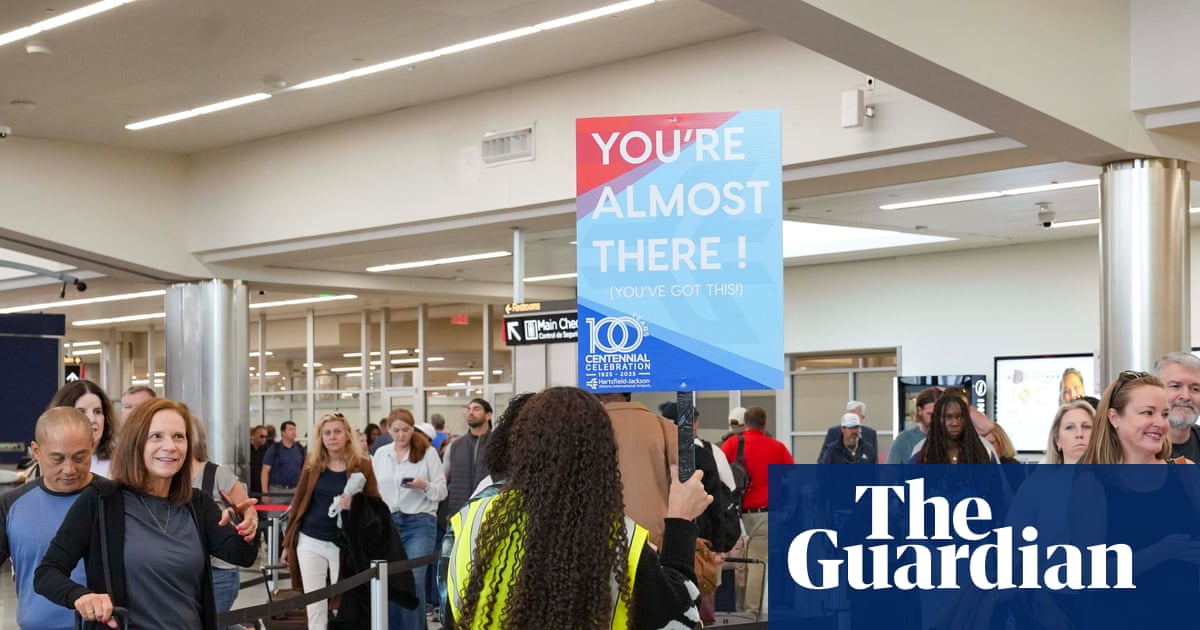
Passengers flying through the world’s busiest airport are being told to arrive up to four hours before their scheduled departure — and even that may not be enough. Atlanta’s Hartsfield-Jackson International Airport is in the middle of a serious security screening crisis, one that has prompted an unusual federal response and left travelers facing some of the longest TSA wait times on record.
The U.S. government deployed Immigration and Customs Enforcement agents to Hartsfield-Jackson in an attempt to ease the pressure on overwhelmed TSA checkpoints. It was an unconventional move, and by most accounts, it hasn’t solved the problem. Hours-long queues persisted despite the intervention, and the airport’s own TSA wait time tracking system was temporarily taken offline — raising questions about how the situation got this bad, and what it means for millions of travelers passing through Atlanta every year.
If you’re flying through Atlanta anytime soon, here’s what you need to know.
What’s Actually Happening at Hartsfield-Jackson
Hartsfield-Jackson holds the title of the world’s busiest airport by passenger volume. That distinction comes with enormous logistical demands on every system operating inside it — including security screening. When those systems strain under pressure, the effects ripple out fast and far.
According to available reporting, a significant staffing shortage at TSA checkpoints triggered the current crisis. The agency simply doesn’t have enough personnel to move passengers through screening at the pace a major hub like Atlanta requires. Lines backed up to unacceptable lengths, and travelers were left waiting for hours before even reaching a checkpoint.
In response, the federal government made the decision to deploy ICE agents to the airport to provide support. The move was intended to relieve some of the operational burden. But the results have been described as underwhelming — ICE agents were able to offer only limited assistance, and the core throughput problem at TSA checkpoints remained largely unresolved.
The TSA Staffing Shortage Behind the Delays
The staffing shortage driving these delays isn’t a sudden development. TSA has faced workforce challenges at major airports for years, with high turnover, demanding working conditions, and pay concerns all cited as contributing factors in broader reporting on the agency.
What makes the Atlanta situation particularly acute is the scale of the airport itself. Hartsfield-Jackson processes tens of millions of passengers annually. Even a modest reduction in screening staff can translate into massive bottlenecks when passenger volumes remain high. There is little margin for error at an airport operating at that level of traffic.
The decision to pull in ICE personnel — an agency whose core mandate is immigration enforcement, not airport security screening — underscores how stretched the situation became. It also highlights the limited options available to federal authorities when TSA staffing falls critically short at a major hub.
Key Facts About the Atlanta Airport Crisis
| Detail | What We Know |
|---|---|
| Airport affected | Hartsfield-Jackson International Airport, Atlanta |
| Airport status | World’s busiest airport by passenger numbers |
| Primary cause of delays | Significant TSA staffing shortage |
| Federal response | ICE agents deployed to support TSA operations |
| Outcome of deployment | Limited assistance; delays persisted |
| Recommended arrival time | Up to four hours before departure |
| Wait time tracking | Airport’s TSA wait time system temporarily disabled |
- Passengers faced hours-long queues at TSA checkpoints even after ICE deployment
- The TSA wait time tracking system was taken offline to prevent additional strain
- Officials advised arriving up to four hours early — well beyond the standard two-hour recommendation
- The federal intervention was described as producing underwhelming results
- The crisis raised broader questions about readiness and execution of emergency staffing measures
What This Means If You’re Flying Through Atlanta
For anyone with a flight booked through Hartsfield-Jackson, the practical implications are significant. A four-hour pre-departure window is not a casual suggestion — it reflects a genuine risk of missing your flight if you arrive at the standard two-hour mark. At a hub this size, that’s not a minor inconvenience. It’s a real threat to your travel plans.
The temporary disabling of the airport’s TSA wait time tracking system makes the situation harder to navigate in real time. Normally, travelers can check estimated wait times and adjust their arrival accordingly. With that tool offline, there’s less visibility into what conditions actually look like at any given checkpoint — meaning the safest strategy is simply to build in as much extra time as possible.
Travelers with connecting flights face an added layer of risk. If an inbound flight arrives on time but security lines are running hours long, passengers could still miss their connections. Anyone with tight layovers at Hartsfield-Jackson should contact their airline directly to understand their options.
Officials have noted that the situation reflects the limits of improvised solutions to structural staffing problems. Deploying ICE agents to fill gaps in a TSA operation is not a long-term fix — it’s a stopgap that, in this case, didn’t fully close the gap it was meant to address.
What Comes Next for Atlanta’s Airport Security
What is clear is that the current situation is unsustainable for an airport handling the volume of passengers Hartsfield-Jackson sees every day.
Critics of the federal response have argued that deploying an immigration enforcement agency to patch a transportation security staffing hole signals a deeper problem with how TSA workforce gaps are being managed. Supporters of the intervention would likely counter that some response is better than none — but the results at Atlanta suggest the approach fell short of what was needed.
Until TSA staffing levels are restored to meet demand, travelers should expect conditions at Hartsfield-Jackson to remain unpredictable. Monitoring official airport communications and airline updates before heading to the terminal is strongly advisable.
Frequently Asked Questions
Why are TSA wait times so long at Atlanta’s airport right now?
A significant staffing shortage at TSA checkpoints has caused severe delays at Hartsfield-Jackson International Airport, resulting in hours-long queues for passengers.
Why were ICE agents deployed to Atlanta’s airport?
The U.S. government deployed Immigration and Customs Enforcement agents to support TSA operations and help address the staffing shortage driving the delays.
Did the ICE deployment fix the problem?
No. Despite the federal intervention, passengers continued to experience long wait times, and the deployment was described as producing limited and underwhelming results.
How early should I arrive at Hartsfield-Jackson right now?
Passengers have been advised to arrive up to four hours before their scheduled departure time to account for the extended security lines.
Why was the TSA wait time tracking system turned off?
The airport’s TSA wait time tracking system was temporarily disabled to prevent further strain on the system during the crisis.
Is there a confirmed timeline for when delays will improve?
This has not yet been confirmed in available reporting. Travelers should monitor official airport and airline communications for updates before their flights.




Leave a Reply