
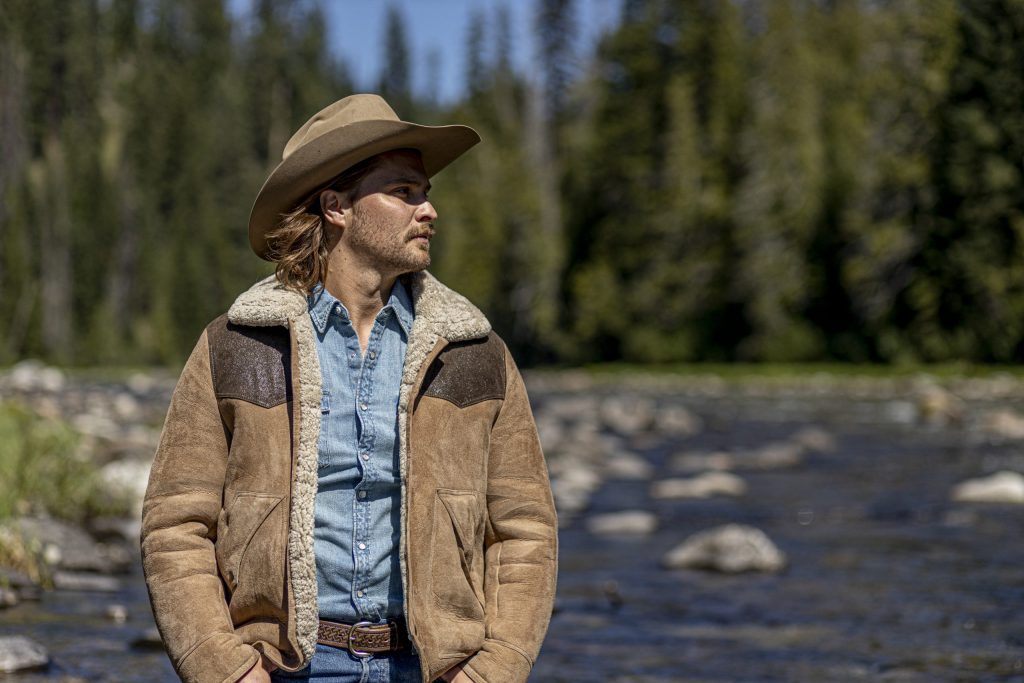
The conventional narrative about bears and rural businesses holds that conflict is inevitable — that wildlife and commerce cannot share the same address for long. The story of a small-town diner near Montana’s Beartooth Mountains, and a black bear locals called Bruno, challenges that assumption in ways that turned into a national conversation almost overnight.
According to a widely shared Facebook account of the incident, a small-town diner went viral after a long, unspoken agreement with a local bear suddenly collapsed. For years, the previous owners had quietly maintained what neighbors described as a mutual understanding with Bruno — the bear kept his distance from the building’s interior, and the diner kept operating without incident. That arrangement, however, did not survive the transition to new ownership or, apparently, to Bruno’s own evolving appetites.
How a Bear Became a Local Institution
In small communities tucked at the base of the Beartooth Mountains — a range that straddles the Montana-Wyoming border and feeds some of the most rugged terrain in the lower 48 states — bears are not strangers to main street. According to XL Country’s reporting on towns in the region, these communities carry a distinct identity built around outdoor adventure and small-town character, where wildlife encounters are embedded into daily rhythms rather than treated as crises.
Bruno, by multiple local accounts, had lived peacefully in and around the community for years without incident. Residents described him not as a nuisance, but as a fixture — a bear who seemed to understand, on some level, where the boundaries were. Whether that understanding was the result of learned behavior, the previous diner owners’ quiet management practices, or simple chance is a question wildlife observers say is genuinely difficult to answer.
Author Kevin Grange, whose new book Grizzly Confidential examines North America’s bear populations in depth, writes about the paradox of human-bear proximity in his prologue. As Mountain Journal’s coverage of the book notes, Grange explores how familiarity between bears and human communities can develop over time — and how easily that familiarity can become complicated when conditions shift.
The Day the Agreement Ended
Details about what specifically triggered the breakdown remain partial, drawn largely from social media accounts and community posts rather than official documentation. What the record does show is that Bruno eventually entered the diner — not as a passing curiosity at the threshold, but as an uninvited guest helping himself to whatever was available inside. The incident was enough to go viral.
A parallel event reported around the same time involved a local couple who got what was described as “quite the surprise” when an unwanted four-legged guest broke into their home and made himself at home, according to community accounts circulating on social media. Whether this was Bruno or a different bear has not been confirmed in available reporting.
The viral spread of the diner story prompted a wave of responses from people who had their own experiences with wildlife crossing the line from background presence to active participant in human spaces. The Instagram reel referencing the incident accumulated significant engagement, with commenters split between those who found dark humor in the situation and those mourning what felt like an avoidable outcome.
A Town in Mourning — and a Broader Question
Community members in the Montana town confirmed that Bruno is no longer present. The town is mourning him, according to posts from residents who described feeling genuine grief over the loss of a bear they had watched from a comfortable distance for years. That grief reflects something real about the psychology of small-town wildlife coexistence: when an animal is known by name, its death carries a weight that statistics about bear management rarely capture.
This dynamic — communities absorbing conflict silently until it becomes unmanageable — is a pattern wildlife researchers have documented across Montana, Wyoming, and Idaho for decades. The Beartooth Mountains corridor in particular sees regular bear activity due to its proximity to Yellowstone’s broader ecosystem, which supports one of the densest concentrations of both black bears and grizzlies in the contiguous United States.
What the Diner Story Reveals About Rural Bear Management
The viral nature of the Bruno story points to a gap between how wildlife management is discussed in policy circles and how it is experienced by the people living it. Montana Fish, Wildlife and Parks manages bear conflicts across the state, operating under protocols that prioritize non-lethal deterrence when possible — but those protocols depend heavily on whether an animal has already crossed into food-conditioned behavior.
The diner situation, whatever its specific sequence of events, illustrates the fine line that communities near bear habitat walk constantly. Informal tolerance of a bear’s presence — even benign, long-established tolerance — can create conditions that eventually lead to the outcome everyone was hoping to avoid.
Kevin Grange’s Grizzly Confidential addresses this cycle directly, arguing that genuine appreciation for bears requires confronting the discomfort of what happens when coexistence breaks down. Mountain Journal’s review of the book notes that Grange came to his subject through personal immersion in bear country — the kind of firsthand experience that shapes a different understanding than policy documents alone can provide.
For the Montana community mourning Bruno, that distinction between policy and personal experience is not abstract. It is the gap between a bear management statistic and the name of an animal a town watched for years, gave a name to, and then lost — not to wilderness, but to a situation that felt, to many residents, entirely preventable.
As of this reporting, the diner’s current operational status following the incident has not been independently confirmed. The viral social media posts that brought the story national attention remain the primary public record of events.
Related: Tourists Pay 4x More for Breakfast in Landour — 5 Local Spots Where Chai Is ₹15 and Meals Under ₹50

Leave a Reply