
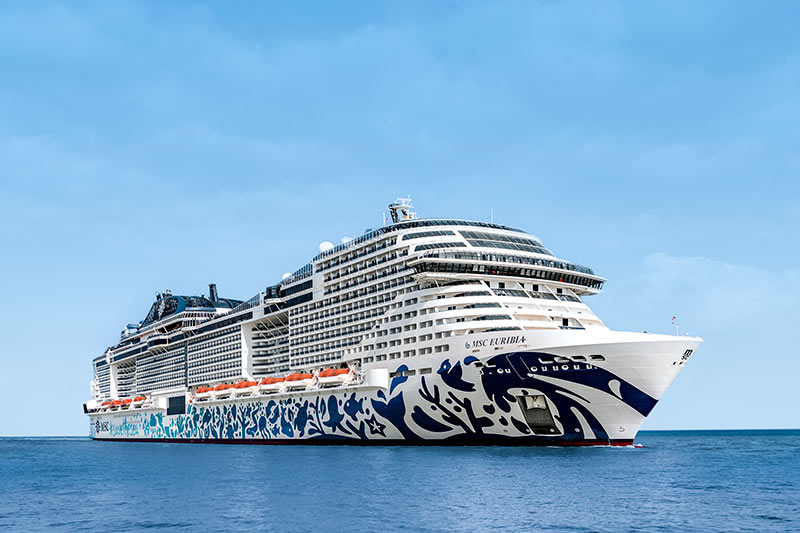
Here’s a claim that cuts against the grain of cruise industry marketing: a ceasefire doesn’t actually fix anything. MSC Cruises proved that in early April 2026, when it cancelled MSC Euribia’s first scheduled European sailing despite a two-week ceasefire being agreed in the region. The ship was still stuck. The season was already broken.
The cruise industry has spent years positioning the Middle East as a glamorous winter playground. Dubai, Abu Dhabi, the glittering ports of the Gulf. But the 2026 season is exposing just how fragile that positioning really is.
The Kiel Departure That Never Happened: MSC Euribia’s May 2 Cancellation
MSC Euribia was supposed to depart from Kiel, Germany, on May 2, 2026. That voyage marked the ship’s first European sailing of the summer season, a significant milestone for one of the fleet’s flagship vessels. It didn’t happen.
The reason is straightforward and frustrating in equal measure. MSC Euribia was delayed in Dubai due to ongoing regional disruptions in the Middle East. With the ship unable to reposition in time, the Kiel departure was withdrawn from the schedule entirely.
MSC Euribia is no ordinary vessel. It is LNG-powered, making it one of the most environmentally advanced ships in commercial cruise service. LNG propulsion reduces sulfur oxide emissions by up to 99% compared to conventional marine fuel. The ship was designed to lead MSC’s sustainability narrative into European waters. Instead, it became a symbol of geopolitical exposure.
| Ship | Affected Season | Cancelled/Redirected | Original Home Port |
|---|---|---|---|
| MSC Euribia | Summer 2026 | First European sailing cancelled | Kiel, Germany |
| MSC World Europa | Winter 2026-27 | Entire Middle East season cancelled | Dubai, UAE |
The World Europa situation is even more dramatic. MSC’s largest ship in the region had an entire season planned, running from November 2026 through March 2027, sailing from Dubai and Abu Dhabi to ports across the Gulf. That season has been cancelled wholesale. The ship is being redeployed elsewhere.
Why a Two-Week Ceasefire Wasn’t Enough to Save the Season
Travel media initially reported the ceasefire as potential good news for cruise operations in the region. The logic seemed reasonable. A pause in hostilities means safer transit corridors, calmer ports, resumed itineraries.
But cruise operations don’t run on two-week windows. They run on months of advance planning, port agreements, fuel logistics, and passenger bookings. A ceasefire that arrives after a ship has already missed its repositioning window changes nothing operationally.
“With the ship still in the Middle East, the first European voyage must be cancelled.”
— Cruise Hive, reporting on MSC Euribia’s situation
That single sentence captures the operational reality perfectly. Geography and timing conspired against MSC regardless of diplomatic developments. The ship couldn’t teleport from the Gulf to the Baltic in time to honor a May 2 departure.
This is the part the travel industry rarely discusses openly. Cruise lines make deployment decisions 12 to 18 months in advance. When a region destabilizes within that window, the options are limited: delay, cancel, or redeploy. MSC chose a combination of all three.
MSC World Europa’s Entire 2026-27 Middle East Season: A Fleet-Level Rethink
The scale of the cancellation involving MSC World Europa deserves more attention than it has received. This isn’t a single sailing. It’s an entire season, spanning roughly five months of itineraries from the Gulf.
World Europa is among the largest cruise ships on the planet. Deploying a vessel of that size to any region represents a massive commercial commitment. Port fees, fuel contracts, shore excursion partnerships, marketing spend, and passenger deposits all flow from that deployment decision. Cancelling the whole season doesn’t just affect passengers. It sends a signal to the entire Gulf cruise ecosystem.
Dubai and Abu Dhabi have invested heavily in cruise infrastructure over the past decade. Dubai’s Mina Rashid terminal and Abu Dhabi’s Zayed Port have both expanded capacity to attract the world’s largest ships. Losing a full season from a vessel like World Europa is a significant blow to that infrastructure investment.
The redeployment of World Europa, while not fully detailed in official announcements, signals that MSC sees more reliable returns elsewhere for the 2026-27 winter period. Mediterranean repositioning, Caribbean deployment, or other markets will absorb the capacity. But the Gulf loses a marquee ship and the associated passenger spending.
What This Means for Passengers and the Broader Cruise Market in 2026
For passengers booked on affected sailings, the immediate concern is practical. Rebooking, refunds, and travel insurance claims become the priority. MSC has a track record of offering alternatives when cancellations occur, but the specifics depend on individual booking terms.
The broader market implication is more interesting. MSC Cruises is the world’s largest cruise line by fleet capacity as of 2023. When it makes a deployment pivot of this scale, other lines pay attention. Royal Caribbean, Norwegian, and Costa all operate or have operated in the Gulf region. None of them will ignore what MSC is signaling.
The Middle East cruise market had been growing steadily before the current disruptions. Dubai alone handled over 900,000 cruise passengers in the 2022-23 season, according to port authority data. A sustained pullback by major lines would reverse years of infrastructure investment and tourism growth in the region.
European cruise passengers planning summer 2026 sailings face a different kind of uncertainty. MSC Euribia’s delayed arrival in European waters creates a capacity gap on northern European itineraries. Ships are not interchangeable. Euribia was assigned specific ports, specific dates, specific shore excursion packages. Substituting another vessel, if possible at all, means renegotiating everything.
The Forward Picture: Can the Gulf Cruise Market Recover by 2027?
The honest answer is: it depends on factors no cruise line controls. Regional stability, transit corridor safety, and diplomatic progress will determine whether the Gulf bounces back as a cruise destination within the next 12 to 24 months.
The infrastructure argument for recovery is strong. Dubai and Abu Dhabi have spent billions building world-class port facilities specifically to attract mega-ships. That investment doesn’t disappear. The moment conditions stabilize sufficiently, cruise lines have every commercial incentive to return.
The passenger appetite argument is more complicated. Travelers who booked Gulf cruises and faced cancellations may hesitate to rebook the same region. Trust, once broken by a cancelled vacation, takes time to rebuild. The cruise industry learned this during the pandemic. Recovery happened, but it took longer than optimists predicted.
MSC’s decision to cancel World Europa’s entire season rather than wait and see is itself a data point. The line clearly assessed the risk-reward calculation and concluded that five months of uncertainty wasn’t worth holding the deployment. That’s a conservative, passenger-protecting choice. It’s also a clear-eyed admission that the region remains unpredictable.
For MSC Euribia specifically, the summer 2026 European season will be shorter than planned. The ship will eventually arrive in European waters and begin its itineraries. But the Kiel departure on May 2 is gone. Early-season passengers on those routes have lost their sailings, and the ripple effects on port schedules will take weeks to sort out.
The cruise industry has always sold certainty as part of its product. Fixed dates, fixed ports, fixed experiences. What 2026 is demonstrating, with uncomfortable clarity, is that the world doesn’t honor cruise brochures. Geopolitics has no booking deadline, and no cancellation policy.

Leave a Reply