
▶ Read transcript
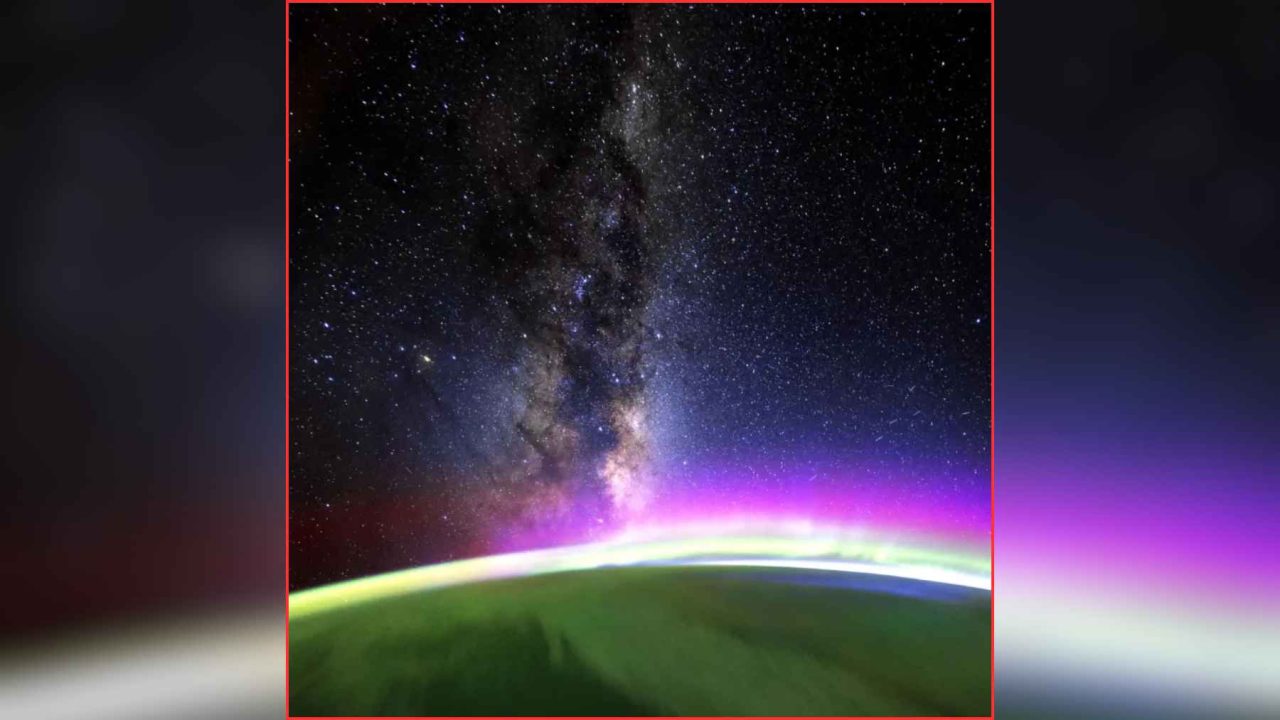
Here’s what you need to know about a fascinating debate sparked by NASA astronaut Don Pettit’s photography from space. Pettit returned to Earth on April 19, 2025, after spending 220 days aboard the International Space Station with Expedition 72, completing over 3,500 orbits. During that time, he created stunning images of physics experiments in microgravity, like charged water droplets looping around a Teflon knitting needle, that look more like abstract paintings than scientific documentation. This has ignited a real debate. Scientists argue these photos are valuable data capturing real physical phenomena, while artists and curators point out that Pettit makes deliberate choices about lighting, composition, and contrast that elevate them beyond mere documentation. The consensus? Both sides are right. The images serve science and art simultaneously. The takeaway here is simple: don’t let labels limit how you engage with knowledge. Sometimes the most powerful science communication happens when it moves you emotionally.
A charged water droplet floats in the void, looping lazily around a Teflon knitting needle while a camera shutter clicks. The resulting photograph looks like a glowing blue jellyfish suspended in ink. NASA astronaut Don Pettit took that image aboard the International Space Station, and when it circulated online, thousands of people assumed it was digital art.
Pettit returned to Earth on April 19, 2025, after a 220-day stay with Expedition 72. He brought back a portfolio of images that ignited a quiet but persistent argument in both the scientific and artistic communities. The question is deceptively simple: when an astronaut photographs a physics demonstration in microgravity and the result looks like a painting from another dimension, what exactly are we looking at?
The Divide Between Documentation and Aesthetic Vision
On one side stand scientists and engineers who view Pettit’s images as valuable documentation. On the other stand artists, curators, and cultural commentators who argue the photographs transcend their scientific origins. The tension isn’t new. It echoes debates about nature photography, medical imaging, and even the Hubble telescope’s color-enhanced nebula portraits.
But Pettit’s work sharpens the argument. He doesn’t just point a camera out the window. He designs small experiments using whatever materials are available, a practice he calls “science of opportunity.” Then he photographs the results with deliberate compositional choices. The intent is dual. The outcome is contested.
| Dimension | Science Documentation | Artistic Expression |
|---|---|---|
| Primary Goal | Record physical phenomena | Evoke emotion and wonder |
| Composition | Functional, repeatable framing | Deliberate aesthetic choices |
| Audience | Researchers, engineers, students | General public, gallery visitors |
| Value Metric | Data accuracy and reproducibility | Cultural impact and beauty |
| Context | Published in journals and reports | Shared on social media, exhibited |
Why Physicists Say the Camera Is Just Another Instrument
The case for treating Pettit’s photographs as pure science is straightforward. Every image corresponds to an observable physical phenomenon. The charged water droplets looping around that Teflon knitting needle demonstrate electrostatic effects in microgravity. The behavior is real. The camera merely captures what a human eye would see.
Researchers point out that Pettit’s “science of opportunity” approach has genuine experimental value. When an astronaut notices unexpected fluid behavior and grabs a camera, that image becomes data. It can inform future experiment design. It can reveal phenomena that formal experiments, constrained by pre-planned protocols, might miss entirely.
The ISS itself is a laboratory first. During Pettit’s mission, astronauts patched NICER, an X-ray telescope that studies neutron stars, after sunlight interference corrupted its data collection. They collected microbial samples from the station’s exterior for the ISS External Microorganisms investigation. These are serious scientific endeavors. Pettit’s photography, from this perspective, belongs in the same category: tools serving knowledge.
“Science of opportunity means quick experiments and observations done with tools and time available in microgravity.”
— Don Pettit, NASA Astronaut
Supporters of the science-first interpretation also note that calling these images “art” risks trivializing their content. If a photograph of electrostatic water behavior gets framed and hung in a gallery, does the public remember the physics? Or do they remember a pretty picture? The concern is that aestheticization strips the educational power from the image.
Why Curators and Photographers See Something Deeper
The counterargument is equally compelling. Art historians and photographers point out that Pettit makes conscious decisions about lighting, exposure, and composition. He selects which experiments to photograph and which angles to use. These are creative choices, not automatic documentation.
Consider the knitting needle photograph again. Pettit could have taken a clinical, evenly lit shot with a ruler for scale. Instead, the image uses dramatic contrast and negative space. The water droplet’s trajectory becomes a luminous arc against darkness. The visual language borrows from abstract expressionism, whether or not that was the conscious intent.
There’s historical precedent. NASA’s own Hubble Space Telescope images are color-enhanced composites that bear little resemblance to what a human eye would perceive. Yet they’re displayed in museums worldwide and have shaped popular culture’s visual imagination of the cosmos. Nobody argues the Hubble images aren’t science. But nobody denies they’re also art.
You’re a NASA mission planner allocating crew time for the next ISS expedition. An astronaut requests two hours per week for improvised photography experiments using available materials. Other teams want that time for scheduled research.
Photography critics further argue that the ISS environment itself functions as a kind of studio. Microgravity is the medium. The station’s unique conditions produce visual results impossible anywhere on Earth. When Pettit exploits those conditions for aesthetic effect, he’s doing what any artist does: working with his environment to create something new.
What 220 Days of Orbital Photography Actually Produced
Setting aside the philosophical debate, the raw output of Pettit’s mission tells its own story. Over 220 days and 3,520 orbits covering approximately 93.3 million miles, Pettit generated a substantial body of photographic work. Some images document hardware. Some capture Earth from above. And some fall into the contested middle ground.
The station’s infrastructure upgrades during recent years provided new visual subjects. NASA’s roll-out solar array technology, first tested on the station in 2017, expanded to six IROSA arrays by 2023. Those arrays boosted power for research and operations by 20 to 30%. For a photographer like Pettit, new hardware means new geometries, new reflections, and new interplay between engineered surfaces and sunlight.
The scientific experiments Pettit documented also varied widely. The charged water droplet demonstrations were informal, improvised with available materials. The NICER telescope repair and external microorganism sampling were formal, scheduled activities. Pettit’s camera captured both categories, and the visual distinction between them is often impossible for a lay viewer to detect.
This ambiguity is precisely what fuels the debate. When you can’t tell whether an image was planned by mission control or improvised by a curious astronaut with a knitting needle, the boundary between science and art dissolves.
The Case That Both Camps Are Right, and Wrong
The most defensible position acknowledges that the dichotomy itself is flawed. Pettit’s photographs are simultaneously scientific records and aesthetic objects. Insisting on one category excludes the other, and neither exclusion serves the public interest.
Science communication research consistently shows that emotionally engaging imagery increases public understanding and retention. A beautiful photograph of electrostatic water behavior will reach more people, and teach more people, than a technical diagram ever could. Dismissing the aesthetic dimension doesn’t protect the science. It limits its audience.
At the same time, treating the images purely as art erases their scientific context. A gallery visitor who sees a glowing droplet and thinks “beautiful” but never learns about electrostatics has gained something, but not everything the image can offer. The ideal presentation includes both the wonder and the explanation.
Pettit himself seems to understand this intuitively. His “science of opportunity” philosophy treats curiosity as the starting point and documentation as the natural next step. The camera isn’t separate from the experiment. It’s part of it.
What Pettit’s Legacy Means for Future ISS Missions
As the International Space Station approaches the end of its operational life, expected sometime in the early 2030s, the role of astronaut-photographers will only grow more significant. Every image taken now becomes part of the historical record of humanity’s longest continuous presence in space.
Future commercial stations will likely have different priorities and different aesthetic sensibilities. The scientific experiments will continue, but the culture of improvisation that produced Pettit’s most striking images may not survive the transition to privately operated platforms with tighter schedules and more commercial pressures.
The debate over Pettit’s photographs also foreshadows larger questions about AI-generated imagery, augmented reality, and the future of visual evidence. If a photograph can be both data and art, both objective record and subjective interpretation, then the categories we use to organize visual culture need updating.
Pettit completed 3,520 orbits in 220 days. He traveled 93.3 million miles. He photographed charged water dancing around a knitting needle. Whether that makes him a scientist with a camera or an artist with a laboratory may be the wrong question entirely. The more interesting one is this: what would you see if you had 220 days to look?



Leave a Reply