
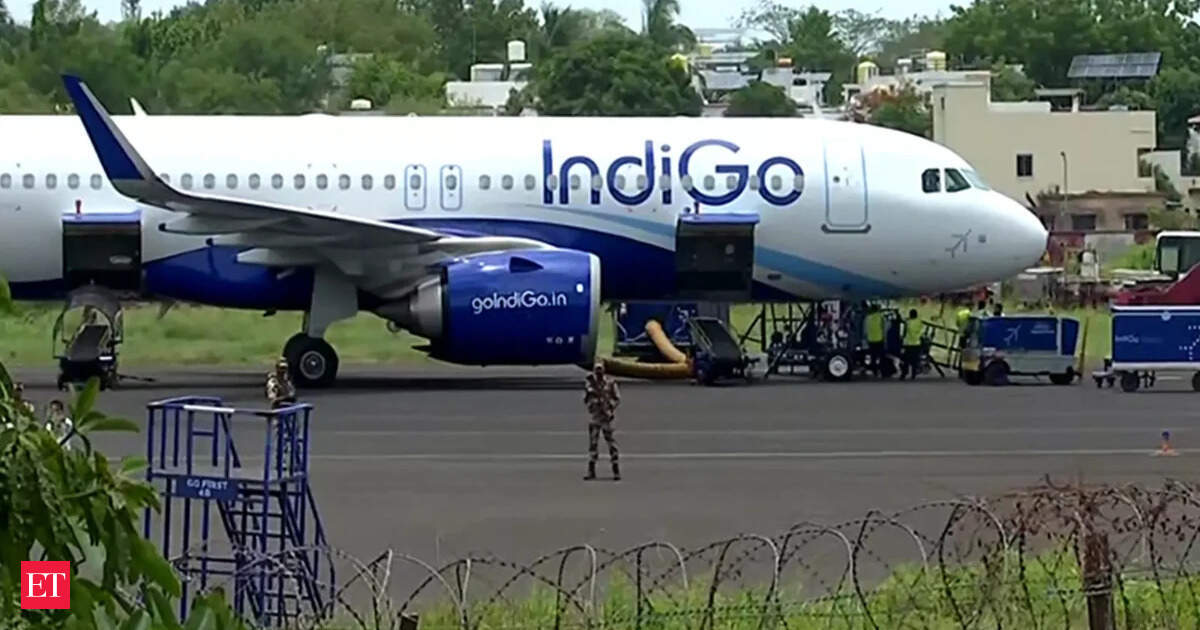
Thirty new routes. Forty-six destinations. One airport that hasn’t even been open a year yet. Navi Mumbai International Airport is moving fast — and if you live anywhere in the Mumbai Metropolitan Region, that matters directly to you.
The airport has released its first-ever summer schedule, running from March 29 to October 24, 2026, and the numbers are genuinely striking for a greenfield facility still in its early operational phase. The expansion is being positioned as a direct response to surging travel demand from one of India’s most densely populated urban corridors.
For millions of travelers who have long relied on Chhatrapati Shivaji Maharaj International Airport — one of the busiest and most congested airports in the country — this new schedule represents something they’ve been waiting for: a real alternative with direct access to dozens of Indian cities.
(function(){var wrp=document.getElementById(“paap_stat_69ca756fb94ac3.03988352”);if(!wrp)return;var ids=[“paap_stat_69ca756fb94ac3.03988352_c0″,”paap_stat_69ca756fb94ac3.03988352_c1”];var dur=1800;function ease(t){return 1-Math.pow(1-t,3);}function anim(){ids.forEach(function(id){var el=document.getElementById(id);if(!el)return;var tgt=parseFloat(el.getAttribute(“data-target”))||0;var pfx=el.getAttribute(“data-prefix”)||””;var sfx=el.getAttribute(“data-suffix”)||””;var dec=parseInt(el.getAttribute(“data-decimals”))||0;var st=null;function step(ts){if(!st)st=ts;var p=Math.min((ts-st)/dur,1);var v=ease(p)*tgt;el.textContent=pfx+v.toFixed(dec)+sfx;if(p<1)requestAnimationFrame(step);}requestAnimationFrame(step);});}if("IntersectionObserver" in window){var obs=new IntersectionObserver(function(e){e.forEach(function(en){if(en.isIntersecting){anim();obs.disconnect();}});},{threshold:0.2});obs.observe(wrp);}else{anim();}})();
What Navi Mumbai International Airport Is Actually Launching
The summer schedule covers 46 domestic destinations across India, with 30 of those routes being entirely new. That’s not a minor adjustment — that’s building a network largely from scratch in a single seasonal schedule.
The destinations span a wide range of travel purposes. Commercial hubs like Delhi, Bengaluru, Hyderabad, Kolkata, and Cochin are included, giving business travelers direct options without the cross-city commute to the older airport. But the schedule also serves tourism and pilgrimage travelers, with cities like Goa, Varanasi, Lucknow, and Indore all part of the new connectivity map.
That mix is deliberate. Airport planners appear to be targeting the full spectrum of Indian air travelers — not just the corporate flyer, but also the family heading to a wedding in Lucknow or a religious visit to Varanasi. Serving all those needs from day one signals serious ambitions for the facility’s role in India’s aviation landscape.
The Routes and Destinations: What’s in the Schedule
Here’s a breakdown of the key confirmed destinations included in the Navi Mumbai International Airport summer 2026 schedule:
| Destination | Category |
|---|---|
| Delhi | Commercial Hub |
| Bengaluru | Commercial Hub |
| Hyderabad | Commercial Hub |
| Kolkata | Commercial Hub |
| Cochin | Commercial Hub |
| Goa | Tourism Hotspot |
| Varanasi | Religious Centre |
| Lucknow | Regional Hub |
| Indore | Regional Hub |
The full list of 46 destinations extends well beyond these confirmed names, covering a broad geographic spread across India’s north, south, east, and west. The 30 new routes indicate that the majority of this network is being built fresh rather than inherited from any earlier limited operation.
Why This Expansion Matters for Travelers in the Mumbai Region
Mumbai has long had an airport capacity problem. Chhatrapati Shivaji Maharaj International Airport handles enormous passenger volumes and has faced persistent criticism for congestion, delays, and the sheer logistical challenge of getting there from many parts of the city — let alone from Navi Mumbai, Thane, or the wider MMR.
For residents of Navi Mumbai and surrounding areas, the distance to the existing airport has always been a practical burden. A journey that might take 20 minutes by road under ideal conditions can stretch to well over an hour in traffic, effectively adding hours to any trip.
NMIA changes that equation entirely for a significant portion of the region’s population. Passengers who live or work on the eastern side of the metropolitan area now have a far more accessible departure point — and with 46 destinations available from day one of the summer schedule, they won’t be sacrificing connectivity for convenience.
The inclusion of both major metros and smaller regional cities also matters. Not every traveler is heading to Delhi or Bengaluru. Connecting cities like Indore, Lucknow, and Varanasi directly from NMIA means travelers with roots or business ties in smaller Indian cities won’t need to route through another hub.
What Happens as the Summer Schedule Unfolds
The schedule is now active, with the effective start date of March 29, 2026 already in play. The window runs through to October 24, 2026 — a nearly seven-month operational period that will serve as a genuine stress test for the airport’s infrastructure, ground operations, and airline partnerships.
How airlines perform across these 30 new routes during the summer season will likely influence how the network evolves for the winter schedule and beyond. Strong passenger uptake on leisure routes like Goa could push carriers to increase frequencies. Solid business travel demand on the Delhi and Bengaluru corridors may accelerate the addition of premium cabin options.
For NMIA, the summer of 2026 is essentially the airport’s public debut as a functioning, multi-destination hub. The decisions made — and the passenger response generated — during this window will shape the facility’s long-term position in India’s aviation market for years to come.
Frequently Asked Questions
When does the Navi Mumbai International Airport summer schedule begin and end?
The schedule runs from March 29, 2026 to October 24, 2026.
How many destinations will NMIA serve under the new summer schedule?
The airport will connect to 46 domestic destinations across India.
How many of the routes are completely new?
30 of the routes in the summer schedule are new additions to the network.
Which major cities are included in the new schedule?
Confirmed destinations include Delhi, Bengaluru, Hyderabad, Kolkata, Cochin, Goa, Varanasi, Lucknow, and Indore, among others.
What types of destinations does the schedule cover?
The network spans commercial hubs, tourism hotspots, and religious centres, catering to a broad range of travel purposes.
Will international routes be part of this schedule?
The summer 2026 schedule as announced focuses on domestic connectivity; international route details have not been confirmed in the current schedule announcement.

Leave a Reply