
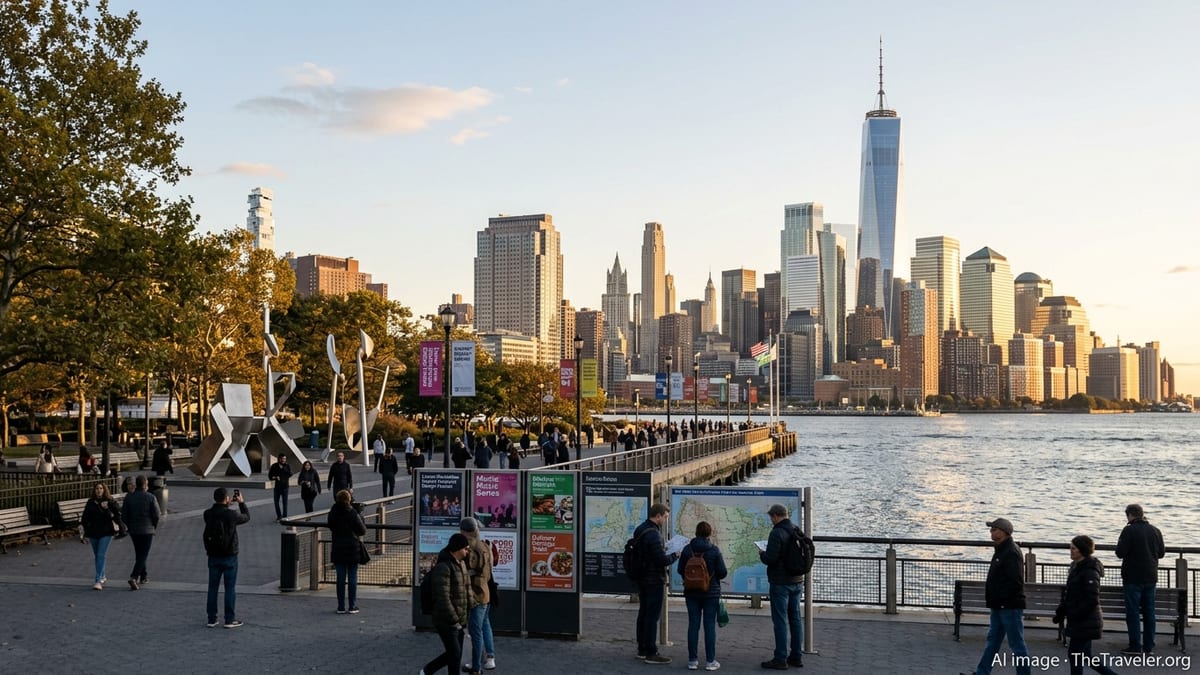
New York City is doubling down on cultural travel — and the strategy goes well beyond the Statue of Liberty and Times Square. City officials are expanding tourism grant programmes specifically designed to fund festivals, heritage experiences, and neighbourhood-level cultural events, with the goal of attracting more global visitors and keeping them engaged longer once they arrive.
The shift reflects a broader rethinking of what a trip to New York should look like. Rather than funnelling tourists toward the same handful of iconic landmarks, the city wants visitors to move through cultural neighbourhoods, attend local festivals, and connect with the heritage that makes each part of the city distinct. Officials believe this approach will not only improve the visitor experience but also spread tourism spending more evenly across the five boroughs.
For anyone planning a trip to New York — or working in the travel and hospitality industry — this expansion signals a meaningful change in how the city positions itself on the global tourism stage.
What New York’s Tourism Grant Expansion Actually Involves
The core of the updated strategy is increased financial support directed at festivals and public cultural events. Organisers across New York will have better access to funding, which is expected to result in a wider variety of events throughout the calendar year — not just during peak summer months.
The emphasis on year-round activity is deliberate. One of the persistent challenges for any major tourist destination is seasonal concentration, where visitors cluster into a few busy months and leave the rest of the year comparatively quiet. By funding cultural programming across all seasons, the city is working to smooth out that pattern and give visitors more reasons to come in spring, autumn, and winter.
Heritage travel is also a named priority. This means supporting experiences tied to the distinct cultural histories of New York’s many communities — from immigrant heritage in Queens and Brooklyn to arts traditions in Harlem and beyond. The idea is to make cultural identity a draw in itself, not just a backdrop.
Why This Matters for Global Visitors and the Travel Industry
New York is consistently ranked among the most visited cities in the world. That status brings enormous economic benefits, but it also creates pressure to manage tourism in ways that serve both visitors and residents. Simply attracting more people is no longer enough — the quality and depth of the experience has become a competitive factor.
Officials have noted that travellers increasingly seek authentic, locally rooted experiences rather than purely transactional sightseeing. The grant expansion responds directly to that shift. When festivals and cultural events receive stronger institutional backing, they become more reliable, better produced, and more visible to international audiences planning their itineraries months in advance.
For the travel industry — tour operators, hotels, airlines, and experience providers — a more robust cultural calendar in New York creates new packaging opportunities and gives agents something genuinely fresh to sell to repeat visitors who feel they have already seen the city’s greatest hits.
A Closer Look at the Strategy’s Key Priorities
Based on what has been reported about the grant expansion, the strategy targets several interconnected goals:
- Festival funding: Increased grants for public cultural events and festivals across New York City’s neighbourhoods
- Heritage travel development: Support for experiences tied to the cultural and historical identity of New York’s diverse communities
- Year-round tourism activity: Programming designed to draw visitors outside of peak travel seasons
- Neighbourhood-level engagement: Moving visitor activity beyond the most-visited landmarks and into culturally rich local areas
- Global visitor experience improvement: Raising the overall quality and depth of what international tourists encounter in New York
| Focus Area | Goal | Expected Outcome |
|---|---|---|
| Festival & Event Funding | Increase financial support for organisers | More events, better production, wider variety |
| Heritage Travel | Highlight neighbourhood cultural identities | Deeper visitor engagement beyond landmarks |
| Year-Round Programming | Reduce seasonal tourism concentration | Steadier visitor numbers across all months |
| Global Visitor Experience | Improve quality of cultural offerings | Higher satisfaction and longer stays |
Who Stands to Benefit — and How
The most direct beneficiaries are the cultural organisations, festival producers, and community groups that have historically struggled to secure consistent funding. With stronger grant access, these groups can plan further ahead, invest in better programming, and build the kind of reputation that attracts international attention.
Local businesses in culturally rich neighbourhoods also stand to gain. When tourists venture beyond Midtown Manhattan into areas like Flushing, the South Bronx, or Red Hook, they spend money at local restaurants, shops, and venues — economic activity that rarely shows up in the headline visitor statistics but matters enormously to residents.
For travellers themselves, the practical benefit is a richer, more varied city to explore. A New York trip planned around a neighbourhood food festival, a heritage walking tour, or a community arts event is a fundamentally different — and often more memorable — experience than one organised purely around the standard tourist circuit.
Supporters of the programme argue that this kind of investment pays for itself over time. Visitors who have deeply positive cultural experiences are more likely to return and more likely to recommend the destination to others, generating long-term tourism value that extends well beyond a single trip.
What Comes Next for New York Tourism
The expansion of these grant programmes represents an ongoing strategic shift rather than a single announcement. As funding reaches more organisers and cultural events grow in number and quality, the effects are expected to build gradually across the tourism calendar.
Officials have framed this as part of a longer-term effort to reshape how global tourists think about New York — positioning the city not just as a place to see famous things, but as a living cultural destination with something new to offer on every visit. Whether that ambition translates into measurable visitor growth will become clearer as the programmes take effect.
For now, the direction is set: New York is investing in culture as infrastructure, treating festivals and heritage experiences as seriously as it treats any other major tourism asset.
Frequently Asked Questions
What is the New York tourism grant expansion?
It is an expansion of grant programmes designed to fund festivals, heritage travel experiences, and public cultural events across New York City, with the aim of attracting more global visitors and improving the quality of their experience.
Who can receive funding through these grants?
The grants are directed at cultural event organisers and festival producers across New York City’s neighbourhoods, though specific eligibility details have not been confirmed in available reporting.
Will this affect tourism outside of peak summer months?
Yes — a stated goal of the strategy is to encourage year-round tourism activity by funding cultural programming across all seasons, reducing the city’s reliance on summer visitor peaks.
How does this change the experience for international visitors?
Officials intend for tourists to engage more deeply with cultural neighbourhoods, festivals, and heritage sites rather than focusing solely on iconic landmarks, creating a broader and more varied experience of the city.
Does this programme cover all five boroughs?
The strategy is described as city-wide, with an emphasis on neighbourhood-level cultural engagement, though specific borough-by-borough funding breakdowns have not been confirmed in
When will the effects of this expansion be visible?
This has not been confirmed with a specific timeline, but the initiative is described as an ongoing strategic shift expected to build gradually as funding reaches more organisations and events.



Leave a Reply