
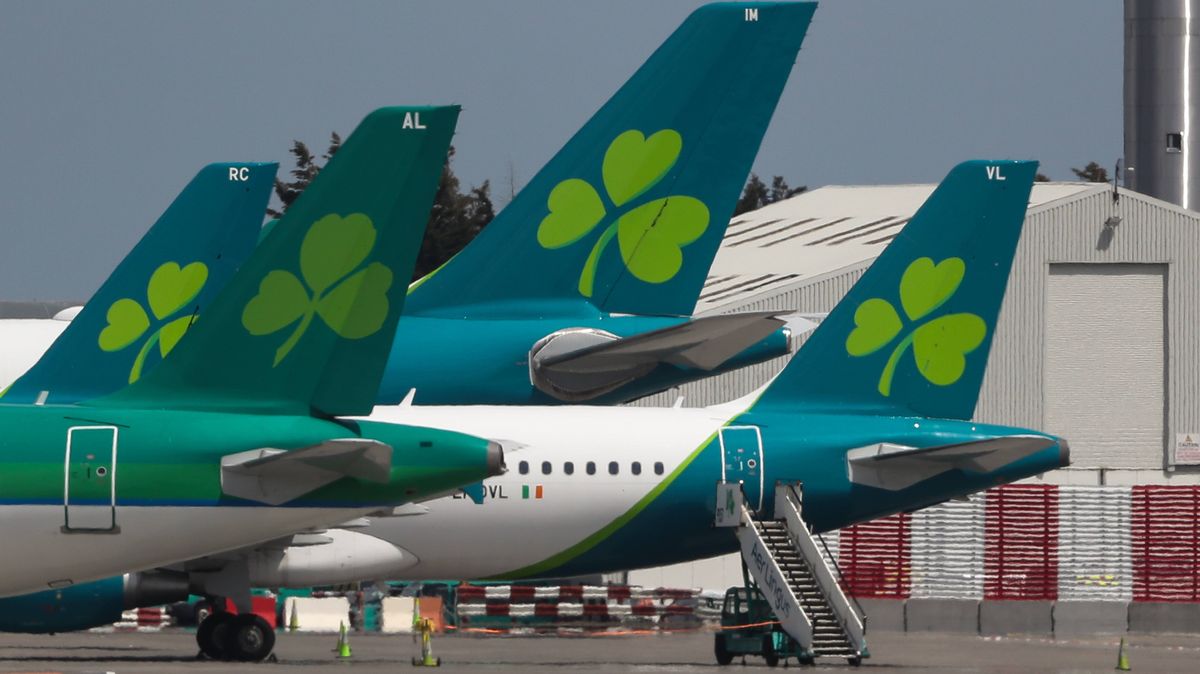
▶ Read transcript
Here’s what you need to know about the new Aer Lingus direct flight between Dublin and Raleigh-Durham, North Carolina. For the first time ever, travelers in the Tar Heel State can fly straight to Ireland without a single layover. No more connecting through New York, Boston, or Charlotte. This route is part of a bigger Aer Lingus expansion for summer 2026, which includes at least seven new routes across North America and Europe. What makes Raleigh-Durham especially well-suited for this connection is the Research Triangle, home to Duke, UNC Chapel Hill, and NC State, creating steady demand from business travelers, academics, and students. Aviation experts also note that new direct routes tend to grow travel demand, not just redirect it, so expect tourism numbers in both directions to climb. Your takeaway: if you’re in North Carolina and planning a trip to Ireland, start watching Aer Lingus for summer 2026 fare announcements now.
Only about 1.9 million Americans claim Irish ancestry in North Carolina. Yet until now, not a single direct flight connected the Tar Heel State to the Emerald Isle. That gap is about to close.
Aer Lingus has announced a new direct route between Dublin and Raleigh-Durham International Airport, marking the first time these two cities will be linked without a layover. It is a small line on a route map, but for the people on both sides of the Atlantic, it changes everything.
Why Raleigh-Durham Is the Right City at the Right Moment
Raleigh-Durham is not a sleepy regional airport. The Research Triangle, which anchors the metro area, is home to Duke University, the University of North Carolina at Chapel Hill, and North Carolina State University. That cluster of world-class institutions generates a constant stream of academic exchange, conference travel, and student mobility.
The region has also become one of the fastest-growing technology and life-sciences hubs in the United States. Companies relocating from the Northeast and West Coast have brought thousands of internationally mobile professionals with them. Those workers travel. They attend global summits, visit overseas partners, and take international vacations.
Ireland, for its part, has deep commercial ties to the United States. Dublin serves as the European headquarters for dozens of American multinationals, from pharmaceutical giants to tech firms. A direct link between Dublin and Raleigh-Durham is not just a tourism play; it is a business corridor waiting to be formalized.
Aer Lingus’s Broader Summer 2026 Expansion
The Dublin–Raleigh-Durham route is part of a sweeping expansion Aer Lingus has announced for summer 2026. The airline is adding at least seven new routes across North America and Europe, signaling a confident bet on post-pandemic travel demand.
From Dublin Airport, new services will connect to Oslo in Norway, Montpellier in southern France, and Asturias in northern Spain. Aer Lingus Regional, operated by Emerald Airlines, will add routes to Tours and Inverness. Cork Airport gains two new routes: one to Nice on the French Riviera, and another to the historic Spanish pilgrimage city of Santiago de Compostela.
| New Route | Departure Airport | Region Served |
|---|---|---|
| Dublin – Raleigh-Durham | Dublin | North Carolina, USA |
| Dublin – Oslo | Dublin | Norway |
| Dublin – Montpellier | Dublin | Southern France |
| Dublin – Asturias | Dublin | Northern Spain |
| Cork – Nice | Cork | French Riviera |
| Cork – Santiago de Compostela | Cork | Northwestern Spain |
The scale of this expansion suggests Aer Lingus is positioning itself as a primary bridge between Ireland and both the Americas and continental Europe. The Raleigh-Durham route, however, stands out. It is the only new transatlantic addition in the announcement, and it targets a market that major carriers have largely overlooked.
“The continued growth of…” connections like Raleigh-Durham reflects the airline’s commitment to opening new transatlantic corridors where demand has quietly been building for years.
— Aer Lingus leadership, via The Sun Ireland
What a Direct Flight Actually Does to Tourism Numbers
Aviation economists have a term for it: the route-creation effect. When a direct flight appears between two cities, demand does not simply shift from connecting routes. It expands. New travelers who previously considered the journey too inconvenient suddenly book.
Ireland has seen this play out repeatedly. When new transatlantic routes opened to smaller U.S. cities, inbound tourism from those metro areas climbed sharply in the following two to three years. North Carolina travelers who once connected through Charlotte, New York, or Boston to reach Dublin will now board a single plane.
The reverse flow matters equally. Irish tourists exploring America tend to cluster around New York, Boston, and Chicago, cities with large Irish diaspora communities and established visitor infrastructure. Raleigh-Durham offers something different: the Blue Ridge Mountains, the Outer Banks barrier islands, a thriving food and craft-beer scene, and a temperate climate that is gentler than the Northeast.
Students, Researchers, and the Academic Travel Dividend
One underreported dimension of this route is student travel. Ireland has become a popular study-abroad destination for American undergraduates, particularly those at large research universities. The Research Triangle sends hundreds of students to European programs each year.
Previously, a student at UNC Chapel Hill flying to Dublin for a semester abroad faced a connection in New York, Boston, or London. That added hours, cost, and logistical friction. A direct flight to Dublin removes all of that.
Irish students traveling the other direction face the same calculus. Programs at Duke, NC State, and UNC attract international applicants. A direct route makes the journey less daunting and the decision to enroll more straightforward.
Academic conferences, research collaborations, and visiting faculty positions also benefit. When the flight is direct, a three-day conference becomes viable in a way that a two-connection journey never quite is.
The Quiet Power of Being First
There is a strategic dimension to this route that goes beyond seat counts and load factors. Aer Lingus is establishing itself as the carrier of record between Ireland and a major American growth market before any competitor does.
Raleigh-Durham’s population has grown faster than almost any other major metro in the eastern United States over the past decade. The airport has expanded its international footprint steadily. Airlines that establish early on a route tend to build loyalty, slot advantages, and brand recognition that are difficult to dislodge later.
For Aer Lingus, the Raleigh-Durham route fits a pattern visible across its 2026 expansion. The airline is not chasing the most obvious markets. It is identifying cities where demand is real but underserved, places where the absence of a direct flight has suppressed travel rather than reflected a lack of interest.
Oslo, Montpellier, Asturias, and Inverness follow the same logic in Europe: secondary cities with strong cultural or economic pull, connected to Dublin for the first time or with improved frequency. Raleigh-Durham is simply the transatlantic version of that strategy.
What This Means for North Carolina’s Tourism Economy
Tourism is North Carolina’s third-largest industry. The state drew tens of millions of domestic visitors in recent years, but international arrivals remain a smaller slice of the pie. A direct transatlantic route changes the calculus for inbound tourism marketing.
Visit North Carolina and regional tourism boards can now pitch Ireland and the broader European market more aggressively. Previously, the pitch was complicated by the connection requirement. Now, it is straightforward: fly direct from Dublin, land in Raleigh-Durham, and you are already in the state.
Hotels, restaurants, tour operators, and cultural venues in the Triangle stand to gain. So do destinations further afield. Travelers arriving at Raleigh-Durham often continue by car to Asheville, the Outer Banks, or the Smoky Mountains. The new route effectively puts those destinations within reach of the Irish market for the first time.
The airline seat is always the first domino. Once it falls, the rest of the tourism economy tends to follow, sometimes faster than anyone predicted.
Frequently Asked Questions

You Might Also Like
122 Flights Canceled: Lufthansa Pilot Strike Paralyzes Germany
A two-day Lufthansa pilots strike canceled 122 flights and delayed 743 more across Frankfurt, Berlin,…

Russian Travelers Are Quietly Choosing Thailand Over Europe for Medical Care
Medical tourism searches for Thailand have climbed 8% year over year — and that number…

Puerto Vallarta and Riviera Nayarit Just Signaled a Major Tourism Shift
More than 750 tourism professionals from around the world gathered on Mexico’s Pacific Coast in…
Leave a Reply