
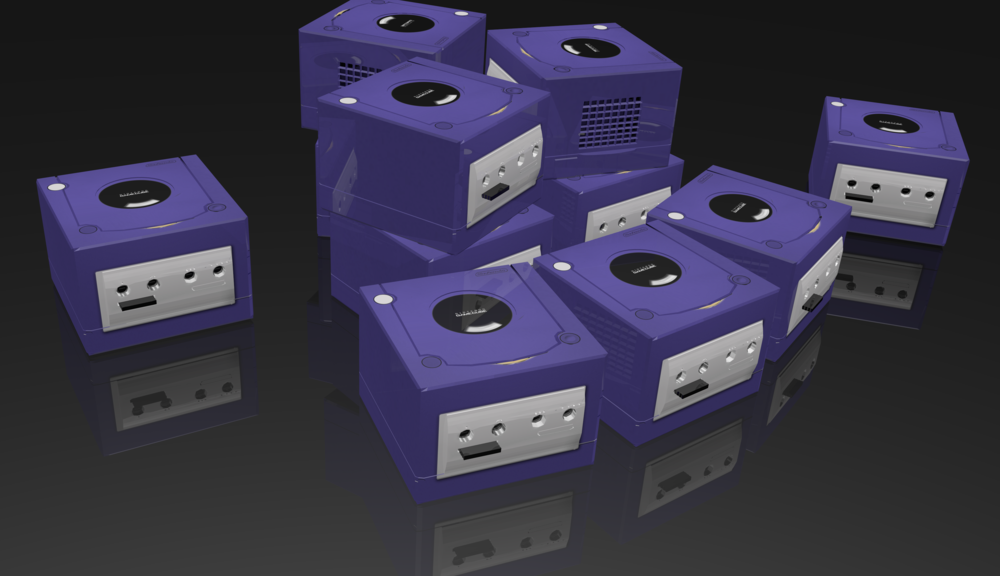
The Nintendo GameCube never won its console generation — it finished behind the PlayStation 2 and the original Xbox in sales. But ask anyone who owned one, and they’ll tell you it didn’t matter. The library it produced was unlike anything else on the market, and the influence of its best titles is still visible across gaming today.
The GameCube era gave us franchises that are still running, mechanics that were widely copied, and at least a handful of games that are routinely cited among the greatest ever made. Decades later, collectors are paying serious money for original discs, and Nintendo keeps re-releasing these titles because the demand never went away.
So which GameCube games actually mattered most — not just as fun experiences, but as genuinely important moments in gaming history? Here’s a look at the titles that defined the console and shaped what came after.
Why the GameCube’s Legacy Outlasted Its Sales Numbers
When the GameCube launched in 2001, Nintendo was playing defense. The N64 had lost ground to the PlayStation, and the GameCube needed a statement. What it got instead was a slow burn — a console that underperformed commercially but quietly built one of the most critically respected libraries in Nintendo’s history.
Part of what makes the GameCube so interesting to revisit is how many risks Nintendo took. Several major franchises tried something genuinely new on the platform. Some of those experiments became templates that the industry followed for years. Others remain one-of-a-kind experiences that have never been replicated.
That tension between commercial underperformance and creative excellence is exactly why the GameCube’s most important games deserve a closer look.
The GameCube Games That Changed Everything
Not every important game is the most technically impressive or the best-reviewed. Importance means influence — what a game did for its franchise, its genre, or the medium as a whole. By that measure, the GameCube’s roster holds up remarkably well.
- Resident Evil 4 — Arguably the most influential third-person shooter ever made, RE4 redefined the action-horror genre and introduced an over-the-shoulder camera perspective that became the industry standard. Nearly every modern action game owes something to it.
- The Legend of Zelda: The Wind Waker — Controversial at launch for its cel-shaded art style, Wind Waker is now recognized as a visual and design masterpiece. It proved that Zelda didn’t need photorealism to be extraordinary.
- Metroid Prime — Retro Studios took a beloved 2D franchise and translated it into a first-person perspective without losing a single drop of what made it special. It’s one of the most technically and artistically ambitious games of its era.
- Super Smash Bros. Melee — Released just after launch, Melee became one of the most enduring competitive games ever made. Its competitive scene is still active today, and its GameCube controller remains the preferred input device for serious players.
- Animal Crossing — The North American debut of Animal Crossing introduced an entirely new genre of relaxed, open-ended life simulation to a mainstream audience. The franchise it launched eventually became a global phenomenon with New Horizons.
- Luigi’s Mansion — A launch title that gave Mario’s brother his own spotlight and introduced a genuinely creative gameplay loop. It spawned a franchise that’s still going strong.
- Pikmin — Miyamoto’s real-time strategy experiment was unlike anything Nintendo had made before. It introduced a franchise that continues today and influenced how developers think about resource management in action games.
- The Legend of Zelda: Twilight Princess — The GameCube version of Twilight Princess (later more widely known as a Wii launch title) delivered the darker, more realistic Zelda fans had been asking for since the N64 era.
How These Titles Stack Up by Impact
| Game | Genre | Key Legacy |
|---|---|---|
| Resident Evil 4 | Action-Horror | Defined the modern third-person shooter camera |
| Super Smash Bros. Melee | Fighting | Launched one of gaming’s most enduring competitive scenes |
| Metroid Prime | First-Person Adventure | Proved 2D franchises could thrive in 3D first-person form |
| The Legend of Zelda: Wind Waker | Action-Adventure | Demonstrated cel-shading as a timeless art direction choice |
| Animal Crossing | Life Simulation | Introduced a genre that later became a mainstream phenomenon |
| Luigi’s Mansion | Action-Adventure | Launched a franchise and gave Luigi a permanent solo identity |
| Pikmin | Real-Time Strategy | Brought strategy game thinking to console action gameplay |
| Twilight Princess | Action-Adventure | Delivered the mature Zelda aesthetic fans had long requested |
What These Games Mean for Players Today
If you never owned a GameCube, you’ve almost certainly played something it influenced. Resident Evil 4 alone reshaped how developers build third-person action games — and its 2023 remake introduced it to an entirely new generation. Smash Bros. Melee is still being played competitively at major tournaments, using original GameCube hardware.
For Nintendo specifically, the GameCube era was where several of its most important modern franchises found their footing. Animal Crossing went from a niche import to one of Nintendo’s biggest properties. Metroid Prime proved the franchise could survive outside 2D. Luigi’s Mansion turned a side character into a bankable lead.
Many of these titles have been re-released on later Nintendo hardware, and the demand every time is a reminder of how deeply this library connected with players. The GameCube may have lost the sales race, but it arguably won the long game.
Where You Can Play These Games Now
Original GameCube hardware and disc-based games have become increasingly collectible, with prices reflecting how much the platform has been reassessed over time. Nintendo has made several of these titles available through its Nintendo Switch Online Expansion Pack service, and others have received full remakes or remasters.
Resident Evil 4 received a widely acclaimed full remake in 2023. Metroid Prime Remastered launched on Switch in 2023 to strong reviews. Wind Waker and Twilight Princess were remastered for Wii U, though physical copies of those versions are themselves now hard to find cheaply.
For anyone who wants to experience the originals, original GameCube hardware remains fully functional and the controller — especially for Smash Bros. — has never really been replaced.
Frequently Asked Questions
What is considered the most important Nintendo GameCube game ever made?
Resident Evil 4 is widely considered one of the most influential, having redefined the third-person action genre with its over-the-shoulder camera perspective that became an industry standard.
Is Super Smash Bros. Melee still played competitively?
Yes — Melee has one of the most enduring competitive scenes in gaming history, and tournaments using original GameCube hardware are still held regularly today.
Can you play GameCube games on Nintendo Switch?
Some GameCube titles are available through the Nintendo Switch Online Expansion Pack, and others like Metroid Prime have received dedicated remasters for the Switch platform.
Why did the GameCube underperform despite having great games?
The GameCube faced stiff competition from the PlayStation 2 and original Xbox, and factors including its miniDVD format and limited third-party support contributed to its lower sales figures despite a critically strong library.
Which GameCube games have been remade or remastered?
Notable examples include Resident Evil 4 (2023 remake), Metroid Prime Remastered (2023), and Wind Waker and Twilight Princess HD on Wii U.
Is the GameCube controller still relevant today?
Yes — particularly for Super Smash Bros. players, the GameCube controller remains the preferred input device for competitive play and Nintendo has continued producing adapters to support its use on modern hardware.

Leave a Reply