
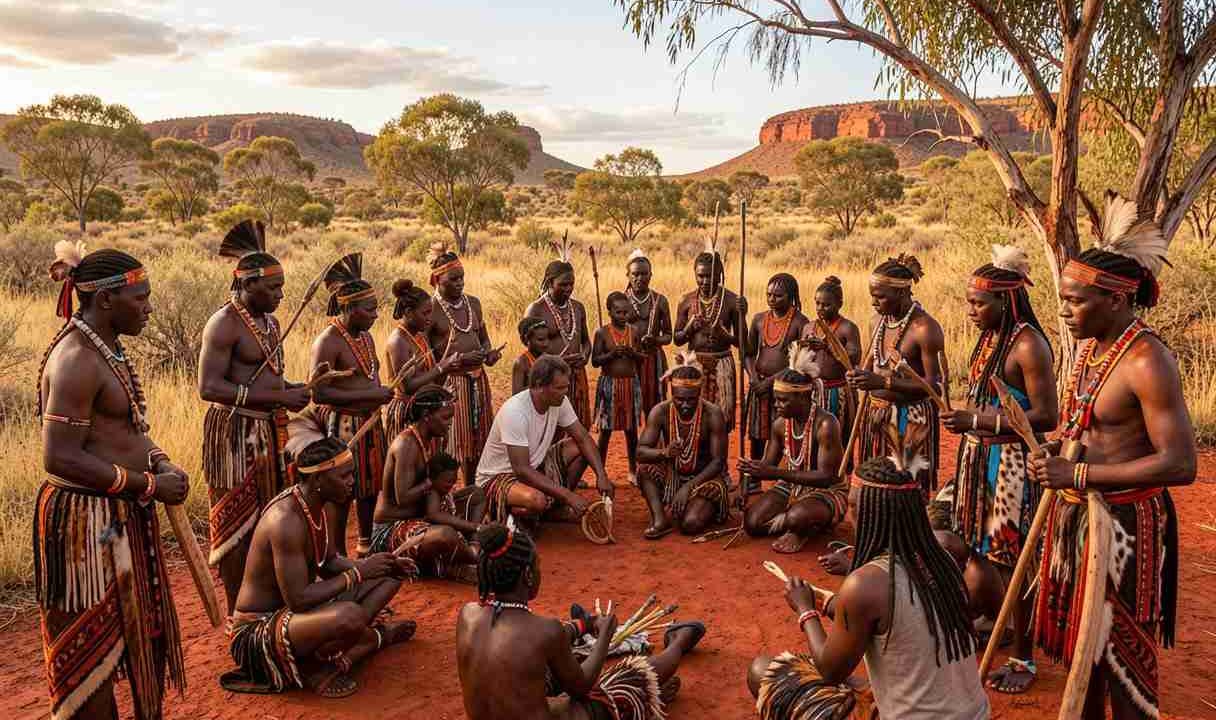
Aboriginal cultural tourism in Australia’s Northern Territory already contributes hundreds of millions of dollars to the regional economy each year and supports thousands of local jobs — and a sweeping new government framework is designed to push that figure even higher while putting Indigenous communities firmly in the driver’s seat.
The NT Aboriginal Affairs Framework 2026–2028 represents the Northern Territory Government’s most structured commitment yet to weaving Aboriginal leadership into the territory’s economic and tourism future. It builds on years of prior investment and signals a clear shift: this is no longer about showcasing Aboriginal culture for visitors — it’s about ensuring Aboriginal people own and benefit from that experience directly.
For anyone interested in cultural travel, sustainable tourism, or the evolving relationship between Indigenous communities and government policy, this development matters well beyond Australia’s borders.
What the NT Aboriginal Affairs Framework Actually Does
Before the framework’s official launch, the NT Government had already been investing heavily in Aboriginal tourism infrastructure. That groundwork — positioning Aboriginal people at the centre of the tourism sector rather than on its edges — laid the foundation for what the 2026–2028 framework is now formalising.
The framework covers the period from 2026 to 2028 and is designed to guide how the NT Government engages with Aboriginal communities across policy areas, with tourism as one of the most visible and economically significant pillars. The goal is a sustainable tourism industry that generates lasting economic benefit for Aboriginal Territorians, not just for external operators or government coffers.
Advocates argue that frameworks like this one are most effective when they move beyond consultation and into genuine co-ownership — giving communities real authority over how their culture is presented, who profits from it, and how visitor access is managed.
The Destinations Drawing Millions of Visitors Each Year
The Northern Territory’s appeal to both domestic and international travellers is anchored by a handful of world-famous locations, each carrying deep cultural and spiritual significance for Aboriginal Australians.
- Uluru — One of the most recognisable natural landmarks on earth, and a site of profound importance to the Anangu people.
- Kakadu National Park — A UNESCO World Heritage site combining extraordinary biodiversity with ancient rock art and living Aboriginal culture.
- Arnhem Land — A vast and largely restricted region that offers some of Australia’s most immersive and carefully managed cultural tourism experiences.
- Nitmiluk (Katherine Gorge) — A dramatic sandstone gorge system with deep connections to the Jawoyn people, who co-manage the national park.
Together, these destinations draw millions of visitors annually. The cultural experiences offered across these areas have long been a defining part of the NT’s identity as a travel destination — and a significant economic engine for the region.
| Destination | Cultural Significance | Tourism Status |
|---|---|---|
| Uluru | Sacred site of the Anangu people | International icon, millions of visitors annually |
| Kakadu National Park | UNESCO World Heritage, ancient rock art | Major domestic and international drawcard |
| Arnhem Land | Living Aboriginal culture, restricted access | Carefully managed, immersive cultural tourism |
| Nitmiluk (Katherine Gorge) | Jawoyn people, co-managed national park | Popular natural and cultural destination |
Why This Shift Matters for Aboriginal Communities
The economic numbers are significant, but the more important story is about who benefits. For decades, tourism built around Aboriginal culture sometimes generated revenue that flowed primarily to non-Indigenous operators and government agencies, with communities receiving limited direct economic return.
The framework’s emphasis on placing Aboriginal people at the heart of the tourism sector is a direct response to that history. Officials have noted that sustainable tourism growth in the NT depends on authentic partnerships — and authenticity, in this context, means Aboriginal communities having real agency over their participation.
This has practical consequences for travellers too. Experiences designed and led by Aboriginal community members tend to be richer, more respectful, and more genuinely educational than those managed at arm’s length. Visitors increasingly seek out that kind of depth — and are willing to pay for it.
The framework also signals a broader shift in how the NT Government approaches Aboriginal affairs overall. Rather than treating economic development and cultural preservation as competing priorities, the 2026–2028 plan treats them as inseparable — the culture is the economy, and protecting one means investing in the other.
What Comes Next Under the 2026–2028 Plan
The framework runs through 2028, meaning the next two years will be the critical test of whether its ambitions translate into measurable outcomes for Aboriginal communities. The NT Government has framed this as an active, evolving strategy rather than a static policy document.
Tourism NT and broader government agencies are expected to continue building on the foundations already laid, with Aboriginal cultural tourism remaining a priority sector. The ongoing growth of this industry will depend on how effectively the framework guides investment, supports community-led enterprises, and manages the balance between visitor access and cultural integrity.
For travellers planning a visit to the Northern Territory, the practical implication is straightforward: the experiences on offer are becoming more deeply rooted in genuine Aboriginal leadership, which means they are likely to become more meaningful — and more sought-after — over time.
Frequently Asked Questions
What is the NT Aboriginal Affairs Framework 2026–2028?
It is a Northern Territory Government strategy designed to guide engagement with Aboriginal communities across key policy areas, with a significant focus on positioning Aboriginal people at the centre of the territory’s tourism economy.
Which destinations in the Northern Territory are most connected to Aboriginal cultural tourism?
The key destinations include Uluru, Kakadu National Park, Arnhem Land, and Nitmiluk (Katherine Gorge), all of which carry deep cultural significance and draw millions of visitors annually.
How much does Aboriginal tourism contribute to the NT economy?
Aboriginal cultural tourism contributes hundreds of millions of dollars to the NT’s economy annually and supports thousands of local jobs, according to the framework’s background context.
Was the NT Government already investing in Aboriginal tourism before this framework?
Yes. Prior to the framework’s official launch, the NT Government had already made significant investments in developing Aboriginal tourism infrastructure and positioning Aboriginal people within the sector.
How long does the framework run?
The NT Aboriginal Affairs Framework covers the period from 2026 to 2028.
Does this framework affect how travellers experience Aboriginal culture in the NT?
The framework’s emphasis on Aboriginal-led tourism is expected to produce more authentic, community-controlled cultural experiences for visitors over time, though specific changes to individual visitor programs have not been detailed in the available information.




Leave a Reply