
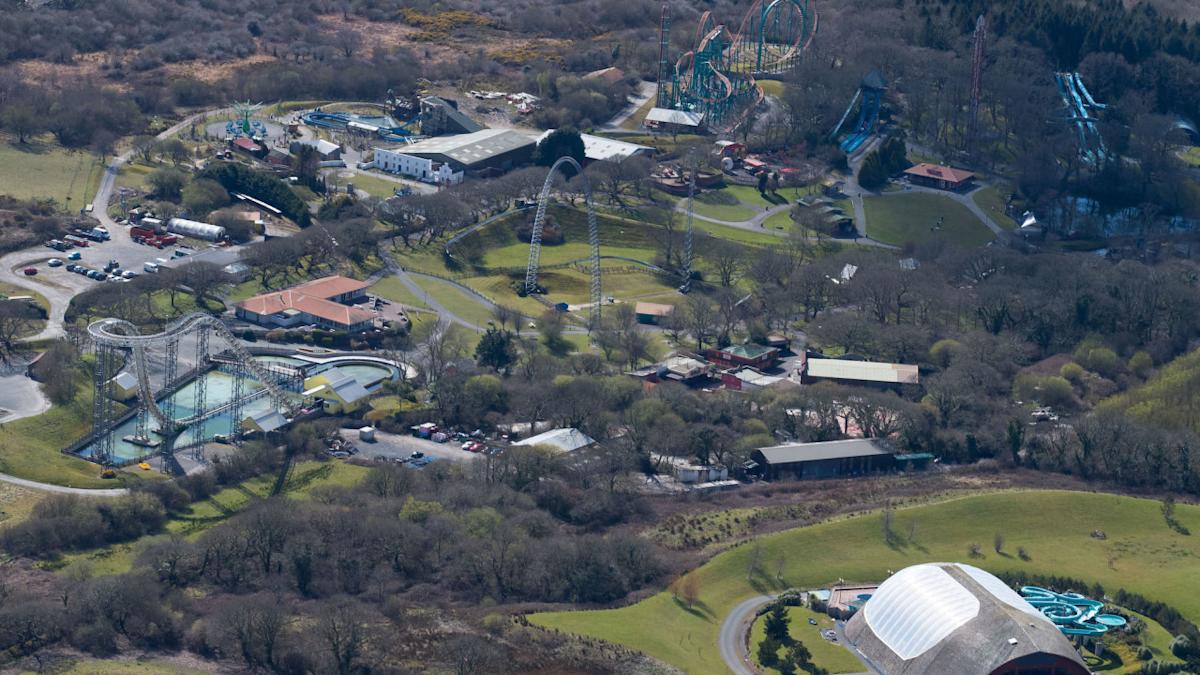
After nearly four decades of roller coasters, family days out, and summer memories, Oakwood Theme Park in Pembrokeshire has closed its gates for good. The permanent closure, which took effect in March 2025, marks the end of one of Wales’s most recognisable family attractions — and it is already reshaping how the region thinks about its tourism future.
For many Welsh families and visitors from across the UK, Oakwood was a rite of passage. Now, with the park gone, Pembrokeshire faces both a challenge and an opportunity: what comes next, and who gets to define it?
The answer, according to those watching the region closely, may have less to do with replacing Oakwood and more to do with reimagining what Welsh tourism can look like altogether.
Why Oakwood Closed After 40 Years
Oakwood’s closure did not happen overnight. The park had been struggling for years, with visitor numbers gradually declining and the costs of keeping aging rides and facilities in working order rising sharply.
The park’s owners, Aspro Parks, cited two primary factors behind the decision to shut down permanently: escalating operational costs and increased national insurance burdens. Together, these pressures made the business financially unsustainable in its existing form.
This is a story that will be familiar to anyone who has watched the UK’s leisure and entertainment sector in recent years. Running a large-scale theme park requires constant capital investment — new attractions, safety upgrades, infrastructure maintenance — and when visitor numbers dip, that investment becomes increasingly difficult to justify.
Oakwood, which had been a major draw for families seeking thrilling rides in the Pembrokeshire countryside, simply could not make the numbers work any longer.
What Oakwood’s Closure Means for Pembrokeshire Tourism
The loss of Oakwood is more than sentimental. It represents a significant gap in the region’s tourism offering, particularly for families with young children who were drawn to the park specifically for its rides and entertainment.
Pembrokeshire is already one of Wales’s most visited areas, home to a national park, dramatic coastline, and some of the most celebrated beaches in the UK. But Oakwood served a distinct purpose — it gave visitors a reason to come on days when the weather turned, or when families wanted something structured and contained rather than a coastal walk.
Without it, the question becomes whether Pembrokeshire can attract and retain the same volume of visitors, particularly from the family market.
| Factor | Detail |
|---|---|
| Years of operation | Nearly 40 years |
| Closure date | March 2025 (permanent) |
| Park owner at time of closure | Aspro Parks |
| Primary closure reasons | Escalating operational costs, increased national insurance burdens |
| Location | Pembrokeshire, Wales |
| Original appeal | Roller coasters, family rides, scenic countryside setting |
The Case for Reinventing Pembrokeshire as an Eco-Tourism Leader
Here is where the story shifts from loss to possibility. Oakwood’s closure has prompted a broader conversation about what kind of tourism Pembrokeshire should be actively building toward — and eco-tourism is emerging as the answer many are pointing to.
Pembrokeshire already has the raw ingredients. The national park, the coastal path, the wildlife, the relatively unspoiled landscapes — these are exactly the kinds of assets that draw a growing segment of travellers who are actively choosing destinations based on their environmental credentials and natural character.
Globally, eco-tourism has been one of the fastest-growing segments of the travel market. Travellers are increasingly seeking experiences that connect them to nature rather than distract from it. A theme park, by its nature, competes with the landscape around it. Eco-tourism, done well, uses the landscape as its core product.
Advocates argue that Pembrokeshire is better positioned than almost anywhere else in Wales to lead on this. The challenge is converting that natural advantage into a coherent, well-marketed offer that can fill the economic gap Oakwood leaves behind.
Who Feels This Most — and What It Could Mean for the Region
The communities closest to Oakwood are the ones most directly affected. Local businesses — accommodation providers, restaurants, and shops — that depended on the flow of visitors the park generated will need to adapt. Some of that footfall may naturally migrate toward other Pembrokeshire attractions, but there is no guarantee.
For families, particularly those who made Oakwood an annual tradition, the closure is a genuine loss. There is no direct like-for-like replacement in the region.
But the longer-term economic question is whether a pivot toward eco-tourism can generate comparable or greater value. Eco-tourism visitors tend to stay longer, spend more locally, and return more frequently than day-trippers drawn to a single attraction. If Pembrokeshire can position itself as Wales’s premier destination for nature-based travel, the economic case is a strong one.
- Pembrokeshire National Park provides a ready-made foundation for eco-tourism development
- The region’s coastline and wildlife are assets that require investment in experience, not infrastructure
- Local communities could benefit from tourism that spreads spending more evenly across the area
- A nature-focused identity could differentiate Pembrokeshire from other Welsh and UK destinations
What Happens Next for Pembrokeshire
The immediate priority for the region is addressing the gap Oakwood leaves in the family tourism market. Whether that means developing new attractions, investing in existing natural sites, or marketing Pembrokeshire’s outdoor offer more aggressively remains to be seen.
What is clear is that the closure has created a moment of genuine reckoning for Welsh tourism planners and local stakeholders. Decisions made now about how to reposition Pembrokeshire will shape what the region looks like for visitors over the next decade.
The site of the former theme park itself has not yet been confirmed for any specific future use. Whether it becomes part of the eco-tourism story — through rewilding, nature-based recreation, or something else entirely — remains an open question.
What Oakwood’s closure has done, perhaps unexpectedly, is force a conversation that needed to happen. The question is no longer whether Pembrokeshire’s tourism model needs to evolve. It is how fast, and in which direction.
Frequently Asked Questions
When did Oakwood Theme Park close permanently?
Oakwood Theme Park closed permanently in March 2025, ending nearly 40 years of operation in Pembrokeshire, Wales.
Why did Oakwood Theme Park close?
The park’s owners, Aspro Parks, cited escalating operational costs and increased national insurance burdens as the primary reasons the business became financially unsustainable.
Who owned Oakwood Theme Park at the time of its closure?
Oakwood was owned by Aspro Parks when it announced and carried out its permanent closure.
What will happen to the Oakwood site now?
A confirmed future use for the former theme park site has not yet been announced.
How might Pembrokeshire replace the tourism income Oakwood generated?
Observers and advocates are pointing toward eco-tourism as a potential growth area, given Pembrokeshire’s national park, coastline, and natural landscapes — though specific plans have not yet been confirmed.
Is Pembrokeshire still worth visiting without Oakwood?
Pembrokeshire remains home to a national park, celebrated beaches, and extensive coastal paths, making it one of Wales’s most visited regions independent of the theme park.




Leave a Reply