
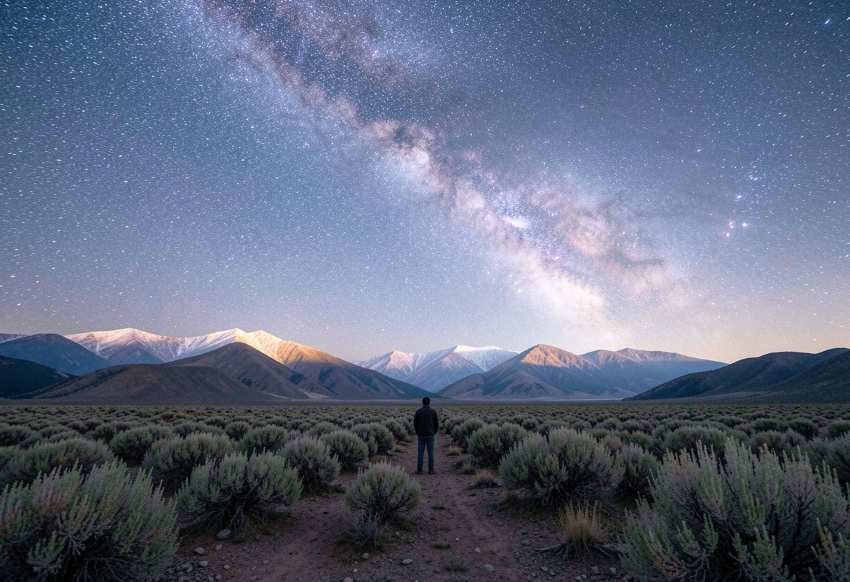
A single stretch of southeastern Oregon holds more protected dark sky than most countries will ever see. The Oregon Outback, designated as an International Dark Sky Sanctuary in March 2024, spans a staggering 2.5 million acres in Lake County — making it one of the largest certified dark sky preserves on the planet. If you have ever wanted to see the Milky Way the way it looked before electric light swallowed the night, this is where you go.
Oregon is not just home to one such place. The state has quietly assembled a collection of certified dark sky sites recognized by DarkSky International, a nonprofit organization dedicated to reducing light pollution and restoring the natural nighttime environment. Together, these locations form a kind of celestial circuit for anyone willing to drive a little and look up.
The timing matters, too. International Dark Sky Week runs from April 13 to 20, a global moment to pay attention to what the night sky actually looks like when humanity gets out of its own way. For Oregon travelers, it is a genuine invitation — not a marketing slogan.
Why Oregon Has Become a Haven for Stargazers
Light pollution is not an abstract problem. It erases the night sky from view for the majority of people living near cities, and its reach extends far into rural areas. DarkSky International estimates that a significant portion of the world’s population can no longer see the Milky Way from where they live. Oregon, particularly its eastern and southeastern regions, remains one of the rare exceptions.
The state’s geography works in its favor. The Cascade Mountains create a natural barrier that keeps coastal moisture and urban glow from bleeding into the high desert country to the east. Sparse population density in counties like Lake, Harney, and Klamath means fewer competing light sources. The result is a night sky that can genuinely stop you in your tracks.
DarkSky International certifies locations that meet strict standards for darkness, community commitment, and ongoing light management. These certifications are not handed out easily, which is why Oregon’s growing list of recognized sites represents a real achievement — and a real draw for travelers who prioritize the experience.
Oregon’s Certified Dark Sky Sites at a Glance
The Oregon Outback is the crown jewel, but it is part of a broader landscape of protected night skies across the state. Here is what the certified picture looks like based on confirmed designations:
| Location | Designation Type | Key Detail |
|---|---|---|
| Oregon Outback | International Dark Sky Sanctuary | 2.5 million acres in Lake County; designated March 2024 |
| Oregon (statewide certified sites) | Various DarkSky International certifications | Curated by DarkSky International nonprofit |
What makes the Oregon Outback designation particularly significant is its sheer scale. At 2.5 million acres, it dwarfs most certified sanctuaries in the world. A sanctuary designation, as opposed to a park or reserve classification, typically applies to remote land with minimal infrastructure — places where darkness is the point, not a side effect.
- Lake County, Oregon — home to the Oregon Outback sanctuary, one of the most remote and least light-polluted regions in the continental United States
- DarkSky International certification — the global standard for recognizing sites with genuinely dark skies and community-level commitment to protecting them
- International Dark Sky Week (April 13–20) — the annual global awareness period that draws attention to light pollution and the value of dark sky preservation
What This Means for Anyone Planning a Trip
Visiting a certified dark sky site is a different kind of travel experience. There are no rides, no queues, no ticket windows. The reward is entirely dependent on showing up at the right time and in the right conditions — and that simplicity is exactly what draws people to it.
For the Oregon Outback specifically, visitors should understand that “remote” is not an understatement. Lake County is genuinely isolated. The nearest significant services may be hours away, and the landscape is high desert: dramatic, beautiful, and unforgiving if you are unprepared. That remoteness is also precisely why the sky there is so dark.
Practically speaking, a trip to any of Oregon’s dark sky sites requires planning around the lunar calendar. A full moon will wash out even the darkest sky. New moon periods — when the moon rises after midnight or not at all — offer the best conditions for seeing the Milky Way’s core, meteor showers, and deep-sky objects with the naked eye.
What Happens Next for Oregon’s Night Sky Network
The March 2024 designation of the Oregon Outback signals that the state’s commitment to dark sky preservation is still growing. DarkSky International continues to evaluate and certify new sites globally, and Oregon’s track record makes it a likely candidate for additional recognitions in the years ahead.
International Dark Sky Week each April serves as both a public awareness moment and a catalyst for new designations and local policy changes around outdoor lighting. Communities near certified sites often adopt lighting ordinances that reduce upward light scatter — a practical step that benefits both stargazers and local wildlife.
For travelers, the practical next step is straightforward: identify which certified Oregon site fits your travel range, check the lunar calendar for the coming months, and start planning. The Oregon Outback’s April skies, coinciding with International Dark Sky Week, offer a rare alignment of timing and place that is hard to argue with.
Frequently Asked Questions
What is the Oregon Outback, and when did it receive its dark sky designation?
The Oregon Outback is a 2.5-million-acre region in Lake County, Oregon, that was designated as an International Dark Sky Sanctuary in March 2024 by DarkSky International.
What is DarkSky International?
DarkSky International is a nonprofit organization that works to reduce light pollution and restore the natural nighttime environment, and it certifies dark sky sites around the world.
When is International Dark Sky Week?
International Dark Sky Week runs from April 13 to 20 and serves as a global call to appreciate and protect the natural night sky.
What type of certification does the Oregon Outback hold?
It holds an International Dark Sky Sanctuary designation, which is typically reserved for remote lands with exceptionally dark skies and minimal human infrastructure.
Are there other certified dark sky sites in Oregon beyond the Oregon Outback?
Yes, Oregon has a collection of sites certified by DarkSky International, though the Oregon Outback is the most recently and prominently designated among them.
Do I need special equipment to visit a dark sky sanctuary?




Leave a Reply