
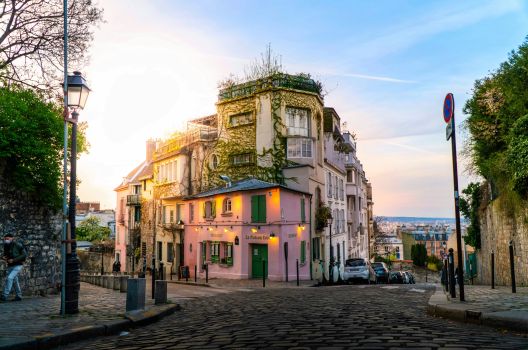
Paris is pushing back against the short-term rental boom — and if you’re planning a trip to the French capital in 2026, the way you book your accommodation may look very different from what you’re used to.
Overtourism has become one of the defining challenges facing Paris right now. As visitor numbers have surged following the pandemic, the city is grappling with a familiar but intensifying problem: how to welcome tourists without making life unliveable for the people who actually call Paris home. Short-term rental platforms like Airbnb are at the centre of that tension, and city authorities have responded with new, stricter regulations designed to limit how many short-term rental properties can operate at any given time.
The pressure has been building for years. Local communities have grown increasingly vocal about the impact of vacation rentals on their neighbourhoods — rising rents, hollowed-out apartment buildings, and a sense that entire streets are being converted into de facto hotels. Paris is now acting on those concerns in a serious way.
Why Paris Is Cracking Down on Airbnb in 2026
The core issue is one that many major European cities are wrestling with simultaneously: short-term rental platforms have expanded rapidly over the past decade, and while they offer flexible, often affordable accommodation for tourists, they’ve had a measurable effect on local housing markets.
When landlords can earn significantly more by renting to tourists on a nightly basis than by offering long-term leases to residents, the incentive to convert apartments into short-term rentals becomes hard to ignore. The result, in cities like Paris, is a shrinking supply of affordable housing for locals — and communities that start to feel less like neighbourhoods and more like tourist zones.
Paris authorities have identified short-term rental platforms as a key driver of housing affordability problems for local residents. The new restrictions introduced in 2026 are a direct response to that pressure, and they signal a broader shift in how the city intends to manage the relationship between tourism and residential life going forward.
What the New Restrictions Actually Mean for Visitors
The regulations target the supply side of the short-term rental market — specifically, the number of properties that can be listed and made available to tourists. Here’s what travellers planning a Paris visit need to understand:
- Fewer short-term rental options: The new rules are designed to reduce the overall number of Airbnb-style listings available in the city, meaning competition for remaining properties is likely to increase.
- Higher prices for short-term rentals: With supply constrained, travellers who prefer apartment-style accommodation may find prices rising as available listings become scarcer.
- Greater reliance on hotels: Visitors who previously defaulted to short-term rentals may need to factor traditional hotel accommodation back into their planning.
- Neighbourhood-level impact: The restrictions are driven in part by pushback from local communities, meaning enforcement is likely to be felt most strongly in residential areas that have seen the heaviest concentration of tourist rentals.
| Factor | Before New Restrictions | Under 2026 Regulations |
|---|---|---|
| Short-term rental supply | Rapidly expanding | Actively limited by city rules |
| Platform accountability | Limited local oversight | Stricter regulatory framework |
| Community pressure | Growing but largely unaddressed | Formally acknowledged and acted upon |
| Accommodation options for tourists | Wide range of short-term rentals | Reduced availability, higher competition |
Who Feels This Most — Residents and Tourists Alike
For Paris residents, particularly those in popular arrondissements that have seen heavy tourist traffic, these regulations represent something they’ve been calling for over an extended period. The argument from local communities has been consistent: when short-term rentals dominate a building or a street, the character of a neighbourhood changes, long-term residents are priced out, and the social fabric that makes Paris neighbourhoods worth visiting in the first place begins to erode.
Advocates for tighter regulation argue that the city’s housing stock should primarily serve the people who live and work in Paris — not function as an inventory pool for a global accommodation platform. The new rules are being framed, at least in part, as a measure to protect that principle.
For tourists, the practical consequences are real but manageable with some forward planning. Travellers who have relied on Airbnb for budget-friendly stays in central Paris may find that the listings they’re used to are no longer available, or are priced higher due to reduced supply. Booking earlier, considering hotel alternatives, or looking at accommodation options slightly outside the most tourist-dense areas may become more common strategies.
The broader context matters too. Paris is not acting in isolation — cities across Europe have been moving in a similar direction, with local governments increasingly willing to impose limits on short-term rental platforms in order to address housing concerns. Paris’s 2026 measures are part of a wider European trend rather than an outlier policy.
- Airbnb and similar platforms expanded rapidly over the past decade with limited city-level restrictions.
- Landlords could freely convert residential apartments into tourist rentals, reducing long-term housing supply.
- Local communities raised concerns about rising rents but faced little formal policy response.
- Paris has introduced strict new regulations specifically limiting the number of available short-term rental properties.
- The city is actively working to protect long-term residents from housing affordability pressures caused by vacation rentals.
- Tourists face a reduced pool of short-term rental listings and may need to plan accommodation further in advance.
What Comes Next for Paris Tourism Policy
The 2026 restrictions appear to mark a turning point rather than a one-off intervention. The pushback from local communities has been building steadily, and city authorities have now formally acknowledged that the unchecked growth of short-term rentals is incompatible with maintaining liveable, affordable neighbourhoods for residents.
Whether platforms like Airbnb will adapt their operating models in response — or whether enforcement of the new rules will prove robust enough to produce meaningful change — remains to be seen. What’s clear is that Paris has signalled a direction, and travellers planning visits in 2026 and beyond should expect the short-term rental landscape to look meaningfully different from what it was even a few years ago.
For anyone with a Paris trip on the horizon, the practical advice is straightforward: don’t assume your usual Airbnb options will be there waiting for you. Check availability early, have a hotel backup plan, and be prepared for a more competitive short-term rental market than you may have encountered on previous visits.
Frequently Asked Questions
Why is Paris restricting Airbnb and short-term rentals in 2026?
Paris has introduced new regulations in response to growing community pressure over housing affordability, with short-term rental platforms blamed for driving up rents and reducing housing availability for local residents.
Will there still be Airbnb listings available in Paris?
Some listings will remain, but the new rules are designed to limit the overall number of short-term rental properties available, meaning supply will be more restricted than in previous years.
Is Paris the only city doing this?
No — many European cities are grappling with the same overtourism and housing concerns, and Paris’s 2026 measures reflect a broader trend of local governments imposing tighter controls on short-term rental platforms.
How will this affect the cost of staying in Paris?
With fewer short-term rental listings available, prices for the remaining properties are likely to rise due to increased competition among travellers seeking that type of accommodation.
Should I book a hotel instead of an Airbnb for my Paris trip?
Given the reduced availability of short-term rentals under the new regulations, it’s worth considering hotel options as a backup — or at minimum, booking your accommodation further in advance than you might have previously.
Are these restrictions permanent?
The regulations have been introduced as a formal policy response to overtourism concerns, but whether they will be extended, tightened, or modified over time has not yet been confirmed.



Leave a Reply