
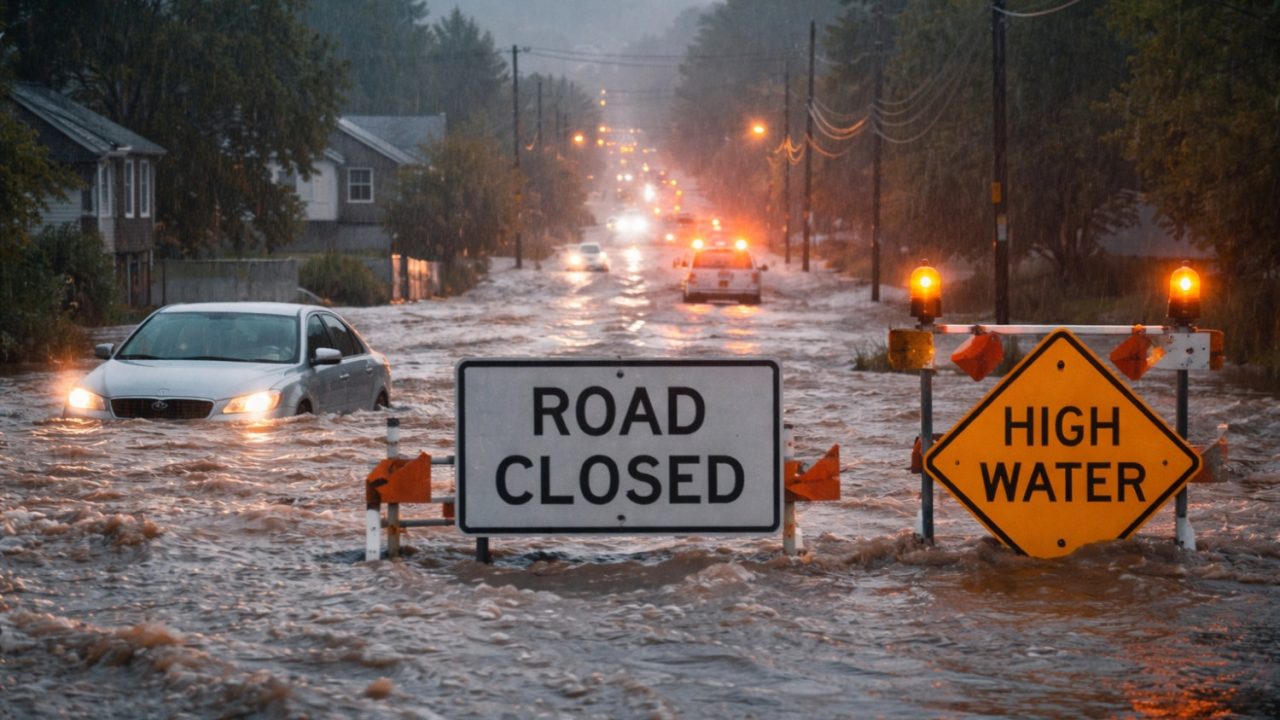
Seven Pennsylvania counties are under active flood warnings as persistent heavy rainfall pushes rivers, creeks, and streams beyond their banks — and officials are urging residents to take the threat seriously before conditions worsen.
The National Weather Service issued the flood warning covering Allegheny, Armstrong, Beaver, Fayette, Indiana, Washington, and Westmoreland counties. Flooding has already begun in several areas, and water levels across the region continue to rise as rain shows little sign of letting up.
For anyone living in or traveling through southwestern Pennsylvania right now, this is not a situation to monitor casually. The combination of saturated ground, swollen waterways, and ongoing rainfall creates conditions where flooding can escalate quickly and with very little warning.
What Is Driving the Flooding Across Pennsylvania
The immediate cause is straightforward: prolonged, heavy rainfall has overwhelmed the region’s waterways. When rain falls faster than the ground can absorb it — especially on land that is already saturated from earlier precipitation — runoff flows directly into rivers and streams, causing them to rise rapidly.
Pennsylvania’s southwestern counties are particularly vulnerable to this kind of flooding. The terrain is defined by a dense network of rivers, creeks, and tributaries, many of which run through populated valleys and low-lying communities. When those waterways overflow, the effects spread quickly into neighborhoods, roads, and farmland.
Experts note that low-lying areas near rivers and streams are always the first to flood in these conditions — and the last to drain once the rain stops. Residents in flood-prone zones should not wait for water to appear at their doorstep before acting.
The Seven Counties on Flood Watch — What You Need to Know
The flood warning spans a wide swath of southwestern Pennsylvania. Here is a breakdown of the affected counties and their general flood exposure:
| County | Key Flood Risk Factors | Status |
|---|---|---|
| Allegheny | Major river confluence, dense urban and suburban areas | Under flood warning |
| Armstrong | Kiskiminetas and Allegheny River corridors | Under flood warning |
| Beaver | Ohio River proximity, low-lying communities | Under flood warning |
| Fayette | Monongahela River watershed, rural valleys | Under flood warning |
| Indiana | Conemaugh River tributaries, rural flood plains | Under flood warning |
| Washington | Monongahela watershed, suburban communities | Under flood warning |
| Westmoreland | Youghiogheny and Loyalhanna Creek systems | Under flood warning |
Every one of these counties has communities situated near waterways that are currently at elevated risk. If you live, work, or are traveling through any of these areas, check local emergency alerts before making any movement decisions.
Who Is Most at Risk Right Now
Flooding does not affect everyone equally. Certain groups and locations face a disproportionately high level of danger during an event like this, and understanding that can make the difference between a close call and a tragedy.
Residents near rivers, creeks, and streams face the most immediate risk. These waterways are already overflowing in some areas, and water can enter homes and roads faster than it appears on any forecast map.
- Travelers and commuters are at serious risk if they attempt to cross flooded roads. Floodwater depth is almost impossible to judge visually, and even shallow moving water can sweep a vehicle off a road.
- Outdoor workers and recreationalists near waterways should cease activity immediately. River conditions during flood events are unpredictable and extremely dangerous.
- Elderly residents and people with mobility limitations in low-lying areas may need assistance evacuating and should reach out to local emergency services proactively.
- Visitors and tourists unfamiliar with the local landscape face added risk, as they may not know which roads flood first or where emergency resources are located.
Pennsylvania’s landscape — while scenic and historically rich — includes many communities built along floodplains that were developed before modern flood risk mapping existed. That history means some neighborhoods have flooded repeatedly over generations, and this event is unlikely to be an exception.
What Should Happen Next — and What to Watch For
The immediate priority for anyone in the affected area is staying informed. Flood warnings can be upgraded, expanded to new counties, or extended in duration as rainfall totals change. The National Weather Service updates its advisories regularly, and local emergency management offices issue more granular guidance for specific communities.
Here is what to watch for as the situation develops:
- Monitor the National Weather Service for any changes to the flood warning status across all seven counties.
- Follow local emergency management agencies for county-specific evacuation orders or shelter-in-place guidance.
- Avoid all unnecessary travel, particularly on roads near rivers and creeks, until warnings are lifted.
- If your home is in a flood-prone zone, move valuables to higher floors and be prepared to evacuate quickly if ordered.
- Do not re-enter flooded areas after water recedes until officials confirm it is safe — floodwater can carry contaminants, and structural damage may not be visible.
Flooding events in Pennsylvania have historically caused significant damage to infrastructure, homes, and agricultural land. The combination of geography and weather patterns in the southwestern part of the state means these situations can develop and intensify faster than many residents anticipate.
Staying alert, staying informed, and — if in doubt — moving to higher ground remains the single most effective response available to anyone in the affected counties right now.
Frequently Asked Questions
Which Pennsylvania counties are currently under a flood warning?
The National Weather Service has issued flood warnings for Allegheny, Armstrong, Beaver, Fayette, Indiana, Washington, and Westmoreland counties.
What is causing the flooding in Pennsylvania?
Persistent heavy rainfall has caused rivers, creeks, and streams to overflow, with water levels continuing to rise across the affected region.
Is it safe to drive through flooded roads in the affected counties?
No. Officials strongly advise against driving through any flooded road, as moving water can be far deeper and more powerful than it appears and can sweep vehicles away.
How long will the flood warning remain in effect?
The exact duration has not been confirmed in available information — residents should monitor National Weather Service updates for the most current warning status.
What should I do if I live near a river or creek in one of these counties?
Move valuables to higher ground, stay informed through local emergency alerts, and be prepared to evacuate quickly if local authorities issue an order.
Are travelers visiting Pennsylvania affected by this flooding?
Yes — visitors unfamiliar with local flood-prone roads and areas face added risk and should check local conditions and avoid unnecessary travel in all seven affected counties.




Leave a Reply