
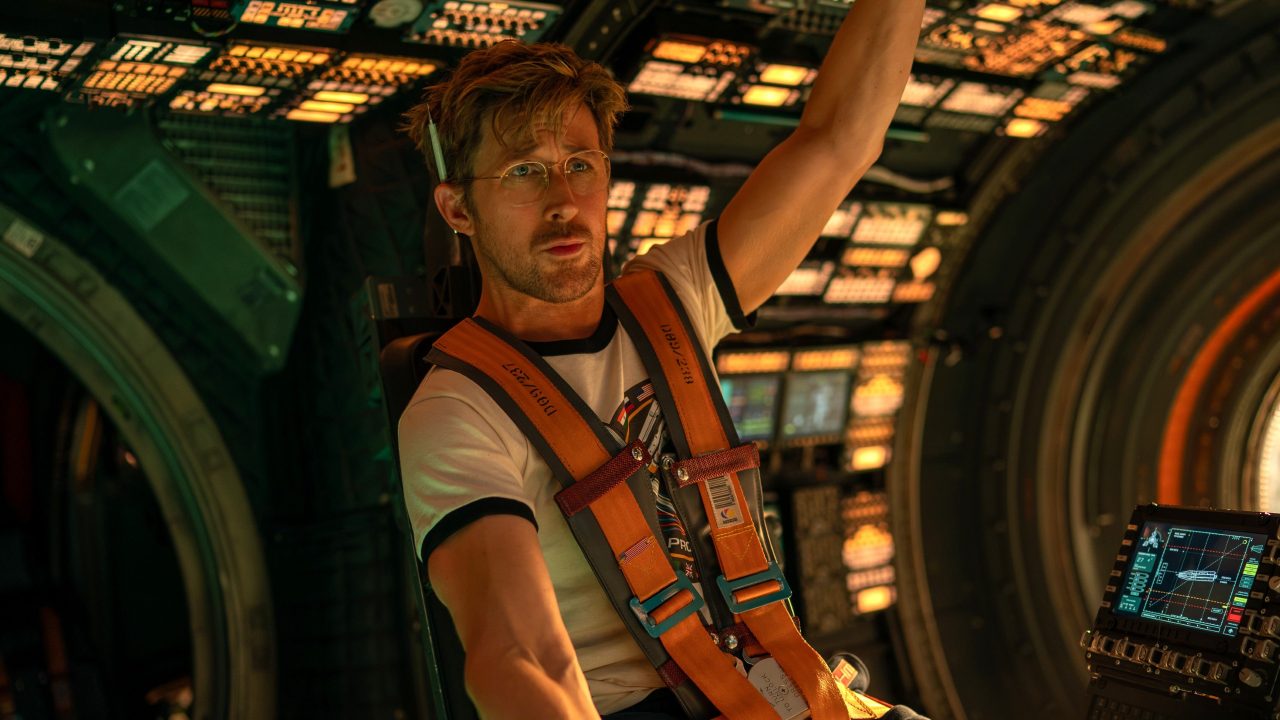
One of the most anticipated science fiction films in years is finally here, and if you’ve read Andy Weir’s beloved novel Project Hail Mary, you’re probably already wondering how faithfully the movie adaptation sticks to The answer, as with most book-to-screen journeys, is: it depends on which part of the story you’re talking about.
Adaptations always require compromise. What works on the page — internal monologue, sprawling backstory, technical exposition — doesn’t always translate cleanly to a two-hour film. The Project Hail Mary movie, starring Ryan Gosling as Ryland Grace, is no exception. Some changes are minor. Others reshape major emotional beats entirely.
Here’s what readers of Weir’s novel should know before — or after — they see the film.
Why Book-to-Film Changes Matter for Project Hail Mary
Andy Weir’s 2021 novel became an instant hit with science fiction fans, praised for its rigorous scientific detail, its warm humor, and one of the most surprisingly emotional alien-contact storylines in recent memory. The friendship between Ryland Grace and the alien Rocky sits at the heart of both the book and the film — and how the movie handles that relationship is arguably the most important creative decision the filmmakers had to make.
Weir’s book is told almost entirely through Grace’s first-person perspective, with large sections devoted to his amnesia-driven rediscovery of who he is and why he’s alone on a spacecraft hurtling toward a distant star. That structure creates natural tension on the page but presents real challenges for visual storytelling.
The film retains the core premise — Grace wakes up with no memory, pieces together his mission to save Earth from a dimming sun caused by a microorganism called Astrophage, and makes unexpected contact with an alien spacecraft — but the path it takes to get there differs in meaningful ways.
The Biggest Changes From the Book to the Screen
Based on what is known about the adaptation, several significant departures from Weir’s novel have been made. These range from structural decisions to character-level changes that alter how audiences experience the story.
- The framing of Grace’s amnesia — The book spends considerable time inside Grace’s fragmented memory as he slowly reconstructs his identity. The film compresses and restructures this to maintain visual momentum.
- Stratt’s role — Eva Stratt, the formidable project administrator who essentially forces Grace onto the mission, is a major presence in the novel’s Earth-set flashbacks. How prominently she appears in the film and how her character is portrayed represents one of the more discussed departures.
- The nature of the flashback structure — Weir’s novel uses a dual timeline naturally, but the film reportedly adjusts the balance between present-day spacecraft scenes and Earth flashbacks.
- Rocky’s introduction and communication arc — One of the book’s most celebrated sequences is the gradual, painstaking process by which Grace and Rocky develop a shared language. The film must condense this without losing the emotional weight it carries.
- The ending — Without detailing specifics for those who haven’t read the book, the novel’s conclusion involves choices and consequences that any adaptation would need to handle carefully. The film’s approach to Grace’s ultimate fate is among the most closely watched changes.
- Technical and scientific exposition — Weir is known for detailed, enthusiastic scientific explanation. Translating that to screen without losing non-specialist audiences requires cutting or simplifying material that book readers loved.
What the Film Keeps — and What That Means for Fans
Not everything changes. The emotional core of Project Hail Mary — a lone scientist forming an unlikely, deeply moving friendship with a being from another world while trying to save two civilizations — remains intact. Ryan Gosling’s casting as Grace was widely praised by fans of the book, who felt his ability to balance humor and vulnerability suited the character well.
Rocky, rendered through visual effects rather than a human performance, presented one of the film’s biggest technical challenges. In the novel, Rocky is described in precise physical detail — a multi-limbed, pressure-resistant creature who communicates through musical tones. Bringing that to life in a way that feels emotionally real, not just visually impressive, was a central concern for the production.
| Story Element | In the Book | In the Film |
|---|---|---|
| Grace’s amnesia arc | Extended, first-person reconstruction | Compressed for visual pacing |
| Stratt’s character | Major flashback presence | Adjusted role reported |
| Grace-Rocky language development | Lengthy, detailed process | Condensed but emotionally retained |
| Scientific exposition | Detailed and frequent | Simplified for broader audiences |
| Ending / Grace’s fate | Specific novel conclusion | Adapted — details closely watched |
How Faithful Adaptations Get Judged — and Why This One Is Different
Most book adaptations get criticized for what they leave out. Project Hail Mary faces a slightly different version of that challenge: the novel’s best moments are internal, scientific, and deeply quiet. Grace talking himself through a problem alone in space doesn’t naturally generate cinematic tension. The film has to find visual and dramatic equivalents for experiences that live almost entirely inside a character’s head.
What separates this adaptation from many others is Most science fiction films adapted from novels deal with plot compression. Project Hail Mary also requires emotional compression — the friendship between Grace and Rocky builds slowly across hundreds of pages, and that gradual accumulation is part of why readers find the novel’s final act so affecting.
Whether the film earns that same emotional response in a fraction of the time is the real test. Early responses from audiences who have seen it suggest the Grace-Rocky dynamic lands — which, for fans of the book, is arguably the only result that truly matters.
Frequently Asked Questions
Is the Project Hail Mary movie faithful to Andy Weir’s book?
The film retains the core premise and central relationship between Grace and Rocky, but makes structural and character changes — particularly around flashback pacing, Stratt’s role, and the handling of scientific exposition.
Does Ryan Gosling play Ryland Grace in the film?
Yes. Ryan Gosling stars as Ryland Grace, the amnesiac scientist who wakes up alone on a spacecraft and must piece together his mission to save Earth.
Is Rocky in the Project Hail Mary movie?
Yes. Rocky, the alien character central to the novel’s emotional core, appears in the film and is rendered through visual effects rather than a human performance.
Does the movie change the ending of the book?
The film’s handling of Grace’s ultimate fate is one of the most closely watched changes, though specific details have not been fully confirmed ahead of release.
Who is Eva Stratt in Project Hail Mary?
Stratt is the powerful project administrator in Weir’s novel who is instrumental in getting Grace onto the mission. Her role in the film adaptation has reportedly been adjusted from her significant presence in the book’s flashback sequences.
Is Project Hail Mary worth seeing if you’ve already read the book?
Based on general audience response, the central Grace-Rocky friendship translates effectively to screen — which most fans of the novel consider the most essential element to preserve.




Leave a Reply