
What Project Hail Mary Actually Is — And Why It Had So Much Riding on It
For those unfamiliar with the source material, Project Hail Mary is the third novel from Andy Weir, the author who redefined what science fiction could look like for mainstream audiences. Weir is also the mind behind The Martian, which was adapted into a hugely successful film starring Matt Damon in 2015 and directed by Ridley Scott. That film earned over $630 million worldwide and received widespread critical acclaim, proving that hard science fiction — grounded in real physics and real problem-solving — could pull enormous crowds. That connection alone raised expectations to near-impossible heights for what this new adaptation could become.
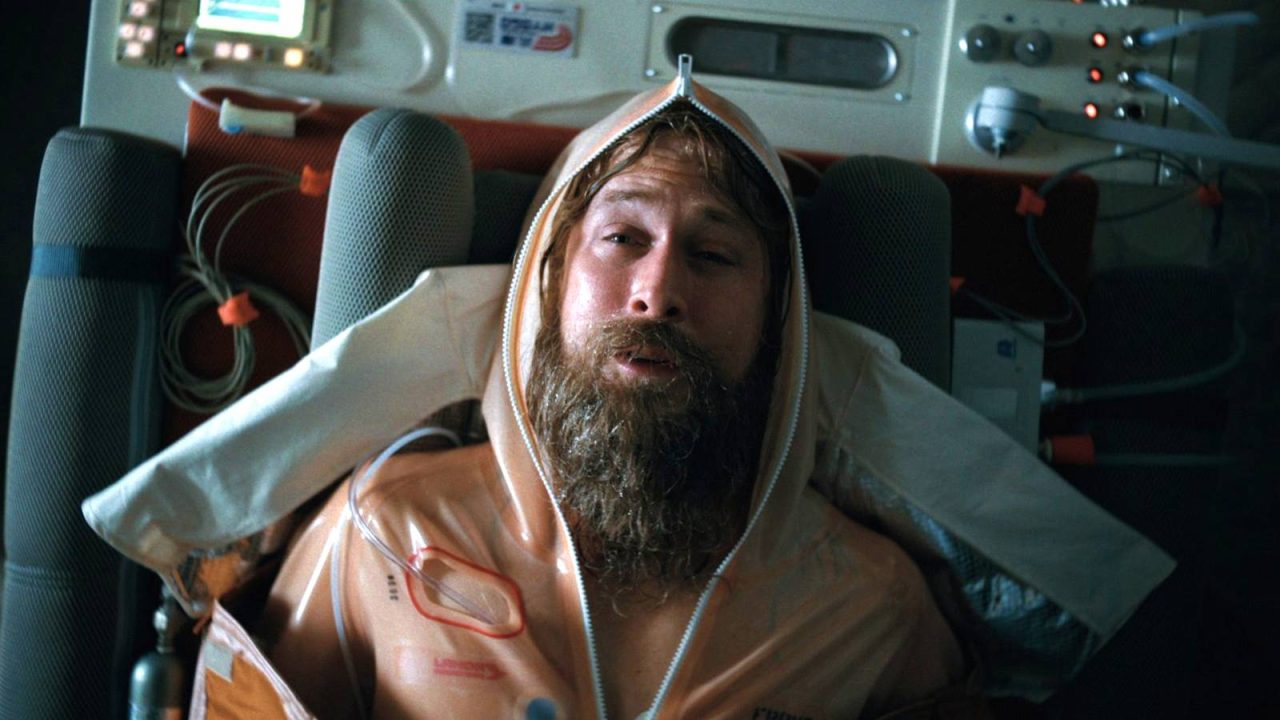
Ryan Gosling stepping into the lead role of Ryland Grace — a mild-mannered science teacher who turns out to be humanity’s last hope — generated enormous buzz from the moment casting was announced. The character is equal parts scientist, everyman, and reluctant hero, making it a role that demands both intellectual credibility and genuine emotional range. Gosling, who demonstrated his dramatic versatility across films like La La Land, First Man, and most recently the global cultural phenomenon Barbie, seemed tailor-made for the challenge. His ability to carry a film almost entirely on his own presence was always going to be tested here.
The film adaptation was always going to be a significant test for more reasons than just its star. Science fiction films with serious literary roots don’t always translate into box office success. Audiences can be cautious about slow-burn, idea-driven stories — even when the underlying material is exceptional. Studios have learned hard lessons from ambitious adaptations that connected with critics but failed to find their audience. That is precisely what makes this opening weekend performance so striking, so meaningful, and so worth examining carefully.
It is also worth remembering the specific cultural moment this film arrives in. Audiences have spent years navigating a landscape dominated by franchise sequels, superhero continuations, and IP-driven blockbusters. A standalone, original science fiction adaptation — one with no cinematic universe attached, no sequel baked in, and no pre-existing screen mythology to lean on — carries a different kind of commercial risk. Studios rarely greenlight projects like this without significant hesitation, which makes the ambition behind Project Hail Mary all the more notable. The fact that it arrived at all is a story worth telling. The fact that it arrived and immediately broke records makes it a genuinely historic moment for the genre.
Project Hail Mary Breaks Three Box Office Records on Opening Weekend
Ryan Gosling’s highly anticipated sci-fi film Project Hail Mary has arrived in theaters — and it didn’t just open strong. It shattered records. The film broke three major box office records during its opening weekend, signaling one of the most impressive debuts for a science fiction film in recent memory and immediately cementing its place in the conversation around the genre’s biggest commercial achievements.
Based on Andy Weir’s beloved 2021 novel of the same name, the film stars Gosling as Ryland Grace, a science teacher who wakes up alone on a spacecraft with no memory of how he got there. What follows is a race against time — and across the universe — to save Earth from an extinction-level threat. The opening weekend numbers have now been confirmed, and the story they tell is remarkable for a film of this kind, particularly one that never sacrifices intellectual depth for the sake of pure spectacle.
Ryan Gosling has proven himself a reliable box office draw, particularly following the global phenomenon of Barbie in 2023, which earned over $1.4 billion worldwide and transformed him into one of Hollywood’s most bankable leading men. But a serious, literary science fiction film carries fundamentally different commercial risks than a pop-culture blockbuster built around an iconic toy brand. The audiences are not the same. The marketing challenge is not the same. The word-of-mouth dynamics are not the same. Gosling crossing that divide successfully — and doing so at record-breaking scale — represents a genuinely significant moment in his career trajectory.
Audiences showing up in record-breaking numbers for a story about a lone scientist trying to solve an interstellar crisis says something genuinely meaningful about where mainstream appetite for intelligent, character-driven science fiction currently sits. Films like The Martian, Interstellar, and Arrival each proved, in their own way, that there is a genuine and deep hunger for this kind of storytelling — narratives that trust the audience to follow complex ideas while still delivering emotional payoffs. Project Hail Mary appears to be the latest and most emphatic confirmation of that appetite.
For studios, this result also matters enormously as a signal about strategy. Adapting beloved novels — especially ones with devoted fan bases, strong word-of-mouth reputations, and scientifically literate communities behind them — can be a high-reward strategy when executed with care and ambition. A record-breaking opening suggests audiences feel the adaptation has honored what made the source material special in the first place, which is among the highest compliments any film based on a book can receive.
Project Hail Mary: By The Numbers
Opening Weekend Box Office Snapshot
Broken Opening Weekend
Worldwide Gross (2015)
Gosling’s Previous Film
Was Published
“Hard science fiction — grounded in real physics and real problem-solving — can pull enormous crowds.”
The Science and Story Behind the Film’s Appeal
Part of what has always made Weir’s novel so compelling is its rare combination of rigorous scientific accuracy and genuine warmth. The book spends considerable time exploring real astrophysics, microbiology, and interstellar chemistry — not as background decoration, but as the actual engine of the story’s tension and resolution. Ryland Grace doesn’t survive on luck or brute force. He survives by thinking carefully, testing hypotheses, and applying the scientific method under conditions of almost unimaginable pressure.
That approach resonated deeply with readers when the novel was published in 2021, quickly earning it a devoted following that includes both hardcore science fiction fans and general readers who might not typically gravitate toward the genre. The novel spent weeks on bestseller lists and accumulated passionate reviews from readers who described it as impossible to put down despite — or perhaps because of — its dense scientific content. That built-in audience of passionate advocates created a word-of-mouth infrastructure that no marketing budget alone could replicate.
Translating that experience to the screen required filmmakers to find a visual and emotional language for ideas that are inherently abstract. Concepts like stellar energy depletion, alien biochemistry, and interstellar propulsion are not naturally cinematic subjects. Making them feel urgent, tactile, and emotionally resonant on screen is a genuine craft challenge — one that separates science fiction films that endure from those that simply impress. The early response from audiences suggests they found it. When science fiction works at its best, it doesn’t just entertain — it changes how viewers think about the universe they inhabit. That ambition, and the apparent success in achieving it, seems to be driving the extraordinary audience response.
There is also the matter of tone. Weir’s novels are notable for their persistent optimism — a belief that human ingenuity, applied with patience and rigor, can solve almost any problem. That is not a fashionable position in contemporary science fiction, which often gravitates toward dystopia, ambiguity, and existential despair. Project Hail Mary offers something rarer: a story where intelligence is celebrated, where curiosity is heroic, and where the act of figuring things out is presented as genuinely thrilling. Audiences appear to be responding to that emotional register with considerable enthusiasm.
What Comes Next for Project Hail Mary at the Box Office
With a record-breaking opening weekend behind it, the conversation now shifts to legs — industry shorthand for how well a film holds in subsequent weeks after its initial debut. Science fiction films that connect emotionally with audiences, rather than relying purely on spectacle and visual effects, often demonstrate strong staying power at the box office. Repeat viewings, sustained word-of-mouth, and audience loyalty can extend a successful theatrical run well beyond what opening weekend numbers alone might predict.
Andy Weir’s novel has been praised specifically for its emotional core, particularly a central relationship that develops in the story’s middle section in ways that are both unexpected and deeply moving. Without venturing into spoiler territory, this element of the book has consistently been cited by readers as what elevates it from a clever puzzle-box thriller into something genuinely affecting. If the film captures that relationship with the same fidelity and emotional intelligence, repeat viewings and sustained audience interest become very real possibilities. Films that make audiences feel something specific — something they want to experience again, or share with someone they care about — tend to hold at the box office in ways that pure spectacle rarely achieves.
There is also the broader question of what this result means for future adaptations of Weir’s work and for science fiction filmmaking more generally. A genuine box office success of this scale tends to open doors — and greenlight conversations — that might otherwise stay firmly closed. Hollywood responds to financial signals, and the signal being sent here is impossible to ignore: audiences want smart science fiction, they will show up for it, and they will reward filmmakers who treat them as intelligent participants in the story rather than passive consumers of spectacle.
For Andy Weir personally, this moment represents a remarkable validation of a career built on the conviction that readers and viewers are smarter than the entertainment industry typically assumes. His first novel, The Martian, proved that thesis once. Project Hail Mary appears to be proving it again, this time at even greater scale and with even higher stakes. Whatever comes next — for Gosling, for the studio, for the genre — the opening weekend of Project Hail Mary has already written itself into the history of science fiction cinema.
Frequently Asked Questions About Project Hail Mary
Is Project Hail Mary based on a book?
Yes. Project Hail Mary is based on the 2021 novel of the same name by Andy Weir, the author also known for writing The Martian. The novel was published to widespread critical acclaim and quickly became a bestseller, earning a devoted readership among science fiction fans and general readers alike.
Who plays Ryland Grace in the film?
Ryan Gosling stars as Ryland Grace, a science teacher who wakes up alone on a spacecraft with no memory of how he got there. Gosling was previously known for roles in La La Land, First Man, and the global blockbuster Barbie, which earned over $1.4 billion worldwide in 2023.
What records did Project Hail Mary break on opening weekend?
The film broke three major box office records during its opening weekend, making it one of the most impressive debuts for a science fiction film in recent memory. The specific records place it among the genre’s biggest commercial achievements and signal a major moment for literary science fiction adaptations in Hollywood.
How does Project Hail Mary compare to The Martian?
The Martian, the 2015 Ridley Scott film based on Weir’s first novel, earned over $630 million worldwide and received widespread critical acclaim. Project Hail Mary‘s record-breaking opening weekend suggests it may be on track to match or surpass that benchmark, though sustained box office performance over subsequent weeks will ultimately determine its final legacy.
Is Project Hail Mary suitable for viewers who aren’t science fiction fans?
Absolutely. Like Weir’s source novel, the film is designed to be accessible to general audiences while still satisfying hardcore science fiction enthusiasts. Its emotional core — centered on curiosity, resilience, and an unexpected central relationship — gives it broad appeal well beyond the traditional genre audience.
Will there be a sequel to Project Hail Mary?
As of now, no sequel has been officially announced. The film is a standalone adaptation of Weir’s novel, which itself does not have a direct sequel. However, given the record-breaking box office performance, it would not be surprising if studio conversations about future projects — including potential new Weir adaptations — accelerate significantly in the weeks ahead.




Leave a Reply