

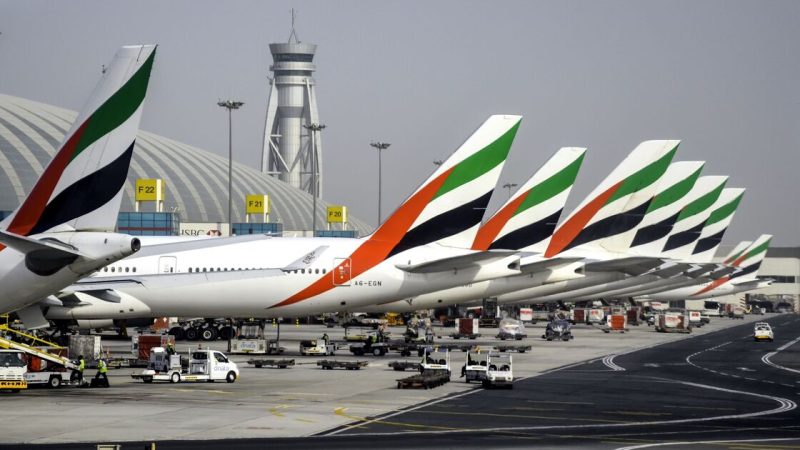
Twenty Qatar Airways aircraft are now sitting on the tarmac of a remote Spanish airport — not because of a scheduling decision, but because escalating instability in the Gulf region has forced the airline to move a significant portion of its fleet thousands of miles away from its home base.
The destination is Teruel Airport, a quiet facility in eastern Spain that most travelers have never heard of. Yet for the second time in just a few years, this unlikely location has become a critical lifeline for a major international airline navigating a crisis it cannot fully control.
The situation reflects how quickly geopolitical conflict can ripple through global aviation — grounding planes, canceling routes, and forcing carriers into emergency decisions that would have seemed unthinkable just weeks earlier.
Why Qatar Airways Is Parking Planes in Spain
The Gulf region crisis has created a cascade of operational problems for Qatar Airways. Flight cancellations have mounted, airspace restrictions have tightened, and the airline’s overall capacity has been significantly reduced. With fewer routes operating and uncertainty about when normal service might resume, the airline needed somewhere safe to store aircraft that can no longer fly their usual schedules.
Teruel Airport stepped into that role. Located in the Aragon region of eastern Spain, the airport sits in a geographically strategic position — roughly equidistant between Madrid, Barcelona, and Valencia. Its dry climate and open space make it well-suited for long-term aircraft storage and maintenance work, qualities that first attracted attention during the COVID-19 pandemic when airlines around the world were desperately looking for places to park grounded fleets.
The fact that Teruel is being called upon again underscores just how serious the current disruption is. This is not a routine maintenance rotation. It is an emergency measure taken under pressure.
What the Teruel Operation Actually Looks Like
Here is what is confirmed from the current situation:
- 20 Qatar Airways aircraft have been relocated to Teruel Airport in Spain
- The relocation is a direct response to the ongoing Gulf region conflict
- Flight cancellations and airspace restrictions are driving the operational reduction
- Teruel Airport has prior experience handling large-scale aircraft storage, most notably during the COVID-19 pandemic
- The airport’s location between major Spanish cities positions it as a practical hub for both storage and maintenance
| Factor | Detail |
|---|---|
| Aircraft relocated | 20 Qatar Airways planes |
| Storage location | Teruel Airport, eastern Spain |
| Cause of relocation | Gulf region conflict and airspace restrictions |
| Previous major use | Aircraft parking during COVID-19 pandemic |
| Geographic position | Between Madrid, Barcelona, and Valencia |
The Part of This Story Most People Are Missing
It is easy to look at a story like this and see only the headline number — 20 planes, one airport, one airline. But the deeper story is about what Teruel Airport represents in the broader architecture of European aviation.
During the pandemic, when passenger travel collapsed almost overnight, airports like Teruel became essential infrastructure almost by accident. They were never designed to be emergency storage facilities for the world’s largest jets. They simply had the space, the climate, and the runway capacity to absorb what the rest of the system could not handle.
Now, with a geopolitical crisis doing what a pandemic once did — suddenly removing large portions of a major airline’s operational capacity — Teruel is filling that same role again. The airport has effectively become a strategic reserve for European aviation, a place that exists quietly in the background until something goes wrong elsewhere.
For Qatar Airways, a carrier that operates one of the most extensive long-haul networks in the world, the disruption is significant. The airline’s hub in Doha connects passengers across Asia, Europe, Africa, and the Americas. Any sustained reduction in its operating capacity affects travelers far beyond the Gulf region itself.
What Happens Next for Qatar Airways and Travelers
The honest answer is that the timeline for resolution depends entirely on developments in the Gulf region — and those remain unpredictable. The aircraft stored at Teruel are not being decommissioned. They are being maintained and held ready for redeployment once conditions allow.
Teruel Airport’s role will likely expand or contract in direct proportion to how the situation evolves. If the conflict deepens or airspace restrictions widen, more aircraft could follow. If conditions stabilize, the airline will move quickly to restore capacity and return its fleet to active service.
For passengers who have booked travel on Qatar Airways routes affected by the disruption, the practical advice is to monitor the airline’s communications closely. Flight cancellations and schedule changes are ongoing, and the situation remains fluid.
What is clear is that Teruel Airport has once again proven its value as a piece of critical aviation infrastructure — one that only becomes visible when the rest of the system is under strain.
Frequently Asked Questions
How many Qatar Airways planes have been moved to Teruel Airport?
Twenty Qatar Airways aircraft have been relocated to Teruel Airport in Spain as a result of the ongoing Gulf region crisis.
Where is Teruel Airport located?
Teruel Airport is located in eastern Spain, positioned between the major cities of Madrid, Barcelona, and Valencia.
Why was Teruel Airport chosen for aircraft storage?
Teruel has prior experience handling large-scale aircraft storage, most notably during the COVID-19 pandemic, and its location and climate make it well-suited for this purpose.
What is causing the Qatar Airways flight disruptions?
The disruptions are caused by escalating conflict in the Gulf region, which has resulted in flight cancellations and airspace restrictions that have reduced the airline’s operating capacity.
Will the stored aircraft return to service?
The aircraft are being maintained at Teruel and are expected to return to active service once conditions in the Gulf region allow — though no confirmed timeline has been established.
Are other airlines affected by the Gulf region crisis?


Leave a Reply