
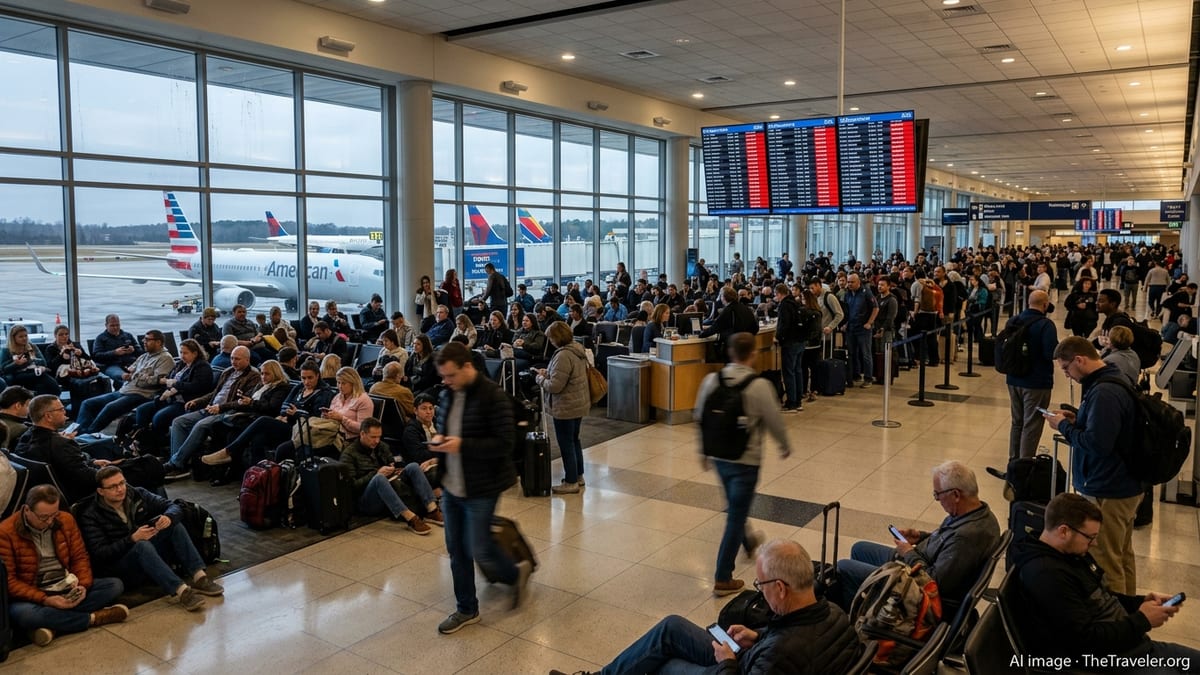
Fifty-seven flights delayed and three outright cancelled — that was the reality facing hundreds of travellers at Raleigh-Durham International Airport on March 22, 2026, turning what should have been routine journeys into hours of frustration, missed connections, and rebooking chaos.
The disruptions hit some of the busiest carriers operating out of the airport, including American Airlines, Delta, and Southwest Airlines, and rippled outward to affect passengers headed to major destinations including New York, Chicago, and Atlanta. For many people caught in the middle of it, the experience was less about a single delayed flight and more about a cascading series of problems that proved difficult to untangle.
Airport disruptions of this scale are rarely isolated events. When a hub like RDU experiences simultaneous delays across multiple airlines, the knock-on effects spread quickly — affecting not just the passengers at the gate, but crews, connecting flights, and travellers at the other end waiting for arrivals that never came on time.
What Happened at Raleigh-Durham International Airport
Raleigh-Durham International Airport, known by its airport code RDU, serves as a key travel hub for the Research Triangle region of North Carolina — one of the fastest-growing metro areas in the United States. On March 22, the airport was hit with a significant wave of operational disruptions that left the departures board looking like a sea of orange and red.
In total, 57 flights were delayed and 3 flights were cancelled during the disruption period. The airlines most visibly affected were American Airlines, Delta, and Southwest Airlines — three of the largest carriers operating at RDU. The routes impacted included some of the airport’s most heavily travelled corridors, connecting the Triangle to major northeast and southeast hubs.
For passengers, the disruption translated into long queues at customer service desks, crowded gate areas, and the anxious scramble to find alternative flights. Rebooking during a multi-airline disruption event is rarely straightforward, particularly when the same weather or operational conditions affecting one carrier are affecting others simultaneously.
Airlines and Routes Caught in the Disruption
The scale of the delays touched virtually every major carrier at the airport. Here is a breakdown of what was confirmed during the disruption:
| Detail | Confirmed Information |
|---|---|
| Total flights delayed | 57 |
| Total flights cancelled | 3 |
| Airlines affected | American Airlines, Delta, Southwest Airlines, and others |
| Key destinations impacted | New York, Chicago, Atlanta, and other major destinations |
| Airport | Raleigh-Durham International Airport (RDU) |
| Date of disruption | March 22, 2026 |
The affected routes to New York, Chicago, and Atlanta are among the most frequently booked out of RDU, meaning the disruption hit passengers travelling on high-demand corridors where alternative seats are rarely easy to find on short notice.
- American Airlines operates a significant number of daily departures from RDU, with connections through its Charlotte and Philadelphia hubs — both of which feed into northeast and midwest routes.
- Delta connects RDU to its Atlanta hub, making delays on that route particularly problematic for passengers with onward international connections.
- Southwest Airlines operates point-to-point routes from RDU, meaning delays on its flights cannot always be resolved through traditional hub rebooking options.
What This Means for Stranded Passengers
Being stranded at an airport during a multi-carrier disruption is a distinctly different experience from a single-flight delay. When dozens of flights are affected at once, airline staff are stretched thin, gate agents are managing multiple queues, and the phone lines for customer service become essentially unreachable.
Passengers in this situation typically face a difficult set of choices. They can wait at the airport in hopes of being accommodated on the next available flight — which may itself be delayed or full. They can attempt to rebook through an airline’s app, which often works faster than standing in line. Or, depending on the length of the disruption, they may need to consider ground transportation alternatives or overnight accommodation.
For travellers connecting through New York, Chicago, or Atlanta to onward destinations, even a moderate delay at RDU can mean a missed connection and an entirely new travel itinerary. That cascading effect is what turns a two-hour delay into a full-day ordeal for some passengers.
Officials have noted that disruptions of this kind — affecting dozens of flights across multiple carriers simultaneously — often point to systemic pressure on an airport’s operations, whether from weather, air traffic control constraints, or staffing challenges. The specific cause behind the March 22 disruptions at RDU has not been confirmed in the available reporting.
If You Were Affected — What to Know
Travellers caught in airport disruptions have more options than many realise. Under standard airline policies, passengers are generally entitled to rebooking at no additional charge when a flight is cancelled or significantly delayed due to factors within the airline’s control. When delays stem from weather or air traffic control issues, policies vary by carrier.
A few practical steps matter most in these situations:
- Use the airline’s mobile app to rebook — it is almost always faster than waiting at a customer service desk during a mass disruption event.
- Check whether your credit card provides travel delay or cancellation protection, which may cover meals, accommodation, or alternative transport costs.
- If your final destination is reachable by another carrier, ask the airline whether they can endorse your ticket to a competitor — some do this during significant disruption events.
- Document everything: keep receipts for any out-of-pocket expenses incurred due to the delay, as these may be reimbursable depending on the cause.
Frequently Asked Questions
How many flights were affected at Raleigh-Durham International Airport?
A total of 57 flights were delayed and 3 flights were cancelled during the disruption on March 22, 2026.
Which airlines were impacted by the RDU delays?
American Airlines, Delta, and Southwest Airlines were among the carriers confirmed to be affected, along with other airlines operating at the airport.
Which destinations were most affected by the disruptions?
Routes to New York, Chicago, and Atlanta were among the key destinations impacted by the delays and cancellations.
What caused the delays at RDU on March 22?
The specific cause of the disruptions has not been confirmed in the available reporting at this time.
What should passengers do if their flight was cancelled or significantly delayed?
Passengers should contact their airline directly to rebook — using the airline’s app is typically the fastest option during large-scale disruption events — and retain any receipts for expenses incurred.
Is Raleigh-Durham International Airport back to normal operations?
This has not yet been confirmed in the available reporting. Passengers with upcoming travel through RDU should check their airline’s app or the airport’s official channels for the latest status.



Leave a Reply