
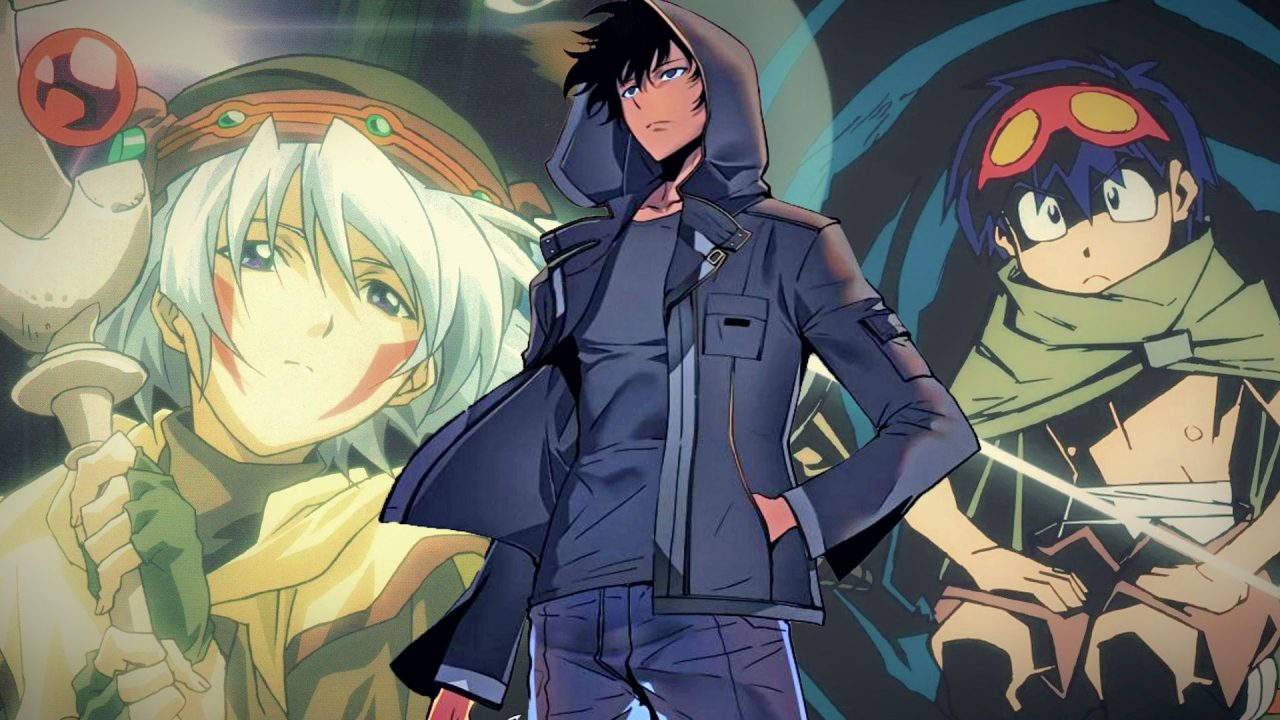
Solo Leveling took the anime world by storm with its slick visuals, overpowered protagonist, and relentless power fantasy energy — but it is far from the first anime to explore those ideas. Long before Sung Jin-Woo was clearing dungeons alone, classic series from the 1990s and early 2000s were doing the same thing, often with more emotional depth, stronger worldbuilding, and narratives that held together over dozens of episodes.
If you finished Solo Leveling and found yourself wanting more — or if you watched it and felt like something was missing — the answer might be sitting in the retro anime catalog. These older series tackled lone-wolf protagonists, dramatic power-ups, and dark fantasy settings before any of it had a label, and many fans argue they did it better.
What Solo Leveling Actually Does — and Where It Falls Short
Solo Leveling’s appeal is easy to understand. It follows a weak hunter who gains an extraordinary ability to level up in secret, eventually becoming the most powerful being in a world filled with monsters and gates. The animation is stunning, the action sequences are fluid, and the power fantasy is delivered with confidence.
But critics of the series often point to the same weaknesses: the lead character can feel emotionally flat once his transformation is complete, side characters rarely get meaningful development, and the plot tends to move from spectacle to spectacle without much breathing room for story. The world looks incredible, but it does not always feel lived in.
Retro anime, by contrast, were built in an era when studios had to earn audience investment through writing rather than visual spectacle. That constraint produced some remarkably rich storytelling — and a handful of series that hit every beat Solo Leveling aims for, with considerably more substance underneath.
The Retro Anime That Cover the Same Ground
The series identified as doing what Solo Leveling does — but with greater depth — span multiple genres within the action and dark fantasy space. Each one shares at least one major DNA strand with Solo Leveling: a protagonist who grows dramatically in power, a world filled with dangerous adversaries, and a tone that takes its premise seriously.
| Anime Series | Key Shared Element with Solo Leveling | Where It Goes Further |
|---|---|---|
| Berserk (1997) | Dark fantasy, lone warrior, overwhelming power | Deep psychological character study and moral complexity |
| Yu Yu Hakusho | Underdog hero, power progression, tournament arcs | Strong ensemble cast and emotional storytelling |
| Hunter x Hunter (1999) | Hunter system, leveling up, dangerous world | Sophisticated worldbuilding and strategic combat |
| Rurouni Kenshin | Elite warrior with a dark past | Rich historical grounding and character redemption arcs |
| Dragon Ball Z | Power scaling, transformation sequences | Long-form stakes and iconic cultural impact |
| Trigun | Overpowered protagonist concealing true strength | Philosophical depth and tonal balance |
| Inuyasha | Demon world, power growth, recurring enemies | Character relationships and emotional investment |
| Outlaw Star | Action-driven protagonist pushing personal limits | Genre-blending and adventurous world exploration |
Why Classic Anime Hit Differently for Long-Term Fans
There is a reason fans who grew up with 1990s anime tend to be protective of that era. Series like Berserk and Yu Yu Hakusho were not built around seasonal hype cycles or social media momentum. They had to work harder to keep audiences coming back week after week, which meant the writing had to carry weight.
Berserk in particular is frequently cited as the standard-bearer for dark fantasy in anime. Guts, its central character, shares Solo Leveling’s brooding lone-wolf energy — but the 1997 adaptation surrounds him with genuine tragedy, moral ambiguity, and a supporting cast that feels real. His power does not arrive as a gift. It is carved out of suffering.
Hunter x Hunter, even in its original 1999 form, built a hunter licensing system and power framework that predates and arguably outclasses the dungeon-and-rank structure Solo Leveling uses. The Nen system rewards viewers who pay attention, and the story regularly subverts expectations in ways that feel earned rather than convenient.
Trigun takes a different angle entirely. Vash the Stampede is an overpowered protagonist who actively hides how strong he is — a premise Solo Leveling borrows heavily from in its early episodes — but Trigun uses that setup to explore pacifism, trauma, and identity in ways the newer series does not attempt.
The Real-World Appeal of Going Back to Retro Anime
For viewers who are newer to anime, these older series represent an enormous amount of untapped content. Many of them are available on major streaming platforms and hold up visually better than people expect — and for those who already know them, revisiting them through the lens of Solo Leveling’s popularity reveals just how much of the newer show’s DNA was borrowed from classics.
There is also a practical argument for retro anime right now. Solo Leveling releases episodes on a seasonal schedule, which means long waits between story developments. Series like Yu Yu Hakusho and Inuyasha are fully complete, with hundreds of episodes available to binge without interruption.
The emotional payoff tends to be higher too. When a character earns their power through years of struggle across a long-running series, the transformation lands differently than a rapid upgrade sequence, no matter how beautifully animated.
What Happens When You Actually Watch Them
The honest experience most viewers report is surprise — surprise at how well these series hold up, and surprise at how much more they got from them emotionally than from newer power-fantasy anime. The animation may not match A-1 Pictures’ modern production quality, but the storytelling frequently does what slick visuals cannot: it makes you care about what happens next for reasons that go beyond wanting to see the next fight.
That is the gap Solo Leveling has not fully closed. It is a remarkable visual achievement and a satisfying power fantasy. But the retro anime that covered this ground first built worlds you could live in, not just watch.
Frequently Asked Questions
What kind of anime is Solo Leveling?
Solo Leveling is a dark fantasy action anime following a weak hunter who gains the unique ability to level up, eventually becoming extraordinarily powerful in a world full of monsters and dungeons.
Which retro anime is most similar to Solo Leveling?
Based on shared themes of power progression, dark fantasy settings, and lone-warrior protagonists, Berserk (1997) and Hunter x Hunter (1999) are most frequently cited as the closest comparisons.
Are these retro anime available to stream?
Many of them, including Yu Yu Hakusho, Hunter x Hunter, and Inuyasha, are available on major streaming platforms, though availability varies by region.
Is the original Hunter x Hunter from 1999 different from the 2011 version?
Yes, the 1999 adaptation and the 2011 remake cover overlapping but not identical material and have different tones, though both are well regarded by fans.
Do retro anime hold up visually compared to modern series like Solo Leveling?
The animation style is noticeably older, but many fans find the visual identity of 1990s and early 2000s anime distinctive and appealing rather than a drawback.
Why do some fans say retro anime are better than Solo Leveling?
The most common argument is that classic series invested more heavily in character development, emotional storytelling, and worldbuilding — areas where Solo Leveling’s critics say the newer show does not fully deliver.


Leave a Reply