
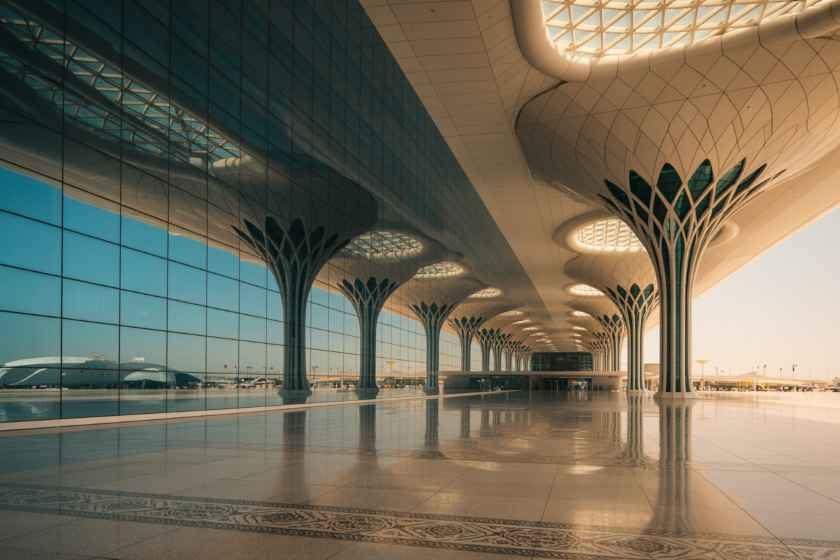
Over 50 drones were launched toward Saudi Arabia in a single day — and 17 of them were intercepted directly over Riyadh. If you have a flight booked through King Khalid International Airport, that number matters more to you right now than almost anything else.
Riyadh’s King Khalid International Airport (RUH) is still open. Planes are still taking off and landing. But the situation on the ground — and in the skies above Saudi Arabia — is complicated enough that thousands of travelers are finding their itineraries in serious doubt, with little clear guidance from airlines or authorities about what comes next.
Here is what is actually happening, what it means if you are flying to, from, or through Riyadh, and what you should do before you head to the airport.
Why Flights Are Being Cancelled at an Airport That Is Still Open
This is the part that confuses most travelers: the airport is fully operational, running 24 hours a day, seven days a week. The runways are not closed. The terminals are not shut down. So why are flights being cancelled?
The answer comes down to airspace risk, not airport closure. Saudi Arabia’s airspace has been under heightened threat as a consequence of the ongoing 2026 U.S.-Iran war. Drone and missile attacks have been reported across the kingdom, with multiple incidents intercepted over Riyadh and the Eastern Province.
The European Union Aviation Safety Agency — known as EASA — has issued guidance advising caution for any flights operating through Saudi airspace. When a major aviation safety body flags a region as elevated risk, airlines begin making their own calculations. Many are choosing to cancel or reroute flights rather than expose aircraft and passengers to potential danger, even when the destination airport itself is technically functional.
It is a distinction that catches many travelers off guard. An open airport does not automatically mean safe skies overhead.
What Has Been Happening on the Ground — and in the Air
The security situation escalated sharply in mid-March 2026. According to available reporting, on March 13 alone, more than 50 drones were launched toward the kingdom. Of those, 17 were intercepted over Riyadh and surrounding areas.
Saudi air defenses have been active, but the frequency and scale of these incidents have rattled the aviation industry. Airlines serving Gulf destinations have been particularly affected, with several suspending or significantly reducing services to and from Riyadh.
The threat is not limited to Riyadh. The Eastern Province has also seen interceptions, suggesting the risk extends across Saudi airspace more broadly — not just the capital.
Key Facts Every Traveler Needs Right Now
| Factor | Current Status |
|---|---|
| King Khalid International Airport (RUH) | Open and operational 24/7 |
| Saudi airspace risk level | Heightened — ongoing drone and missile threats |
| EASA advisory | Caution advised for flights through Saudi airspace |
| Drones intercepted over Riyadh (March 13) | 17 out of 50+ launched toward the kingdom |
| Most affected routes | Gulf destinations particularly impacted |
| Flight schedule reliability | Severely disrupted — frequent cancellations |
A few practical points worth keeping in mind:
- The airport being open does not guarantee your specific flight will operate.
- Airlines are making cancellation decisions based on airspace risk assessments, not just airport conditions.
- Gulf-bound routes appear to be among the most disrupted at this time.
- EASA’s advisory carries significant weight — most major European carriers take it seriously when planning operations.
- Flight status can change rapidly; checking hours before departure is not enough in this environment.
Who This Affects Most — and What the Real Risk Looks Like
If you are flying into Riyadh from Europe, the EASA advisory is directly relevant to your carrier’s decision-making. European airlines operating under EASA oversight are likely to be among the most cautious about maintaining service during an active advisory period.
Travelers connecting through Riyadh to other Gulf destinations face a compounded problem: even if the first leg of a journey operates, onward connections to other Gulf cities may be cancelled separately, leaving passengers stranded mid-journey.
Business travelers, expatriates, and tourists with fixed departure dates are in the most difficult position. Unlike flexible leisure travelers who might delay a trip, people with fixed commitments have fewer options when flights cancel without much warning.
For travelers already in Riyadh trying to leave, the situation is equally stressful. Departing flights are subject to the same cancellation pressures as arriving ones, and rebooking options may be limited if multiple airlines are simultaneously pulling back from the region.
What You Should Do Before Going to the Airport
Officials and travel advisories are consistent on one point: check your flight status frequently and repeatedly before heading to King Khalid International Airport. Given how quickly the situation has been changing, a flight that was confirmed the night before could be cancelled by morning.
Beyond checking status, travelers in this situation should consider the following steps:
- Contact your airline directly to understand their cancellation and rebooking policies under the current circumstances.
- Check whether your travel insurance covers cancellations related to security incidents or government-level aviation advisories.
- Monitor EASA and your home country’s foreign travel advisory pages for updated guidance.
- If your departure is not time-sensitive, consider whether postponing voluntarily makes more sense than waiting for a last-minute cancellation.
- Keep documentation of any airline-initiated cancellations, as this will be relevant for any insurance or refund claims.
The airport itself is not the danger zone here — the airspace above Saudi Arabia is where the risk is concentrated. That distinction matters for how you plan, but it does not change the practical reality that your flight may not run as scheduled.
Frequently Asked Questions
Is King Khalid International Airport in Riyadh currently closed?
No. As of mid-March 2026, King Khalid International Airport (RUH) remains open and operational around the clock. The disruptions are caused by airspace security concerns, not an airport shutdown.
Why are flights being cancelled if the airport is still open?
Airlines are cancelling flights due to heightened security risks in Saudi airspace, including ongoing drone and missile threats. The European Union Aviation Safety Agency (EASA) has issued a caution advisory for Saudi airspace, which is influencing airline decisions.
How many drones were intercepted over Riyadh on March 13?
According to available reporting, 17 drones were intercepted over Riyadh and nearby areas on March 13, out of more than 50 launched toward the kingdom that day.
Which routes are most affected by the cancellations?
Gulf destinations have been particularly impacted by the flight disruptions stemming from the elevated security situation in Saudi airspace.
Should I still go to the airport if my flight is scheduled?
Travelers are strongly advised to check their flight status frequently before heading to the airport, as schedules are severely affected and cancellations can happen with little notice.
Will my travel insurance cover a cancellation caused by this situation?
This depends on your specific policy. Travelers should contact their insurance provider directly to confirm whether cancellations linked to security incidents or aviation authority advisories are covered under their plan.



Leave a Reply