
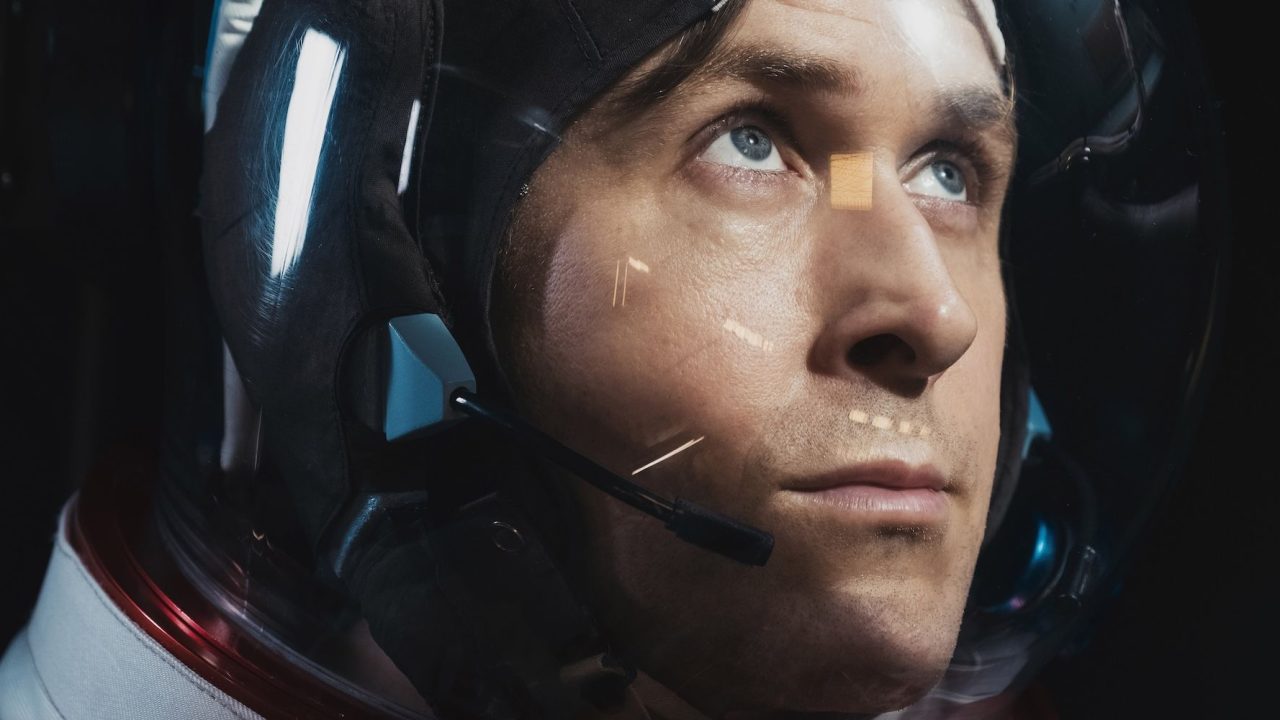
Ryan Gosling has never been short on acclaimed performances — but one of his finest, most emotionally restrained turns remains quietly overlooked by a large portion of the moviegoing public. That film is First Man, director Damien Chazelle’s 2018 biographical drama about astronaut Neil Armstrong, and it represents Gosling’s first on-screen journey to space in more ways than one.
While Gosling has since become a household name for blockbuster roles and award-season darlings, First Man occupies a unique and undervalued corner of his filmography — a performance built almost entirely on silence, restraint, and grief rather than charisma or spectacle. For many viewers, it remains the role they haven’t quite gotten around to watching. That’s worth reconsidering.
The film arrived in the wake of Gosling and Chazelle’s massively celebrated collaboration on La La Land (2016), which made it one of the most anticipated reunions in recent Hollywood memory. And yet First Man landed with considerably quieter cultural impact — praised by critics but somehow never fully absorbed into the wider conversation about either man’s career.
What First Man Is Actually About — And Why It Hits Differently Than Expected
On the surface, First Man tells the story of NASA’s Apollo program and the years-long effort to land a human being on the moon. But Chazelle’s film is far less interested in the triumph of the mission than in the psychological and emotional cost of the man undertaking it.
Neil Armstrong, as Gosling plays him, is not the larger-than-life American hero of popular mythology. He is quiet, withdrawn, and almost unbearably private — a man processing profound personal loss while simultaneously preparing to do something no human being had ever done. The film frames the moon landing not as a moment of national pride alone, but as something deeply personal to Armstrong himself.
That framing makes First Man a more challenging watch than a traditional space epic. There are no rousing speeches, no easy catharsis. What Gosling delivers instead is something rarer: a portrait of a man holding himself together through sheer, methodical focus — and occasionally, just barely, falling apart.
Why Gosling’s Performance Deserves a Second Look
Gosling’s work in First Man is the kind of performance that gets underappreciated precisely because it doesn’t announce itself. He doesn’t chew scenery or deliver the kind of showstopping monologue that generates awards-season clips. Instead, he communicates entire emotional landscapes through small gestures, a clenched jaw, or a long, still gaze.
This approach is entirely deliberate and entirely right for the character. Armstrong was famously private and famously difficult to read — a man who chose engineering logic over emotional expression at nearly every turn. Gosling doesn’t fight that quality; he inhabits it completely.
The result is a performance that rewards patience. Viewers who come in expecting the energy of La La Land may initially feel the film is cold or distant. Those who stay with it tend to find that the emotional payoff — when it finally arrives — is quietly devastating.
The Chazelle Connection and What It Means for Both Careers
Damien Chazelle and Ryan Gosling first worked together on La La Land, the jazz-soaked romantic musical that swept the 2017 awards season and turned both men into major Hollywood players. Their reunion on First Man was, understandably, greeted with enormous expectation.
What audiences received was something deliberately contrary to those expectations. Where La La Land was warm, vibrant, and emotionally open, First Man is cool, intimate, and guarded. Chazelle made a film that mirrored its subject’s inner life — and Gosling matched that energy beat for beat.
For Chazelle, First Man demonstrated a range that extended well beyond the musical sensibility he’d become known for. For Gosling, it showed that his skill set runs deeper than the roles — romantic lead, action hero, comedic foil — that tend to define his public image.
| Film | Director | Year | Gosling’s Role | Tone |
|---|---|---|---|---|
| La La Land | Damien Chazelle | 2016 | Sebastian (jazz musician) | Warm, romantic, vibrant |
| First Man | Damien Chazelle | 2018 | Neil Armstrong (astronaut) | Restrained, intimate, grief-driven |
The Part of This Story Most People Miss
First Man is also notable for being Ryan Gosling’s first on-screen experience in space — quite literally. The film’s depictions of space travel are among the most visceral and technically immersive committed to film in recent years, shot in ways that place the audience inside cramped, rattling spacecraft rather than outside them watching from a safe, cinematic distance.
That choice — to make space feel terrifying and claustrophobic rather than awe-inspiring and beautiful — is central to what makes the film so distinct. It refuses to glamorize what Armstrong and his colleagues actually endured. These were men sitting inside machines the size of a car, hurtling through a vacuum, with margins for error that were essentially nonexistent.
Gosling conveys that reality without melodrama. His Armstrong doesn’t flinch for the cameras, real or fictional. He simply does the job — and the film asks you to understand what that kind of discipline costs a person over time.
Where First Man Sits in Gosling’s Filmography Right Now
In the years since First Man, Gosling has taken on roles across a wide spectrum — from the acclaimed Blade Runner 2049 to the global phenomenon of Barbie and action work in The Fall Guy. His profile has never been higher.
That makes this a particularly good moment to revisit First Man. Audiences who discovered Gosling through his more recent, higher-profile work may not have encountered this quieter chapter of his career — and they’re missing one of his most fully realized performances as a result.
It’s a film that doesn’t meet you halfway. But for those willing to give it the attention it asks for, First Man offers something increasingly rare: a big-budget studio film that trusts its audience to sit with complexity, silence, and sorrow.
Frequently Asked Questions
What is First Man about?
First Man is a 2018 biographical drama directed by Damien Chazelle that follows astronaut Neil Armstrong and the years leading up to the Apollo moon landing, focusing heavily on Armstrong’s personal and emotional life.
Who directed First Man?
The film was directed by Damien Chazelle, who previously collaborated with Ryan Gosling on La La Land in 2016.
Is First Man considered a good film?
The film was praised by critics for its restrained, intimate approach to the space race story and for Gosling’s performance, though it received a quieter cultural reception than Chazelle and Gosling’s previous collaboration.
Is First Man Ryan Gosling’s first space-related film role?
Yes, First Man is noted as Ryan Gosling’s first on-screen journey to space, with the film depicting the Apollo program’s space travel in a visceral and technically immersive way.
How does First Man compare to La La Land?
Where La La Land is warm, romantic, and emotionally open, First Man is deliberately cool, restrained, and grief-driven — a very different film despite sharing a director and lead actor.
Where can I watch First Man?
Streaming availability for First Man varies by region and platform. Checking current major streaming services or digital rental platforms is the best way to find where it is available in your area.



Leave a Reply