
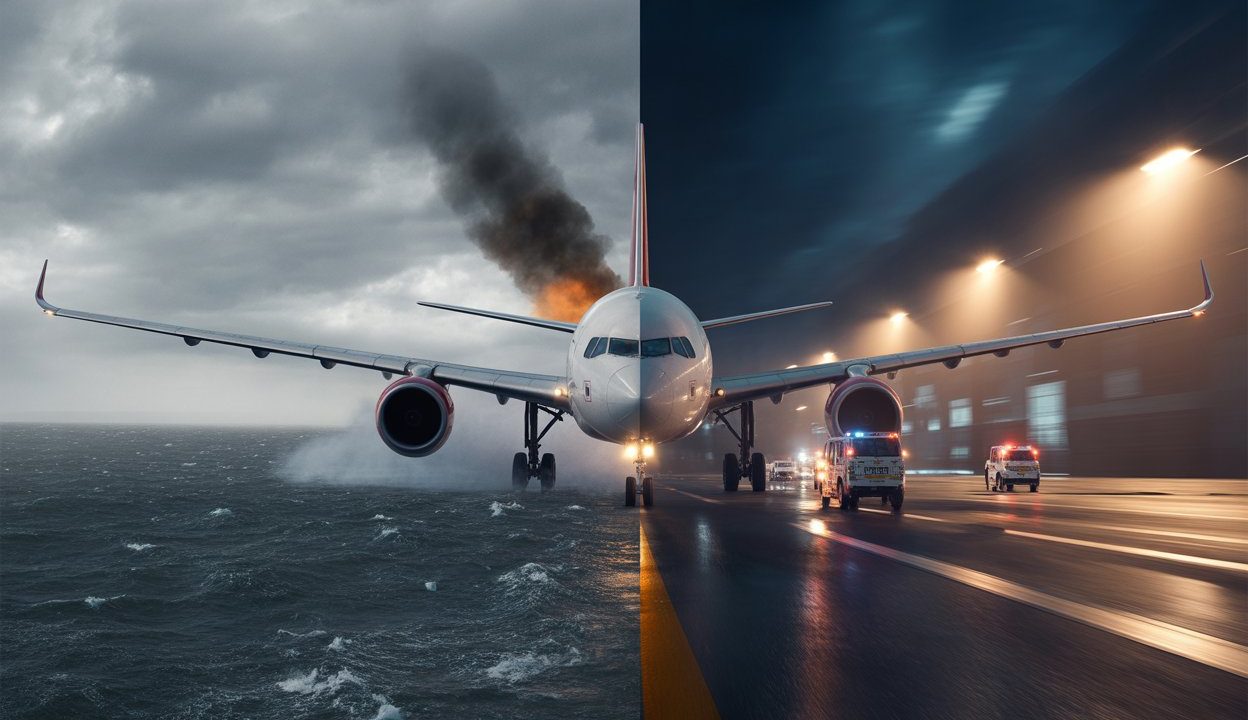
A Ryanair Boeing 737-800 bound for Norway turned back to Manchester Airport shortly after departure, forcing an emergency landing that left passengers shaken and aviation watchers paying close attention. The incident involved flight RK3226, a scheduled service that was expected to complete a routine crossing before something went wrong mid-flight.
What began as an ordinary departure from Manchester quickly escalated into an urgent situation. According to available information, the aircraft was cruising over the North Sea when alarms were triggered on board. The pilots responded decisively, declaring an emergency and reversing course back toward Manchester Airport, where the plane landed safely.
The speed at which the situation developed — from routine flight to mid-air emergency to emergency landing — is what has drawn significant attention from the aviation community and travelers alike.
What We Know About Ryanair Flight RK3226 and the Emergency Landing
Flight RK3226 departed Manchester Airport on a scheduled service to Norway. The Boeing 737-800 — one of the most widely operated narrowbody aircraft in commercial aviation — was well into its journey when the crew determined that continuing the flight was not safe.
Pilots declared an emergency at Manchester Airport, commonly referred to as MAN, and executed a turnaround. The aircraft returned and landed at Manchester without reported casualties, though the full scope of what triggered the emergency has not been publicly confirmed in detail at this stage.
What is confirmed is that the crew acted quickly. Emergency declarations on commercial flights are taken seriously at every level — from the flight deck to air traffic control to ground emergency services, which are typically deployed to the runway as a precaution whenever a declared emergency aircraft is inbound.
The Boeing 737-800 variant involved is a well-established platform used extensively across Ryanair’s European network. While the aircraft type itself has a long operational history, any in-flight emergency involving one naturally draws scrutiny.
Key Facts About the Incident
- Flight number: Ryanair RK3226
- Aircraft type: Boeing 737-800
- Departure airport: Manchester Airport (MAN)
- Intended destination: Norway
- Incident location: Over the North Sea
- Action taken: Pilots declared an emergency and turned the aircraft around
- Outcome: Emergency landing at Manchester Airport
| Detail | Information |
|---|---|
| Flight Number | RK3226 |
| Airline | Ryanair |
| Aircraft | Boeing 737-800 |
| Departure | Manchester Airport (MAN) |
| Destination | Norway |
| Incident Area | Over the North Sea |
| Emergency Declared | Yes — at Manchester Airport |
| Landing Outcome | Safe return to Manchester |
Why This Incident Matters to Passengers and the Wider Aviation World
For the passengers on board flight RK3226, the experience was undoubtedly alarming. A mid-flight turnaround over the North Sea, followed by an emergency landing, is not something any traveler expects when boarding a short-haul European service. The psychological impact of such an event — even when it ends safely — can be significant.
From a broader aviation perspective, incidents like this serve as a reminder of how seriously commercial flight crews are trained to respond when something goes wrong. The fact that the pilots identified the problem, declared the emergency, and returned the aircraft safely is precisely the outcome that aviation safety protocols are designed to produce.
Ryanair operates one of the largest fleets in Europe, and Manchester is a major hub for the airline’s UK operations. Any emergency involving a flight out of Manchester draws attention not just from passengers but from aviation regulators and safety investigators who will want to understand exactly what triggered the alarm system on board.
For travelers booked on similar routes — particularly those flying between the UK and Scandinavia — the incident raises natural questions about what happens when a flight declares an emergency, and what rights passengers have when their journey is disrupted in such circumstances.
What Happens Next for the Investigation and Affected Passengers
Following any declared aviation emergency, standard procedure involves a thorough review by the airline’s safety team and, depending on the nature of the incident, potentially by national aviation authorities as well. The specific cause of the alarm that sent flight RK3226 back to Manchester has not been publicly confirmed, and an investigation is the expected next step.
Passengers who were on board would typically be rebooked on alternative services, though the timeline and arrangements depend on the airline’s assessment of when the aircraft — or a replacement — can safely operate the route again.
Aviation safety investigators generally examine flight data recorders, crew communications, and maintenance logs to piece together a full picture of what occurred. Until those findings are released, the precise trigger for the North Sea emergency remains unconfirmed.
Anyone traveling on Ryanair services through Manchester, particularly on Norway routes, should monitor official communications from the airline for any updates on scheduling or operational changes connected to this incident.
Frequently Asked Questions
What is Ryanair flight RK3226?
RK3226 is a Ryanair service that departed Manchester Airport bound for Norway, operated by a Boeing 737-800 aircraft.
Why did the flight turn around?
The aircraft was over the North Sea when alarms were triggered on board, prompting the pilots to declare an emergency and return to Manchester Airport.
Did the plane land safely?
Yes, the Boeing 737-800 made an emergency landing at Manchester Airport safely following the turnaround.
What caused the in-flight alarm?
The specific cause of the alarm that triggered the emergency has not yet been publicly confirmed and remains under investigation.
What happens to passengers after an emergency landing like this?
Passengers are typically rebooked on alternative flights, though exact arrangements depend on the airline’s assessment of the situation and available capacity.
Will there be a formal investigation into this incident?
Following any declared aviation emergency, airline safety teams and potentially national aviation authorities conduct a review — this has not yet been confirmed publicly for this specific incident.



Leave a Reply