
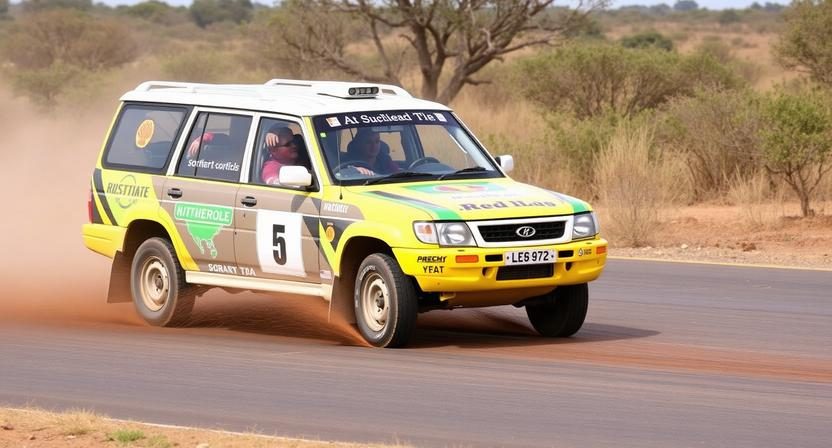
Tens of thousands of spectators from Kenya, East Africa, and countries far beyond the continent descended on the Great Rift Valley for the Safari Rally Kenya — and when the dust finally settled in Naivasha last Sunday, it was clear the event had delivered something well beyond motorsport.
The rally, which wound through some of the most visually striking terrain in the world, has cemented its reputation not just as a competitive racing event but as one of the most effective tourism promotion tools Kenya has in its arsenal. For four days, the world was watching — and what it saw was far more than cars navigating rough roads.
From the open Soysambu plains to the dramatic ridgeline of the Sleeping Warrior and deep into Hell’s Gate National Park, the Safari Rally turned Kenya’s natural landscape into a live, global broadcast. That combination of sport, scenery, and culture is increasingly rare in international events — and Kenya is leaning into it hard.
How the Safari Rally Kenya Became a Tourism Engine
The Safari Rally’s return to the World Rally Championship calendar has done something that conventional tourism campaigns rarely achieve: it has placed Kenya’s landscape in front of a genuinely global audience, repeatedly, through a format that people actually choose to watch.
The rally’s route is not incidental to this effect — it is the point. Organizers have deliberately routed the competition through locations that showcase the diversity of Kenya’s natural environment. Spectators and television viewers alike are taken from wide-open savanna to ancient volcanic terrain, all within a single event.
Supporters converged across multiple distinct terrains during this year’s edition, transforming what could have been a simple racing circuit into something closer to a rolling national showcase. Officials and tourism advocates have noted that this kind of organic promotion — where the destination itself becomes part of the spectacle — carries a credibility that paid advertising simply cannot replicate.
The event’s reach extends well beyond those physically present. Broadcast coverage, social media content, and international press attention all amplify the visibility of Kenya’s landscapes to audiences who may never have considered East Africa as a travel destination before tuning in.
The Route That Doubles as a Destination
One of the most distinctive aspects of the Safari Rally Kenya is the variety of environments competitors and spectators pass through. This year’s event featured three landmark locations that each tell a different story about Kenya’s geography and ecological richness.
| Location | Character | Tourism Significance |
|---|---|---|
| Soysambu Plains | Open savanna terrain | Showcases Kenya’s classic wildlife landscape |
| Sleeping Warrior | Dramatic ridge and highland terrain | Highlights Kenya’s scenic Great Rift Valley geography |
| Hell’s Gate National Park | Volcanic gorge and national park | One of Kenya’s most iconic protected natural areas |
| Naivasha (finish) | Lakeside town in the Rift Valley | Regional hub with strong hospitality infrastructure |
Each of these locations carries its own draw for visitors. Hell’s Gate National Park, in particular, is a well-established destination in its own right — known for its geothermal activity, diverse wildlife, and opportunities for hiking and cycling that are unusual among Kenya’s national parks. Featuring it as a rally stage puts it in front of an audience that may not have previously known it existed.
What This Means for Kenya’s Regional Economy
The economic ripple effects of an event on this scale are felt well beyond the rally stages themselves. Tens of thousands of spectators require accommodation, food, transport, and local services — demand that flows directly into the communities surrounding Naivasha and the broader Rift Valley region.
For a country where tourism is one of the most significant contributors to the national economy, events that attract international visitors carry outsized importance. The Safari Rally draws attendees from across Kenya and East Africa, as well as international visitors who combine the rally with broader travel itineraries in the region.
Supporters of the event argue that its value compounds over time. Each year the rally is broadcast globally, it builds on the previous year’s visibility — gradually shifting Kenya’s international image from a destination associated primarily with traditional safari tourism toward something broader and more dynamic. That repositioning has real long-term economic value.
The cultural dimension matters too. The rally is not purely a foreign spectacle staged on Kenyan soil — it is increasingly woven into local identity, with Kenyan spectators turning out in large numbers and communities along the route engaging directly with the event.
Why the Safari Rally Stands Apart From Conventional Sports Tourism
Most major sporting events are held in stadiums or purpose-built venues. The Safari Rally is different in a fundamental way: the venue is Kenya itself. There are no walls, no fixed seats, and no separation between the competition and the landscape it moves through.
That openness is what makes it such an effective tourism vehicle. Spectators do not just watch the rally — they experience the terrain, the air, the wildlife corridors, and the communities that sit alongside the route. For many international visitors, it is their first direct encounter with the East African landscape, and that first impression is a powerful one.
Tourism advocates have pointed to this immersive quality as one of the rally’s most valuable and underappreciated assets. It creates a form of destination marketing that is experiential rather than promotional — and that tends to stick.
What Comes Next for Safari Rally Kenya
The conclusion of this year’s event in Naivasha marks the end of the 2026 edition, but the work of converting rally visibility into sustained tourism growth continues year-round. Kenya’s tourism and events sectors will be assessing the impact of this year’s attendance figures and international coverage as they plan for future editions.
The broader ambition — positioning Kenya as a globally recognized destination that offers something genuinely different from any other country on the WRC calendar — appears to be gaining traction. Each successive rally builds on the last, and the combination of world-class competition set against Kenya’s extraordinary natural environment is a formula that is difficult for any other host nation to replicate.
Whether that momentum translates into measurable long-term visitor growth will become clearer in the months ahead, but the foundations being laid through events like the Safari Rally are increasingly hard to ignore.
Frequently Asked Questions
Where did the Safari Rally Kenya finish this year?
The rally concluded in Naivasha, located in Kenya’s Great Rift Valley region, this past Sunday.
Which locations were featured on the Safari Rally Kenya route?
The rally passed through the Soysambu plains, the Sleeping Warrior, and Hell’s Gate National Park, among other locations in the Rift Valley.
Who attends the Safari Rally Kenya?
Spectators come from across Kenya, East Africa, and international destinations, with tens of thousands converging on the rally’s various stages and locations.
How does the Safari Rally benefit Kenya’s tourism industry?
The rally provides a global broadcast platform for Kenya’s natural landscapes and culture, attracting visitors and generating economic activity in the communities along the route.
Is Hell’s Gate National Park a significant destination beyond the rally?
Yes — Hell’s Gate is one of Kenya’s established national parks, known for its volcanic landscape, wildlife, and outdoor activities including hiking and cycling.
Does the rally have a long-term economic impact on the region?
Supporters argue that the cumulative effect of annual global coverage builds Kenya’s international profile as a tourism destination over time, contributing to regional economic growth beyond the four-day event itself.

Leave a Reply