
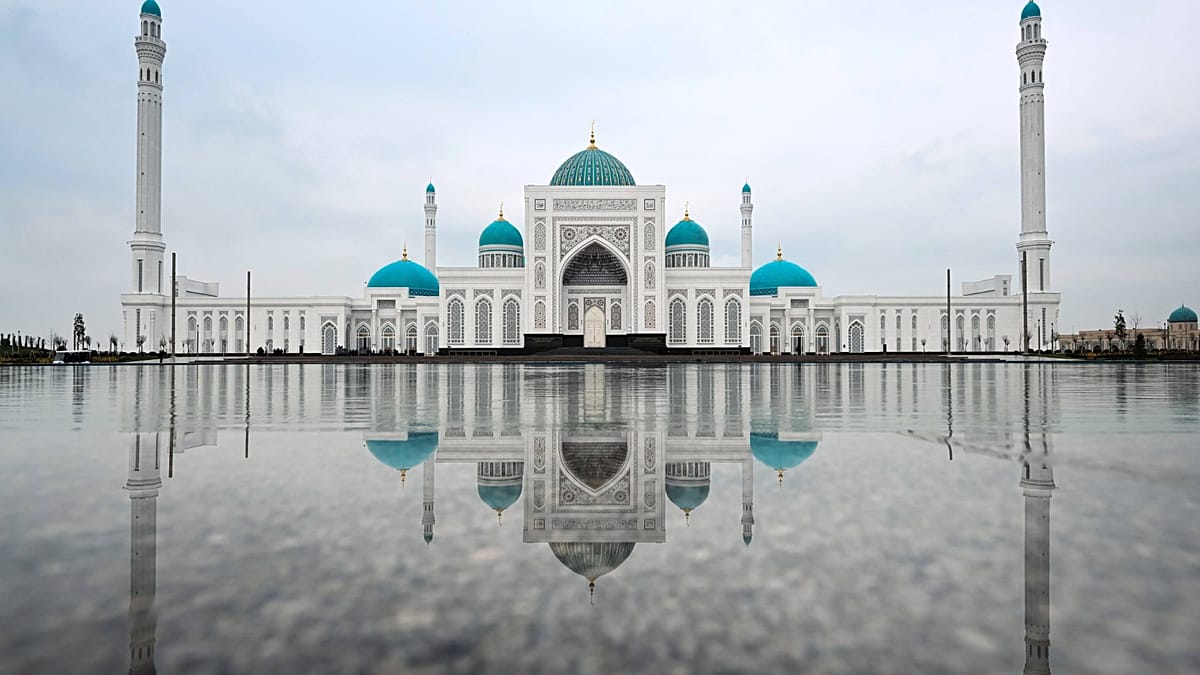
Spanning more than forty-five hectares, Uzbekistan’s newly unveiled Imam al-Bukhari Memorial Complex in Samarkand is being described as one of the largest cultural and religious destinations in the world — and it is already drawing thousands of visitors every single day.
The scale alone makes this remarkable. But what makes the complex genuinely significant is what it represents: a deliberate effort by Uzbekistan to position itself as a premier destination for both spiritual pilgrimage and cultural tourism, drawing travellers from across the Muslim world and beyond.
For a country that has spent years quietly rebuilding its international profile, this is a defining moment — and Samarkand, one of the oldest cities on earth, is at the centre of it.
Who Was Imam al-Bukhari, and Why Does He Still Matter?
Born in 810 CE in what is now Uzbekistan, Imam al-Bukhari grew into one of the most consequential Islamic scholars in history. His defining work, the Sahih al-Bukhari, remains to this day the most respected and widely studied collection of hadiths — the recorded sayings and actions of the Prophet Muhammad — in the Islamic tradition.
For more than a billion Muslims around the world, Sahih al-Bukhari is not simply a historical text. It is a living religious reference, consulted daily by scholars, clerics, and ordinary believers. That makes the scholar’s homeland a site of genuine spiritual significance — and the new memorial complex a natural focal point for pilgrims who wish to connect with that legacy in a tangible, physical way.
The complex doesn’t just honour his memory. It attempts to bring his story to life in a way that speaks to both the devout visitor and the curious traveller who may be encountering his name for the first time.
What the Imam al-Bukhari Complex Actually Offers
The development is far more than a shrine or a single monument. Across its forty-five-plus hectares, the complex functions as a full-scale cultural and religious campus — designed to serve the needs of pilgrims, scholars, tourists, and families visiting from across the region.
| Feature | Detail |
|---|---|
| Total Area | Over 45 hectares |
| Location | Samarkand, Uzbekistan |
| Subject Honoured | Imam al-Bukhari (born 810 CE) |
| Primary Religious Significance | Birthplace nation of the author of Sahih al-Bukhari |
| Visitor Capacity | Thousands per day |
| Designation | One of the largest cultural and religious destinations in the world |
The complex is designed to accommodate the kind of daily visitor volumes that only a handful of religious sites anywhere in the world can sustain. Observers note that the sheer capacity built into the development signals Uzbekistan’s ambition — this is infrastructure built not just for today’s visitors, but for the long-term growth of religious and cultural tourism in the region.
Why Samarkand Is the Right Place for This
Samarkand is not a city that needs much introduction to historians or travellers already familiar with Central Asia. It was one of the great cities of the ancient Silk Road, a crossroads of civilisations that produced extraordinary architecture, scholarship, and art across many centuries.
The city already draws visitors to sites like the Registan — the stunning medieval public square framed by three ornate madrasas — and the Shah-i-Zinda necropolis. Adding the Imam al-Bukhari Memorial Complex to that landscape gives Samarkand a new category of visitor: the religious pilgrim who might previously have had no specific reason to make the journey.
That is a strategically important distinction. Cultural tourism and pilgrimage tourism often travel on separate tracks. By creating a world-class facility that serves both audiences, Uzbekistan is effectively doubling the pool of potential visitors to one of its most historically rich cities.
What This Means for Uzbekistan’s Tourism Ambitions
Uzbekistan has been working steadily to modernise its tourism infrastructure and shed the bureaucratic image it carried during the Soviet era. Visa reforms, improved air connectivity, and investment in hospitality have all contributed to a gradual but real increase in international arrivals over recent years.
The Imam al-Bukhari complex represents something different, though — a flagship project with the scale and spiritual resonance to attract visitors who would not necessarily be drawn by architecture or history alone. Pilgrims travelling to pay respects at a site connected to one of Islam’s most revered scholars represent a highly motivated, returning visitor base.
Supporters of the development argue that the complex could serve as a catalyst for broader economic activity in Samarkand — supporting hotels, restaurants, transport links, and local artisan markets that benefit from sustained visitor traffic throughout the year, not just during peak tourist seasons.
What Comes Next for the Complex and Its Visitors
The complex has now officially opened to the public, with the capacity to receive thousands of visitors daily from its first days of operation. As word spreads across the Muslim world and among cultural travellers more broadly, those numbers are expected to grow.
For anyone planning a visit, Samarkand is accessible by Uzbekistan’s high-speed Afrosiyob train from Tashkent, which covers the roughly 300-kilometre journey in a little over two hours. The city’s existing tourism infrastructure — while still developing — has improved significantly in recent years.
What is clear is that Uzbekistan has made a deliberate and large-scale commitment to this project. A forty-five-hectare complex built to receive thousands of visitors a day is not a modest gesture. It is a statement about where the country sees itself heading — and an open invitation to the world to come and see.
Frequently Asked Questions
Where is the Imam al-Bukhari Memorial Complex located?
The complex is located in Samarkand, Uzbekistan.
How large is the Imam al-Bukhari Memorial Complex?
The complex spans over forty-five hectares, making it one of the largest cultural and religious destinations in the world.
Who was Imam al-Bukhari?
Imam al-Bukhari was an Islamic scholar born in 810 CE in what is now Uzbekistan, best known for compiling the Sahih al-Bukhari, the most respected collection of hadiths in the Islamic tradition.
How many visitors can the complex accommodate?
The complex is designed to receive thousands of visitors every day.
Is the complex open to non-Muslim visitors?
The source describes it as both a cultural and spiritual destination, suggesting it is intended to welcome a broad range of visitors, though specific admission policies have not been confirmed in the available information.
What else can visitors see in Samarkand?
Samarkand is already home to major historic sites including the Registan square and the Shah-i-Zinda necropolis, making it one of Central Asia’s richest destinations for cultural travel.


Leave a Reply