
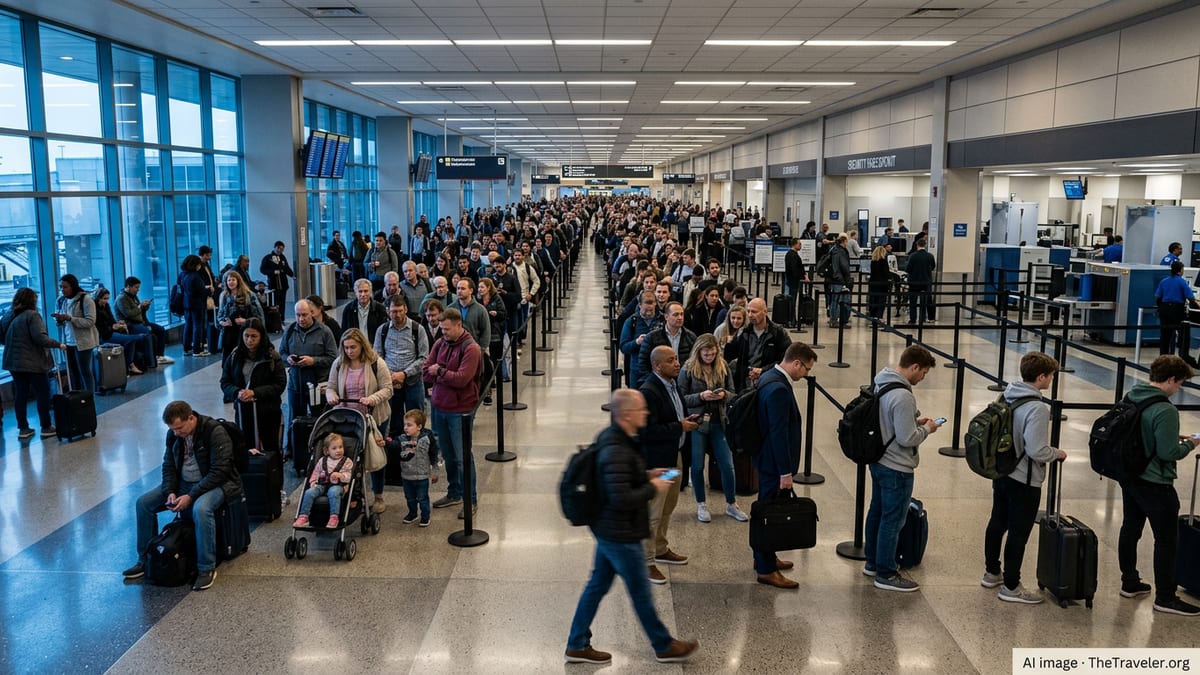
Fourteen flights canceled and nine more delayed in a single day — that’s the scale of disruption hitting passengers traveling through Denmark and the United Kingdom right now, with SAS and Virgin Atlantic at the center of a travel crisis that is rippling across Europe.
The cancellations and delays are affecting some of the busiest routes in the region, leaving travelers stranded at airports and scrambling to find alternative connections. Destinations including Stockholm, Keflavik, Warsaw, Oslo, and Dusseldorf are all caught up in the chaos, meaning the disruption stretches far beyond just two countries.
Airlines have pointed to a combination of inclement weather conditions and air traffic congestion as the driving forces behind the wave of cancellations — a pairing that, when it hits simultaneously, gives carriers very little room to recover and keep schedules on track.
What Is Causing the SAS and Virgin Atlantic Flight Cancellations
The disruptions stem from two compounding problems that airlines dread above most others: bad weather and congested airspace. Either one alone can cause delays. Together, they create a cascading effect where one canceled flight blocks an aircraft from reaching its next destination, triggering a chain of further cancellations that can take hours — sometimes an entire day — to untangle.
SAS, the Scandinavian carrier, operates heavily across Nordic and European routes, making it particularly exposed when weather systems move through the region. Virgin Atlantic, while primarily known for long-haul transatlantic routes, also operates European connections that feed into its wider network — meaning disruptions here can have knock-on effects far beyond the immediate canceled legs.
Operational constraints at key airports are also cited as a contributing factor. When ground handling, gate availability, or crew positioning is disrupted, even flights that could technically depart on time end up grounded while logistics catch up.
The Flights and Routes Caught in the Disruption
The affected routes span a significant cross-section of European air travel. Here is what is confirmed about the scope of today’s disruptions:
- Total cancellations: 14 flights canceled across SAS and Virgin Atlantic operations
- Total delays: 9 additional flights delayed
- Airlines involved: SAS (Scandinavian Airlines) and Virgin Atlantic
- Primary hubs affected: Denmark and the United Kingdom
- Impacted destinations: Stockholm, Keflavik, Warsaw, Oslo, and Dusseldorf
- Stated causes: Inclement weather conditions and air traffic congestion
| Airline | Flights Canceled | Flights Delayed | Primary Cause |
|---|---|---|---|
| SAS | Part of 14 total | Part of 9 total | Weather and air traffic congestion |
| Virgin Atlantic | Part of 14 total | Part of 9 total | Weather and operational constraints |
| Combined | 14 | 9 | Weather, congestion, and operational issues |
Who Gets Hit Hardest — and What It Actually Means for Passengers
If you’re traveling through Denmark or the UK today — or connecting through any of the five named destinations — the practical reality is that your journey is at serious risk of disruption. A canceled flight doesn’t just mean a delay; it means rebooking queues, potentially no available seats for hours or even days on popular routes, and the very real possibility of overnight stays in airports or hotels.
Passengers on connecting itineraries face the sharpest exposure. A canceled SAS flight from Copenhagen to Stockholm, for example, could cause a traveler to miss an onward connection to a destination nowhere near the original disruption zone. That ripple effect is where travel chaos truly earns its name.
Business travelers, families with young children, and anyone on a tight itinerary — think cruise departures, weddings, or medical appointments — are the groups with the least margin for error when schedules collapse this way.
The five affected destination cities — Stockholm, Keflavik, Warsaw, Oslo, and Dusseldorf — are all major transit hubs in their own right, meaning disruptions arriving into those airports can cascade further into their own regional networks, compounding the problem for passengers trying to travel onward from those points.
What Affected Travelers Should Do Right Now
If your flight is on either of these carriers today, the most important step is to check your flight status directly with your airline before heading to the airport. Both SAS and Virgin Atlantic maintain real-time flight status tools on their websites and apps — use them.
Passengers whose flights have been canceled are generally entitled to rebooking on the next available service at no extra cost, and in many cases may also be entitled to compensation or care — including meals and accommodation — depending on the circumstances and the regulations that apply to their specific route and booking.
For those already at the airport, speaking directly with airline staff or customer service agents will be faster and more reliable than waiting on hold with phone lines, which tend to become overwhelmed during large-scale disruption events like this one.
Travelers with flexible itineraries may also want to consider whether alternative routing — such as a different hub or carrier — could get them to their destination sooner than waiting for the next available seat on the original booking.
Frequently Asked Questions
How many flights have been canceled today?
A combined total of 14 flights have been canceled across SAS and Virgin Atlantic operations in Denmark and the UK.
Which destinations are affected by the cancellations and delays?
The confirmed affected destinations include Stockholm, Keflavik, Warsaw, Oslo, and Dusseldorf, among others across Europe.
What is causing the SAS and Virgin Atlantic disruptions?
The airlines have cited inclement weather conditions and air traffic congestion as the main reasons behind the cancellations and delays.
How many flights are delayed in addition to the cancellations?
Nine flights are confirmed as delayed, bringing the total number of disrupted services to 23 across both carriers.
Which airlines are involved in the disruption?
SAS (Scandinavian Airlines) and Virgin Atlantic are the two carriers at the center of today’s travel disruptions in Denmark and the UK.
When will normal flight operations resume?
This has not yet been confirmed by either airline, and the timeline for full recovery will depend on how quickly weather conditions improve and air traffic congestion eases.



Leave a Reply