
▶ Read transcript
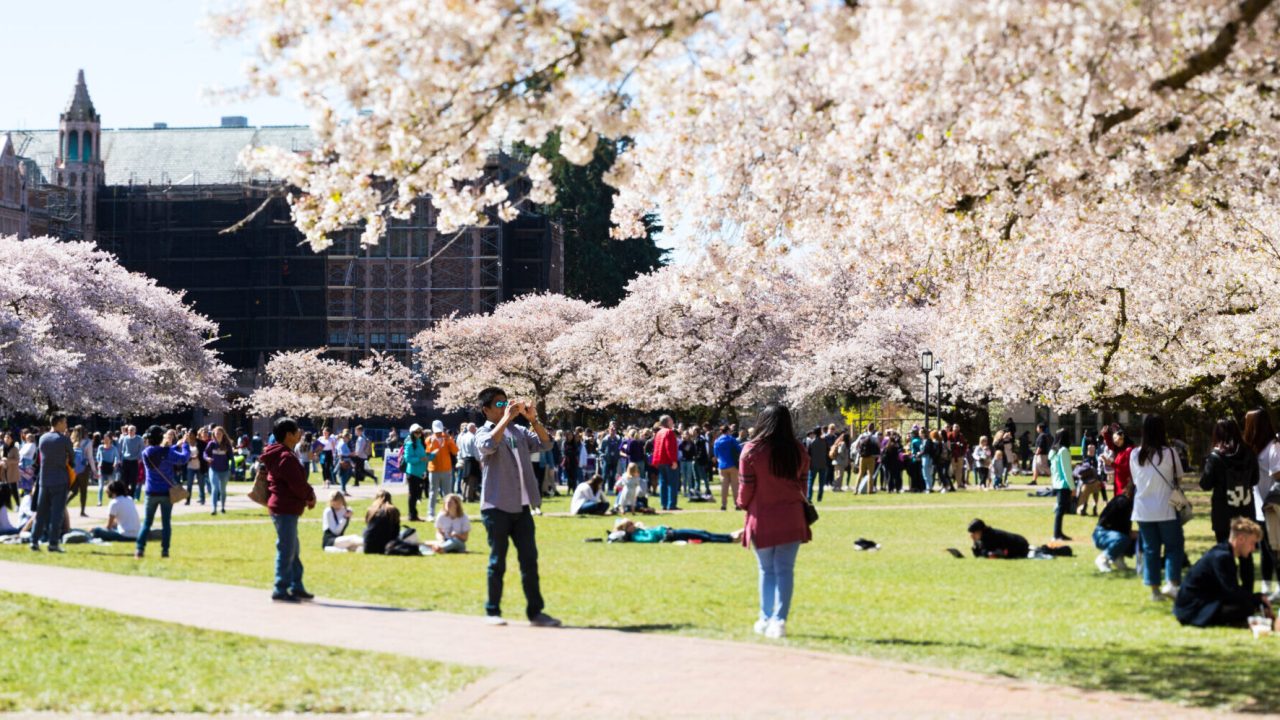
Here’s what you need to know about Seattle’s Cherry Blossom Festival in 2026. This year’s event marked a major milestone, the festival’s 50th anniversary, tracing its roots back to 1976 when Japanese Prime Minister Takeo Miki gifted one thousand cherry trees to Seattle as a symbol of friendship between the two nations. The festival ran April 10th through 12th at Seattle Center, drawing thousands of visitors across three venues, including Fisher Pavilion, the Armory Food and Event Hall, and the Exhibition Hall. Attendees experienced taiko drumming, traditional performances, Japanese food, and hands-on cultural demonstrations. Seattle’s climate also plays a unique role here, the city’s latitude mirrors parts of northern Japan, making it one of the few American cities where cherry trees truly thrive, with the University of Washington Quad reaching peak bloom just weeks before the festival. If you’re planning a Pacific Northwest spring trip, mark your calendar now for early April and book early because this one sells the city out fast.
She almost missed it. Standing at the corner of 5th Avenue North on a Friday afternoon in early April 2026, a first-time visitor from Phoenix named Marisol watched a taiko drumming troupe shake the glass walls of Fisher Pavilion until her coffee cup vibrated on the table. She had come to Seattle for a conference. She stayed for the festival.
That magnetic pull is exactly what organizers of the Seattle Cherry Blossom and Japanese Cultural Festival have counted on for nearly five decades. The 2026 edition, held April 10 through 12 at Seattle Center, packed the Armory Food and Event Hall, Fisher Pavilion, and Exhibition Hall with thousands of attendees over three days, turning the city’s civic campus into a living, breathing celebration of Japanese heritage.
A Gift of 1,000 Trees That Grew Into a Festival
The story begins not with a festival planner but with a prime minister. In 1976, Japanese Prime Minister Takeo Miki arranged for 1,000 cherry trees to be gifted to Seattle as a symbol of friendship between the two nations. Those trees took root across the city, and so did something less tangible: a recurring cultural conversation that has outlasted generations of both cities’ leaders.
The annual Cherry Blossom and Japanese Cultural Festival was established that same year, making 2026 its 50th anniversary. That milestone adds a layer of meaning to every lantern hung and every bowl of ramen served.
Seattle’s relationship with cherry blossoms actually predates the festival by nearly a century. At Pier 66 on the city’s waterfront, cherry trees were planted as a gift from Nippon Yusen Kaisha, a Japanese shipping company, with roots tracing back to 1896. The blossoms at that waterfront location tell a story of maritime trade, immigration, and cultural exchange that predates much of modern Seattle itself.
The University of Washington’s Quad: Seattle’s Most Photographed Spring Spectacle
No mention of Seattle and cherry blossoms is complete without the University of Washington’s famous Quad. Each spring, the UW draws visitors from across the country hoping to catch the iconic trees at peak bloom. In 2026, the estimated peak arrived in late March, giving festival-goers a double window of pink to frame their April trip.
| Destination | Peak Bloom 2026 (Est.) | Best Viewing Spot |
|---|---|---|
| Seattle, USA | Late March – Early April | UW Quad, Waterfront Pier 66 |
| Tokyo, Japan | March 24 – April 2 | Meguro River |
| Kyoto, Japan | March 28 – April 5 | Philosopher’s Path |
| Paris, France | Early April | Champs-de-Mars |
| London, UK | Late March – Early April | Greenwich Park |
Seattle’s placement on that global list is not accidental. The city sits at a latitude and climate zone that mirrors parts of northern Japan, making it one of the few American cities where Yoshino cherry trees truly flourish. That botanical alignment has become a tourism asset worth millions in visitor spending each spring.
Three Days at Seattle Center: What the 2026 Festival Actually Delivered
The 2026 festival ran Friday through Sunday, April 10 to 12, spreading across three distinct venues inside Seattle Center. The Armory Food and Event Hall hosted food vendors offering everything from yakitori to mochi ice cream. Fisher Pavilion became the main stage for performances. The Exhibition Hall filled with artisan demonstrations, cultural education booths, and hands-on activities for families.
The performances leaned into authenticity. Taiko groups, traditional dance ensembles, and martial arts demonstrations drew crowd clusters throughout both days. Local Seattle-based Japanese American organizations used the platform to share stories that go beyond tourist-friendly aesthetics.
“These blossoms are beautiful, but they also cast a shadow. They sit on land with complicated history, and the festival is a chance to look at all of it.”
— Perspective shared via Real Change News
That dual nature, celebration and reckoning, gives the Seattle festival a texture that distinguishes it from purely decorative cherry blossom events. The Japanese American community in Seattle carries the memory of WWII-era incarceration, and many festival participants use this annual gathering to honor that history alongside the cultural pride.
Seattle Center Festál: The Framework Behind the Flowers
The Cherry Blossom and Japanese Cultural Festival is part of Seattle Center Festál, an annual series of free and low-cost cultural festivals hosted at the iconic 74-acre campus. Festál has presented more than 30 different cultural celebrations over the years, but the Japanese festival consistently ranks among its highest-attended events.
The Festál model matters because it democratizes cultural access. Families who cannot afford ticketed attractions can spend an entire day inside Fisher Pavilion watching live performance, tasting food, and learning about ikebana flower arrangement without spending a dollar on admission.
| Venue | Capacity | Primary Use | Indoor/Outdoor | Notable Feature | Accessibility |
|---|---|---|---|---|---|
| Fisher Pavilion | 2,500+ | Performances & Demos | Semi-Outdoor | Taiko Drumming Stage | Wheelchair Accessible |
| Armory Food & Event Hall | 3,000+ | Food & Cultural Exhibits | Indoor | Japanese Cuisine Vendors | Fully Accessible |
| Exhibition Hall | 1,800+ | Art & Cultural Displays | Indoor | Traditional Craft Showcases | Wheelchair Accessible |
| Seattle Center Grounds | 10,000+ | General Festival Space | Outdoor | Cherry Blossom Tree Views | Paved Pathways |
| Seattle Center Campus | 15,000+ | Full Festival Hub | Both | 50th Anniversary Landmark | Full ADA Compliance |
That accessibility is part of why the festival keeps growing. Word-of-mouth brings new attendees who then become regulars. Social media amplifies the visual spectacle every single April, drawing visitors from outside the Pacific Northwest who combine the festival with broader Seattle tourism itineraries.
What a Half-Century of Sakura Diplomacy Reveals About Seattle’s Identity
Seattle often gets categorized by its tech industry or its coffee culture. The Cherry Blossom Festival complicates that reductive framing in the best possible way. It reveals a city with deep Asian Pacific American roots, a history of international exchange, and a civic infrastructure willing to dedicate prime real estate to cultural celebration.
The waterfront cherry trees at Pier 66, planted as a Japanese shipping company’s gesture of goodwill in the late 19th century, predate the Boeing plant, predate Starbucks, and predate Amazon by about a hundred years. The trees were here before the tech campuses. That timeline matters.
For travelers, this context transforms a pretty weekend outing into something more resonant. Watching a taiko performance inside Fisher Pavilion is not just entertainment. It is participation in a relationship between two countries that has been tended, interrupted, and renewed across 130 years.
The visitor from Phoenix who almost walked past the festival eventually spent six hours there. She booked a return trip before her flight home. Not for the tech campuses. Not for the coffee.
For the drums, the petals, and the particular feeling of a city that knows exactly what it wants to remember.
You have a three-day weekend in Seattle in early April 2026. The Cherry Blossom Festival runs Friday through Sunday at Seattle Center. The UW Quad is near peak bloom. You also have tickets to a tech campus tour on Saturday that are non-refundable.
Frequently Asked Questions

You Might Also Like
Kampong Cham’s Khmer New Year Treats Are Drawing Visitors in Ways Few Expected
Cambodia’s Khmer New Year is one of Southeast Asia’s most vibrant cultural celebrations — and…
EasyJet Warns British Travellers Flights Will Cost More By Summer 2026
If you’re planning a summer holiday in Europe and haven’t booked your flights yet, the…
Aegean Airlines Quietly Cuts Flights to Dubai and Five More Middle East Cities
Greece’s largest airline has quietly pulled the plug on flights to some of the Middle…
Leave a Reply