
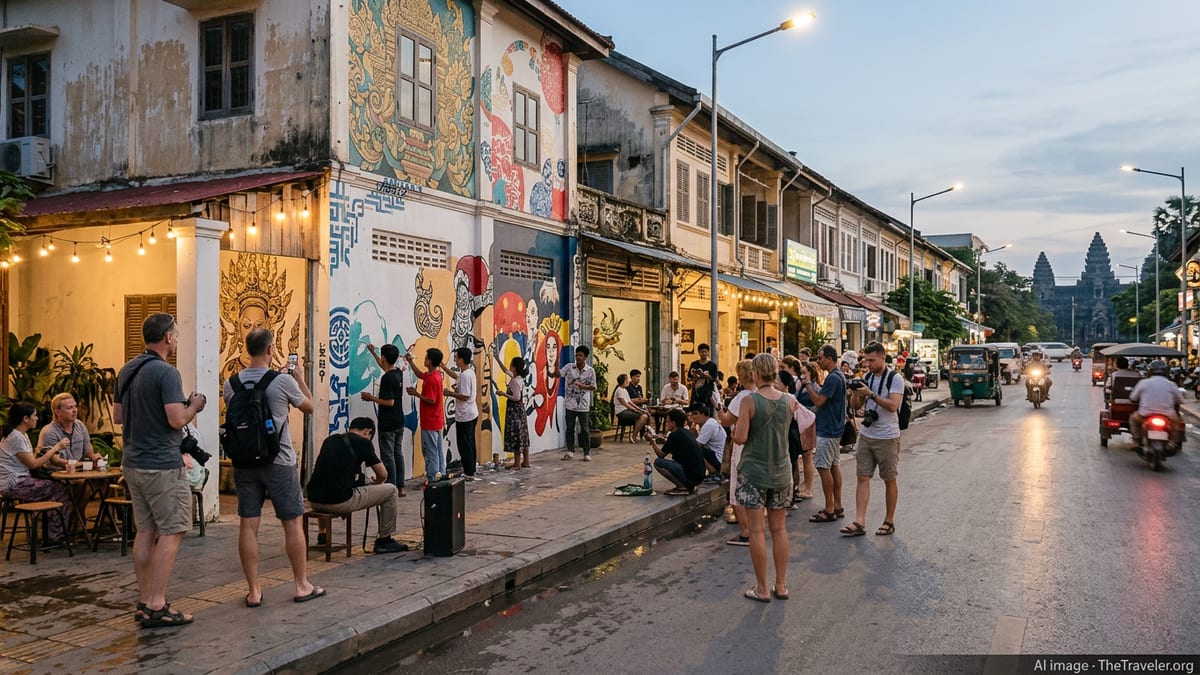
On March 21, 2026, the streets of Siem Reap transformed into an open-air stage — and the world was invited to watch. A two-hour Cambodia-China international street art performance filled the city’s famous Pub Street area with traditional music, live dance, and vibrant cultural displays, drawing crowds of both local residents and international visitors.
The event wasn’t just a celebration. It was a deliberate, carefully timed signal to the global tourism market: Cambodia is open, active, and building something bigger with one of its most important travel partners.
For anyone planning a trip to Southeast Asia — or simply watching how cultural diplomacy shapes tourism trends — this performance marks a moment worth paying attention to.
What the Siem Reap Street Art Performance Was Actually About
The March 21 event was held in the Pub Street area of Siem Reap province, one of the most visited districts in Cambodia and the gateway to the ancient temples of Angkor Wat. The two-hour performance brought together traditional music, songs, and dances representing both Cambodian and Chinese cultural heritage.
But the street art performance was more than an artistic showcase. Officials have framed it as a key activation within the broader Cambodia-China Tourism Year campaign — a bilateral initiative designed to deepen travel ties between the two countries and drive meaningful visitor growth in both directions.
The timing is deliberate. Cambodia is preparing to launch a pilot visa-free policy specifically for Chinese tourists, set to begin in June 2026. The Siem Reap performance served as an early, high-visibility signal of that coming change — a way to build awareness and excitement among Chinese travelers before the policy officially takes effect.
Why This Matters for Cambodia’s Tourism Recovery
China has historically been one of Cambodia’s largest sources of international visitors, and the relationship between the two countries extends well beyond tourism into trade, infrastructure investment, and diplomatic ties. Rebuilding that visitor pipeline after years of disruption carries enormous economic weight for communities in and around Siem Reap.
Siem Reap, in particular, depends heavily on international tourism. The city exists in large part as a base for visitors exploring the Angkor Archaeological Park, a UNESCO World Heritage Site and one of the most significant historical complexes in the world. When international arrivals drop, local businesses — from guesthouses to street food vendors to tour operators — feel it directly.
Events like the Cambodia-China street art performance serve a dual purpose: they generate immediate foot traffic and media attention, and they send a longer-term message to travel planners and tour operators that Siem Reap is investing in its cultural appeal.
Officials have noted that the performance is part of a wider initiative by Cambodian authorities to position the country as a vibrant, culturally rich destination — not just a historical one.
Key Details at a Glance
- Event date: March 21, 2026
- Location: Pub Street area, Siem Reap province, Cambodia
- Duration: Two hours
- Cultural content: Traditional music, songs, and dances from both Cambodia and China
- Campaign connection: Part of the Cambodia-China Tourism Year initiative
- Policy link: Tied to Cambodia’s pilot visa-free entry for Chinese tourists, launching June 2026
- Audience: Local residents and international visitors
| Detail | Information |
|---|---|
| Event Date | March 21, 2026 |
| Venue | Pub Street, Siem Reap Province |
| Event Duration | Two hours |
| Campaign Name | Cambodia-China Tourism Year |
| Upcoming Policy | Pilot visa-free entry for Chinese tourists |
| Policy Start Date | June 2026 |
Who Stands to Benefit — and How
The most immediate beneficiaries are the businesses and communities in Siem Reap that rely on visitor spending. A sustained increase in Chinese tourist arrivals — especially under a visa-free framework — would translate into more bookings, more spending on food and transport, and greater demand for guided tours and cultural experiences.
For Chinese travelers, the practical impact is straightforward: if the pilot visa-free policy launches as planned in June 2026, visiting Cambodia will become significantly easier and less administratively burdensome. That kind of friction reduction tends to have a real effect on travel decisions, particularly for short-haul and spontaneous trips.
For the broader tourism industry watching Southeast Asia, the Cambodia-China Tourism Year campaign is also a case study in how bilateral cultural programming can be used to rebuild and expand visitor markets. Street-level performances in high-footfall areas like Pub Street create shareable, visually compelling content that spreads organically across social media — an effect that traditional advertising rarely matches.
Supporters of the initiative point to evidence suggesting that cultural exchange events generate goodwill and familiarity that outlasts any single performance, laying groundwork for sustained tourism interest rather than a one-time spike.
What Comes Next for Cambodia-China Tourism
The March 21 performance is described as part of a wider initiative — meaning more events and activations are expected as the Cambodia-China Tourism Year campaign continues through 2026.
The most concrete next milestone is the June 2026 launch of the pilot visa-free policy for Chinese tourists. How that policy performs in its early months will likely shape whether Cambodia extends, expands, or modifies the program going forward.
For travelers considering a visit to Siem Reap, the combination of active cultural programming and an incoming visa-free entry option makes 2026 a particularly notable year to pay attention to. The city has long been on the bucket lists of history and culture travelers worldwide — and Cambodia appears to be working hard to make sure it stays there.
Frequently Asked Questions
When did the Cambodia-China street art performance take place?
The performance was held on March 21, 2026, in the Pub Street area of Siem Reap province.
How long did the Siem Reap street art event last?
The event ran for two hours and featured traditional music, songs, and dances from both Cambodia and China.
What is the Cambodia-China Tourism Year campaign?
It is a bilateral initiative aimed at strengthening tourism ties between Cambodia and China, with the Siem Reap street art performance serving as one of its key activations.
When does Cambodia’s pilot visa-free policy for Chinese tourists begin?
According to the source, the pilot visa-free policy for Chinese tourists is set to begin in June 2026.
Will there be more events like this in Siem Reap?
The performance is described as part of a wider initiative, suggesting additional events are planned, though specific future dates have not been confirmed in the available source material.
Does the visa-free policy apply to all tourists or only Chinese nationals?
Based on Details about other nationalities have not been confirmed in this reporting.


Leave a Reply