
▶ Read transcript
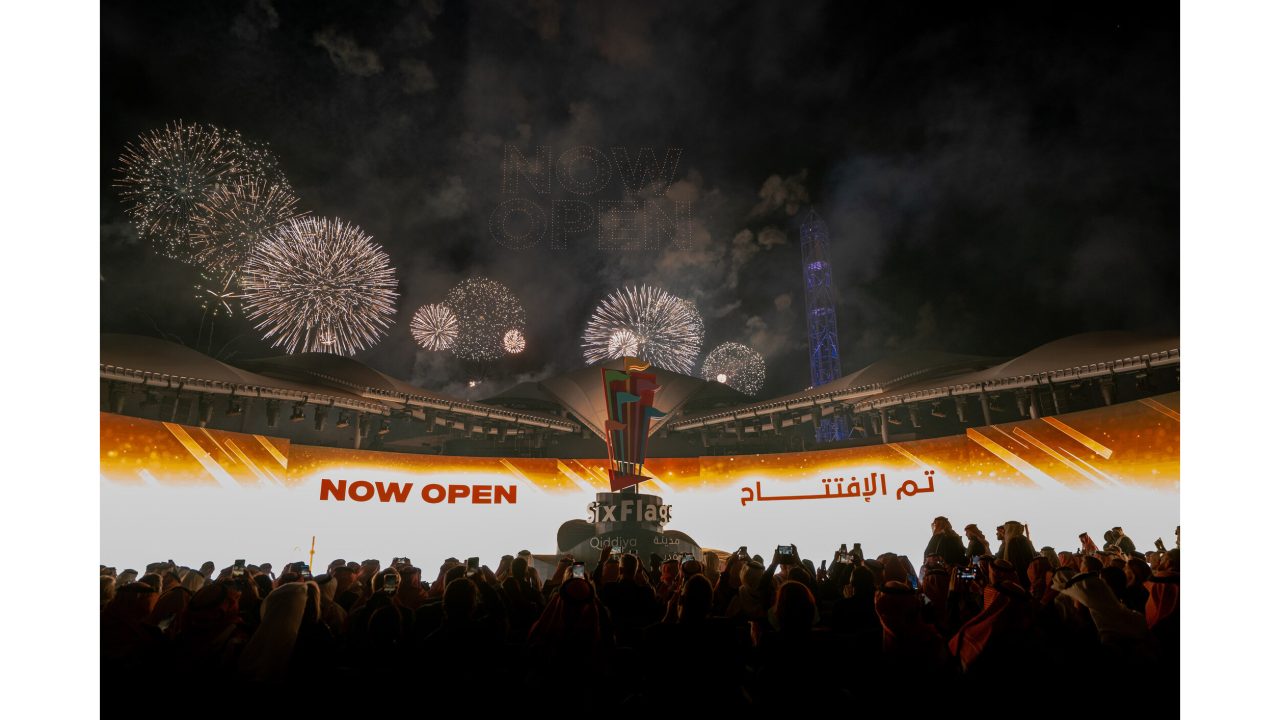
Here’s what you need to know about Six Flags Qiddiya City, the billion-dollar theme park that just opened in Riyadh and is turning heads across the global travel industry.
Saudi Arabia officially opened the park in 2025, making it the first Six Flags destination ever designed and built outside North America. The price tag is over one billion dollars, funded not by Six Flags itself but by Saudi Arabia’s sovereign wealth fund through the Qiddiya Investment Company. The kingdom owns the asset — Six Flags just lent its name and expertise.
The park’s headline attraction is Falcon’s Flight, currently the world’s tallest and fastest rollercoaster, which instantly puts Riyadh on the map for thrill-seekers everywhere. And the ambition doesn’t stop there — Saudi Arabia is targeting 17 million visitors annually by 2030, putting it in the same league as Disneyland Paris.
If you’re planning a visit, aim for October through March. Riyadh summers regularly hit 113 degrees Fahrenheit, and the outdoor experience is far better in cooler months.
Seventeen million visitors. That’s the annual attendance target Saudi Arabia has set for Six Flags Qiddiya City by 2030, a number that would place it in the same conversation as Disneyland Paris and Universal Studios Japan. For a country that, just a decade ago, had virtually no commercial entertainment infrastructure, that figure is staggering.
Six Flags Qiddiya City officially opened its gates in Riyadh in 2025, and the world’s travel industry is paying close attention. This isn’t just another theme park ribbon-cutting. It’s the first Six Flags destination ever designed and built outside North America, and it carries the weight of an entire national economic strategy on its shoulders.
A $1 Billion Bet Backed by Saudi Arabia’s Sovereign Wealth Fund
The park’s price tag alone makes it remarkable. Saudi Arabia opened what has been described as a record-breaking $1 billion theme park, a figure that reflects not just construction costs but a deliberate signal to the global tourism market. The money didn’t come from Six Flags Entertainment Corporation. It came from the Qiddiya Investment Company, which is backed by Saudi Arabia’s Public Investment Fund, the kingdom’s sovereign wealth fund.
That distinction matters enormously. Six Flags licensed its brand and expertise; Saudi Arabia built and owns the asset. The arrangement reflects a broader pattern in Vision 2030 projects, where international brands provide credibility while the kingdom retains control and economic benefit.
The Qiddiya project was first announced in April 2017 as a cornerstone of Vision 2030, Saudi Arabia’s national strategy to reduce oil dependency and grow domestic tourism and entertainment spending. Six Flags Entertainment Corporation formally announced its involvement on April 4, 2018, backed by the Public Investment Fund. What followed was years of construction, pandemic delays, and recalibrated timelines before the park finally opened.
| Feature | Six Flags Qiddiya City | Typical Six Flags Park (US) |
|---|---|---|
| Location | Riyadh, Saudi Arabia | North America |
| Ownership | Qiddiya Investment Company (PIF-backed) | Six Flags Entertainment Corp. |
| Themed Zones | 6 zones | Varies, typically 4–6 |
| Rides and Attractions | 28 rides, 29 international F&B outlets | Typically 40–50 rides |
| Signature Coaster | Falcon’s Flight (world’s tallest and fastest) | Regional record-holders |
| Investment | $1 billion+ | Varies widely |
Falcon’s Flight and the Science of Record-Breaking Attractions
No element of Six Flags Qiddiya City has generated more global attention than Falcon’s Flight. The coaster holds the title of the world’s tallest and fastest rollercoaster, a record that instantly positions Riyadh on the bucket list of thrill-seekers worldwide. In the competitive theme park industry, a single record-breaking ride can define a destination’s identity for decades.
Consider how Kingda Ka at Six Flags Great Adventure in New Jersey held the world height record for years and became the park’s defining attraction. Falcon’s Flight operates on the same principle, but with a crucial difference: it’s the anchor of an entirely new tourism ecosystem, not just one ride in an established park.
The broader park offers 28 rides and attractions spread across 6 themed zones, with indoor and outdoor experiences designed to function year-round in Riyadh’s intense climate. The inclusion of 29 international food and beverage outlets signals a deliberate effort to position the park as a full-day, full-sensory destination rather than a simple thrill venue.
The park’s design also incorporates what its developers describe as a blend of thrills, culture, and sustainability. That last word is significant. Saudi Arabia has faced sustained international scrutiny over its environmental record, and embedding sustainability messaging into a flagship entertainment project reflects a calculated effort to shape perception alongside experience.
Vision 2030’s Tourism Gamble and What It Means for Global Travel Flows
Saudi Arabia’s Vision 2030 strategy is, at its core, an economic diversification plan. Oil revenues have historically accounted for the vast majority of government income. Tourism, entertainment, and hospitality are identified as the sectors that can replace that dependency over time.
Six Flags Qiddiya City is one piece of a much larger puzzle. The broader Qiddiya City development project is projected to generate approximately 325,000 jobs and attract up to 17 million visitors annually by 2030. Those numbers would represent a seismic shift in Middle Eastern tourism patterns, drawing visitors who currently default to Dubai, Abu Dhabi, or European destinations.
“The Qiddiya project was announced in April 2017 as part of Saudi Vision 2030, a national strategy aimed at diversifying the Saudi economy and increasing domestic tourism and entertainment spending.”
— Qiddiya Investment Company, Project Overview
The implications for global travel flows are real. When a market the size of Saudi Arabia, with a young population hungry for domestic entertainment, builds world-class infrastructure, it doesn’t just capture existing demand. It creates new demand. Saudi families who previously traveled to Orlando or Paris for theme park experiences now have a compelling reason to stay home. That’s a meaningful shift in international tourism spending patterns.
At the same time, the park is explicitly designed to attract international visitors. The Six Flags brand carries recognition across North America, Europe, and Asia. Pairing that brand with a world record-holding coaster and a destination city narrative gives travel marketers a clear hook for international campaigns.
The Broader Qiddiya City Vision Beyond the Theme Park Gates
It would be a mistake to evaluate Six Flags Qiddiya City in isolation. The theme park is the most visible and immediately accessible element of a far larger urban development project. Qiddiya City is being built as an entertainment, sports, and arts destination covering a massive footprint southwest of Riyadh.
The full Qiddiya City vision includes motorsport facilities, water parks, a performing arts district, and residential communities. The theme park functions as the anchor tenant, the first completed major attraction that establishes the destination’s identity and begins generating visitor traffic while the rest of the city develops around it.
This model mirrors how major resort destinations have been built elsewhere. Disney World in Florida opened its first theme park in 1971 and spent decades building hotels, additional parks, and supporting infrastructure around it. Qiddiya is attempting a compressed version of that trajectory, with the advantage of sovereign wealth fund backing that removes the typical financing constraints.
What the Next Five Years Look Like for Qiddiya and Saudi Tourism
The 2030 deadline creates a clear accountability horizon. Saudi Arabia has committed publicly to transforming its tourism sector, and projects like Six Flags Qiddiya City are the tangible evidence of that commitment. The question isn’t whether the infrastructure is impressive. It clearly is. The question is whether it translates into sustained international visitor growth.
Several factors will shape that outcome. Visa accessibility for international travelers has improved significantly under Vision 2030 reforms, with Saudi Arabia introducing tourist visas in 2019 for the first time in the country’s modern history. That policy shift, combined with new direct flight routes and hotel capacity expansion across Riyadh, creates a more complete tourism ecosystem.
The competitive landscape is also shifting. Dubai has spent two decades building its reputation as the Middle East’s premier leisure destination. Abu Dhabi has invested heavily in cultural tourism through the Louvre Abu Dhabi and Ferrari World. Riyadh is entering that competition with significant resources and a clear point of differentiation: scale and spectacle.
For global travelers, the emergence of Saudi Arabia as a serious tourism destination expands the menu of options in a region that was previously dominated by a handful of city-states. That competition ultimately benefits travelers through better experiences, more competitive pricing, and more diverse itinerary options across the Arabian Peninsula.
The park’s success will also be watched closely by the global theme park industry. If Six Flags Qiddiya City achieves even a fraction of its 17 million visitor target, it will validate the model of sovereign wealth-backed entertainment infrastructure as a tool for tourism development. Other nations with similar ambitions and similar funds are already watching.
Six Flags Qiddiya City isn’t just a theme park opening in the desert. It’s a proof of concept for an entirely new way of building tourism destinations, and the world’s travel industry is only beginning to understand what that means for the decades ahead.
Frequently Asked Questions

You Might Also Like
Air China Now Links Chengdu to Brussels in Just 11 Hours
A flight that once demanded a gruelling 17-plus hours of connections and layovers now takes…
Polokwane Is Set to Become Africa’s Tourism Capital in 2026
A city better known as the gateway to one of Africa’s greatest wildlife destinations is…
Port Stephens Council’s Big Investments Are Quietly Reshaping Australian Travel in 2025
Port Stephens, a coastal region roughly two hours north of Sydney, is making a serious…
Leave a Reply