
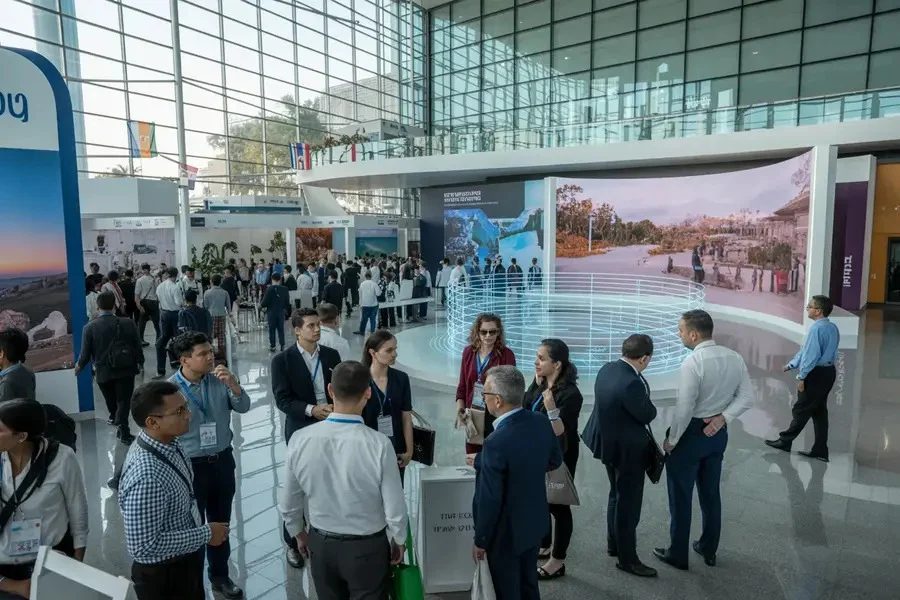
A growing coalition of nations is converging on the International Mediterranean Tourism Market — known as IMTM — and the guest list tells a story about where global tourism is heading. Nepal has joined Greece, Honduras, Sri Lanka, Thailand, Georgia, and several other countries at the event, as Israel uses the platform to highlight what it describes as breakthrough advances in travel technology, tourism accessibility, and destination development.
For an industry still recalibrating after years of disruption, IMTM has become a place where countries don’t just display brochures — they compare strategies, forge partnerships, and signal what kind of tourism future they’re building toward. Nepal’s presence at this year’s edition is a deliberate statement about its ambitions.
The breadth of participating nations — spanning South Asia, Southeast Asia, Eastern Europe, Central America, and the Mediterranean — reflects how international the conversation around tourism innovation has become. And Israel’s role as host and showcase gives the event a particular focus on technology and accessibility as tools for destination growth.
What IMTM Is and Why Countries Keep Showing Up
The International Mediterranean Tourism Market is an established trade event held in Israel, bringing together tourism boards, travel industry professionals, and destination marketers from across the globe. It functions as both a networking forum and a showcase for new ideas in travel — from digital booking infrastructure to accessible tourism design.
Israel has used its hosting role to spotlight its own advances in travel technology and its approach to making tourism more accessible to a wider range of visitors. These aren’t abstract policy goals. They reflect a practical recognition that modern travelers expect seamless digital experiences and that destinations which can’t serve travelers with disabilities or mobility challenges are leaving a significant portion of the global market behind.
For countries like Nepal, attending isn’t just about visibility. It’s about learning what works, finding partners, and benchmarking their own tourism infrastructure against what other nations are building.
Nepal’s Participation and What It Signals
Nepal’s decision to join the IMTM lineup alongside Greece, Honduras, Sri Lanka, Thailand, and Georgia is notable for a country whose tourism identity has historically been defined by trekking, mountaineering, and adventure travel. The Himalayas are a powerful draw — but Nepal’s tourism sector has long grappled with infrastructure limitations and accessibility gaps that constrain the range of visitors it can attract.
By engaging with Israel’s initiatives around tourism technology and accessibility, Nepal is signaling that it wants to broaden that appeal. Officials have noted that adopting innovative solutions to enhance tourism infrastructure is a priority, and participation in forums like IMTM is part of how that goal gets pursued in practice.
The move also reflects a wider trend: countries that have traditionally relied on natural or cultural attractions are increasingly investing in the systems and standards that make those attractions reachable to more people.
The Countries at the Table — and What They Represent
The diversity of nations participating in IMTM this year is worth examining. Each brings a different tourism profile and a different set of challenges and opportunities.
| Country | Region | Tourism Profile |
|---|---|---|
| Nepal | South Asia | Adventure travel, trekking, Himalayan destinations |
| Greece | Mediterranean | Cultural heritage, island tourism, coastal destinations |
| Honduras | Central America | Ecotourism, Mayan ruins, Caribbean coastline |
| Sri Lanka | South Asia | Cultural sites, beaches, wildlife tourism |
| Thailand | Southeast Asia | Mass tourism, temples, beaches, culinary travel |
| Georgia | Eastern Europe / Caucasus | Wine tourism, mountain landscapes, ancient heritage |
| Israel (host) | Middle East | Religious tourism, technology innovation, accessibility |
What these countries share, despite their geographic and cultural differences, is an interest in how technology and accessibility standards can expand their tourism reach. That common thread is what IMTM is designed to explore.
Israel’s Focus on Travel Technology and Accessibility
As the host nation, Israel is using IMTM to showcase what it frames as breakthrough developments in travel technology and tourism accessibility. While specific product details were not included in the available reporting, the focus areas align with broader industry trends: digital infrastructure for travelers, accessible design at tourist sites, and data-driven approaches to destination development.
Accessibility in tourism — designing experiences that work for travelers with physical disabilities, sensory impairments, or other needs — has moved from a niche concern to a mainstream priority in recent years. Destinations that invest in this area don’t just serve a moral imperative; they open themselves to a substantial and underserved global travel market.
Israel’s emphasis on destination development strategy is also significant. Countries attending IMTM aren’t just looking for gadgets — they’re looking for frameworks and partnerships that can reshape how they plan, market, and deliver tourism at scale.
What This Means for Travelers Planning Ahead
For travelers, the practical consequence of events like IMTM tends to show up months or years later — in better booking systems, more accessible attractions, improved wayfinding, and stronger partnerships between airlines, hotels, and tourism boards.
Nepal’s engagement with these ideas could eventually translate into improvements that make Himalayan travel more accessible to visitors who might currently find it out of reach. Similarly, the conversations happening between Greece, Thailand, Sri Lanka, and other participating nations could shape how those destinations evolve their offerings for international visitors.
None of this happens overnight. But the forum is where the groundwork gets laid.
What Comes Next for IMTM Participants
Following the event, participating nations are expected to carry forward the partnerships, insights, and strategies developed at IMTM into their domestic tourism planning. For Nepal specifically, the focus is on strengthening its position in the global tourism market by applying the innovative approaches it has been exposed to through Israel’s showcase and the broader forum.
The event’s outcomes — in terms of bilateral agreements, technology adoptions, or policy shifts — have not yet been confirmed in detail. What is clear is that the participation of such a geographically diverse group of nations reflects a shared recognition: tourism in the coming decade will be shaped by technology, accessibility, and the willingness to learn across borders.
Frequently Asked Questions
What is IMTM?
IMTM stands for the International Mediterranean Tourism Market, a trade event held in Israel that brings together tourism boards and travel industry professionals from around the world.
Which countries participated in IMTM alongside Israel?
According to available reporting, participating nations include Nepal, Greece, Honduras, Sri Lanka, Thailand, and Georgia, among others.
Why did Nepal attend IMTM?
Nepal’s participation is aimed at engaging with Israel’s innovations in travel technology and tourism accessibility, with the goal of enhancing its own tourism infrastructure and attracting more global visitors.
What is Israel showcasing at IMTM?
Israel is highlighting breakthrough travel technologies, advancements in tourism accessibility, and strategies for destination development, though specific product details were not confirmed in the available reporting.
What does tourism accessibility mean in this context?
Tourism accessibility refers to designing travel experiences and infrastructure that are usable by a wider range of visitors, including those with physical disabilities or other needs.
Will IMTM lead to specific agreements between countries?
This has not yet been confirmed in the available reporting, though participants are expected to apply insights and partnerships developed at the forum to their domestic tourism planning.

Leave a Reply