
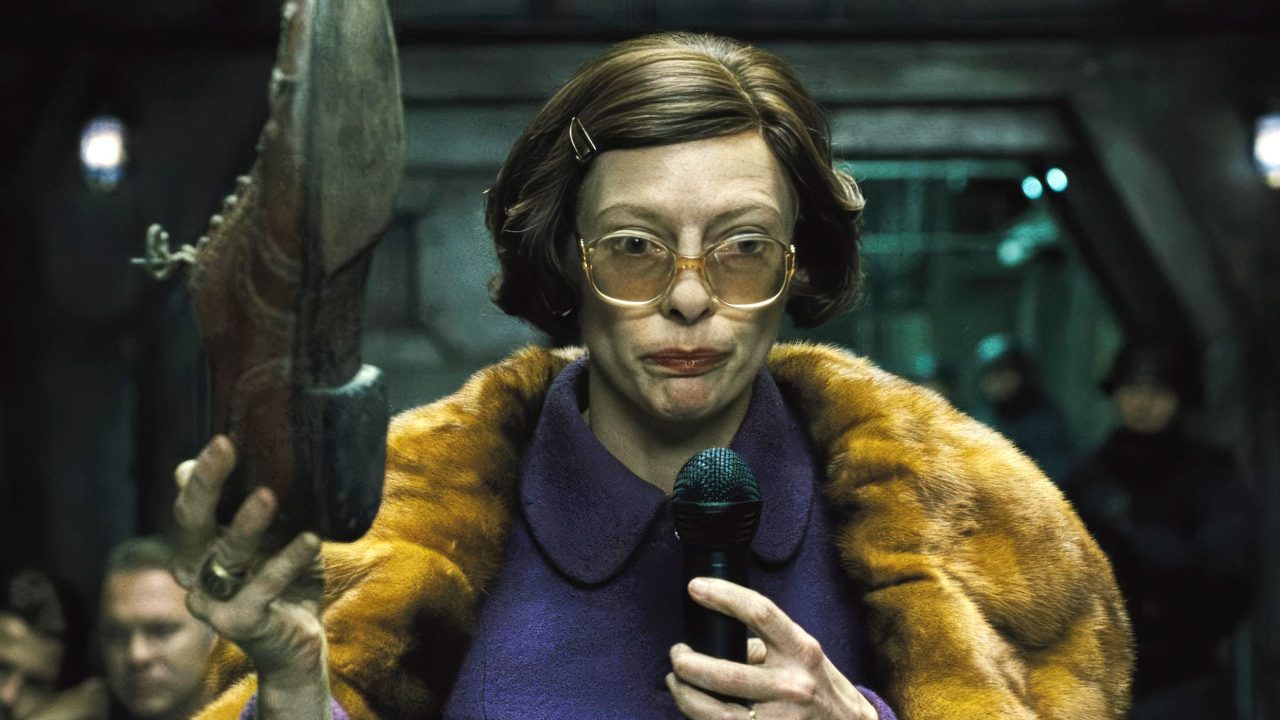
What happens when a filmmaker known for dark, class-conscious social commentary gets handed a runaway train, a frozen apocalypse, and a cast of desperate survivors sorted by wealth? You get Snowpiercer — one of the most audacious, politically charged science fiction films of the 21st century, and a movie that is currently finding a whole new audience on streaming.
The film, directed by Bong Joon-ho, arrived in 2013 as an adaptation of the French graphic novel Le Transperceneige — precisely the kind of daring, unconventional source material that studios were still willing to take risks on during that era. It predates both Train to Busan and Parasite, yet feels like the missing link between them: the kinetic, claustrophobic tension of the former fused with the razor-sharp class allegory of the latter.
For anyone who hasn’t seen it, now is the moment. The film is streaming and drawing renewed attention, introducing a generation of viewers to a story that feels, if anything, more urgent than when it was first released.
The Film That Connects Bong Joon-ho’s World
Snowpiercer occupies a fascinating place in the career of Bong Joon-ho. Before the world knew his name through Parasite‘s historic Best Picture win at the Oscars, and before Train to Busan director Yeon Sang-ho brought Korean genre cinema to a global mainstream audience, Bong was already making films that weaponized genre storytelling against social complacency.
Snowpiercer is set aboard a perpetually moving train carrying the last survivors of humanity after a climate engineering experiment plunges the Earth into a new ice age. The train’s social hierarchy is literal and brutal — the wealthy live in luxury at the front, while the poor are crammed into squalor at the tail end. The story follows a rebellion from the back of the train toward the front, car by car, each section revealing a new layer of the world’s grotesque inequality.
It is, in other words, Parasite rendered as a locomotive chase sequence — and it works extraordinarily well.
Why Snowpiercer Still Hits Differently
Part of what makes the film so enduring is how it uses its graphic novel origins.
These were adaptations that trusted their audiences. They weren’t chasing franchises or building cinematic universes. They were telling singular, uncomfortable stories, and Snowpiercer belongs firmly in that tradition.
Bong’s direction turns the train itself into a character — a closed system, a metaphor made of steel and steam, where the rules of society are enforced by physics as much as by power. Every car the rebels push through is a set piece, but also an argument about how hierarchies sustain themselves.
The Graphic Novel Tradition Behind the Film
It’s worth pausing on
The era that produced this film’s adaptation was one where studios were genuinely interested in the stranger corners of sequential art. Ghost World came first, adapting Daniel Clowes’ quietly devastating story of post-adolescent alienation. Then came American Splendor, a documentary-narrative hybrid built around the semi-autobiographical comics of Harvey Pekar. These weren’t spectacle films. They were intimate, idiosyncratic, and deeply human.
Snowpiercer carries that DNA even while operating on a much larger canvas. It is a blockbuster in scale and a personal film in spirit — a combination that has become increasingly rare.
| Film | Source Material | Director | Tone |
|---|---|---|---|
| Snowpiercer (2013) | Le Transperceneige (French graphic novel) | Bong Joon-ho | Sci-fi action / class allegory |
| Ghost World (2001) | Graphic novel by Daniel Clowes | Terry Zwigoff | Deadpan coming-of-age drama |
| American Splendor (2003) | Semi-autobiographical comics by Harvey Pekar | Shari Springer Berman & Robert Pulcini | Documentary-narrative hybrid |
What the Streaming Moment Means for New Viewers
Films like Snowpiercer benefit enormously from the streaming era — not because they were made for it, but because the format removes every barrier between a curious viewer and a challenging film. There’s no theatrical commitment required, no awareness of a release window. The film simply exists, waiting.
And for audiences who discovered Bong Joon-ho through Parasite, or who fell in love with Korean genre cinema through Train to Busan, Snowpiercer is the essential missing piece. It shows the connective tissue between those two films — the political fury of one, the propulsive genre craft of the other — assembled years before either of them existed.
The renewed streaming attention the film is receiving reflects something real: audiences are actively seeking out back catalogs of filmmakers they trust, and Bong’s catalog rewards that kind of searching more than almost anyone working today.
Why This Film Deserves Your Full Attention
There is a version of Snowpiercer that could have been a mindless action film. Bong Joon-ho refused to make it. Every choice — the production design, the performances, the structure of the narrative itself — serves the film’s central argument about power, privilege, and the stories that systems tell about themselves to justify their own existence.
That argument has not aged. If anything, it has sharpened. Watching the tail-end passengers fight their way toward the front of the train in 2026 carries a weight it might not have carried in 2013, and that is both a credit to the film and a somewhat uncomfortable reflection on the world outside it.
It is, by any measure, one of the great science fiction films of its generation — and one of the most important films Bong Joon-ho has ever made.
Frequently Asked Questions
What is Snowpiercer based on?
Snowpiercer is based on Le Transperceneige, a French graphic novel, adapted as part of a broader era when filmmakers were taking chances on unconventional comic book source material.
Who directed Snowpiercer?
The film was directed by Bong Joon-ho, who later became globally known for Parasite, which won the Academy Award for Best Picture.
Where is Snowpiercer currently streaming?
According to reporting from March 2026, the film has been drawing renewed streaming attention, with Pluto TV among the platforms associated with its current availability.
How does Snowpiercer connect to Train to Busan and Parasite?
Critics and viewers have noted that Snowpiercer feels like a bridge between the two — combining the tense, propulsive genre energy of Train to Busan with the sharp class commentary that defines Parasite.
When was Snowpiercer released?
The film was released in 2013, predating both Train to Busan (2016) and Parasite (2019).


Leave a Reply