
The window for experiencing South Africa the right way is narrowing. Travel demand across the country surged dramatically through 2024 and 2025, pushing peak-season bookings at Kruger National Park and Cape Town’s top properties into sold-out territory months in advance. If you’ve been circling this trip on your mental wishlist, the time to act is right now.
This isn’t a destination that rewards last-minute decisions. South Africa rewards those who plan with intention, who choose the right season, the right reserves, and the right route. A carefully structured 9-night itinerary does exactly that, threading together the country’s most dramatic experiences into a single cohesive journey.
The Route That Covers Everything
The itinerary begins in Johannesburg, moves through the historic diamond fields of Kimberley, boards the legendary Blue Train, sweeps into Cape Town, and culminates in the wildlands of Kruger National Park. Nine nights. Five destinations. One country that contains multitudes.
Few travel experiences in the world deliver this kind of range. You move from urban grit and colonial history to slow luxury on rails, then to coastal grandeur, and finally into raw, untamed bush. South Africa doesn’t ask you to choose between culture and wildlife. It gives you both.
| Destination | Experience Type | Signature Highlight |
|---|---|---|
| Johannesburg | History & Culture | Apartheid Museum, Soweto |
| Blue Train | Luxury Rail | Rolling across the Karoo |
| Kimberley | Heritage | The Big Hole diamond mine |
| Cape Town | Scenic & Coastal | Table Mountain, Cape Point |
| Kruger / Timbavati | Wildlife Safari | Big Five, rare white lions |
Each stop earns its place. There’s no filler. Kimberley alone could anchor a separate trip; its Big Hole remains one of the largest hand-dug excavations on Earth, a monument to the 19th-century diamond rush that reshaped this entire nation’s trajectory.
Johannesburg: The City That Doesn’t Apologize
Most travelers treat Johannesburg as a layover. That’s a mistake. South Africa’s largest city carries its history openly and without apology. The Apartheid Museum delivers one of the most powerful museum experiences on any continent. Soweto, once the epicenter of resistance, now pulses with creative energy and culinary ambition.
The city’s art scene has exploded in the last decade. The Maboneng Precinct alone has drawn comparisons to Brooklyn’s early creative boom. Johannesburg rewards the curious traveler who lingers for even a full day before moving on.
The Blue Train: Luxury in Motion
Between Johannesburg and Cape Town lies 1,600 kilometers of terrain that shifts from highveld plateau to arid Karoo scrubland to the lush valleys of the Western Cape. The Blue Train covers this distance in about 27 hours. It does so in a manner that makes you wish the journey were longer.
The train carries fewer than 80 guests at a time. Suites feature en-suite bathrooms, full-length windows, and white-glove service. Meals are formal, multi-course affairs prepared by a trained culinary team onboard. The lounge car pours South African wines as the Karoo slides past in golden afternoon light.
“The Blue Train is not just transportation. It is a moving landmark of South African hospitality, connecting the country’s extremes in comfort that few land journeys can rival.”
— Africa Geographic
Cape Town: Views That Actually Live Up to the Photographs
Cape Town sits at the convergence of two oceans, a mountain, a peninsula, and centuries of layered history. Table Mountain provides the postcard image, but the city underneath delivers far more. The V&A Waterfront, Boulders Beach’s African penguin colony, and the Cape Winelands all sit within an hour’s drive of each other.
Cape Point, at the southwestern tip of the continent, offers a walk to a lighthouse perched above cliffs where the Atlantic crashes in from the west. The drive down Chapman’s Peak, one of the world’s most dramatically engineered coastal roads, is worth the trip alone.
Cape Town’s food scene has evolved into a genuine destination in its own right. The city’s chefs draw on Cape Malay, Dutch colonial, indigenous, and contemporary influences to produce a cuisine that is entirely its own.
Kruger and Timbavati: Where the Rarest Sighting in Africa Lives
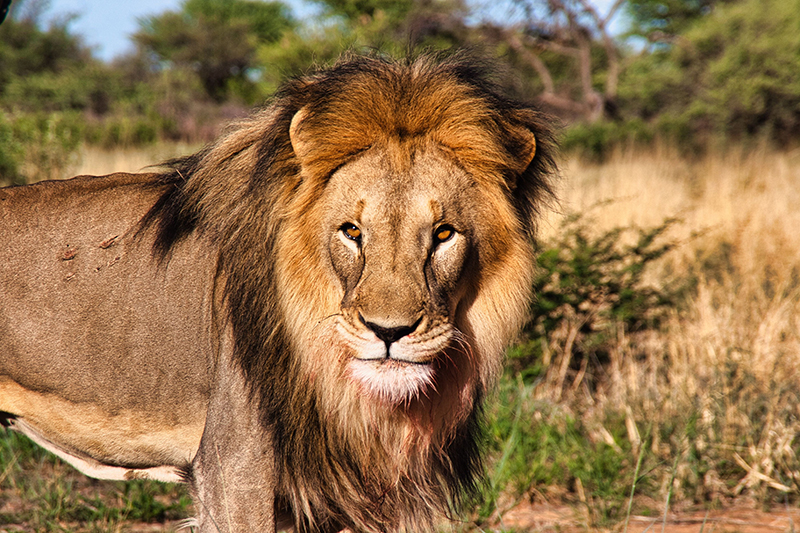
Kruger National Park is South Africa’s most iconic wildlife reserve. It stretches nearly 20,000 square kilometers across the northeast of the country, home to the Big Five and hundreds of other species. Safari vehicles move through landscapes that shift from dense riverine forest to open savanna in the space of a few kilometers.
But the journey’s most extraordinary wildlife chapter isn’t Kruger itself. It’s Timbavati.
Timbavati Nature Reserve shares an unfenced border with Kruger, meaning animals move freely between the two. This open system keeps wildlife density high and animal behavior natural. Timbavati operates as a wilderness-led conservation haven where wildlife thrives and local communities share in the reserve’s prosperity.
What makes Timbavati genuinely singular is the white lion. These are not albinos. They carry a recessive genetic trait called leucism that produces their near-white coloring. The trait exists in a specific gene pool tied directly to the Timbavati region. You will not reliably find them anywhere else on Earth outside captivity.
Simbavati describes the reserve as having a “tangible sense of wilderness” that sets it apart even from other high-end safari destinations. That description holds up. The density of wildlife, the absence of crowds compared to Kruger’s main rest camps, and the possibility of a white lion sighting combine to create something most travelers will never forget.
| Destination | Experience Type | Signature Highlight | Best For | Duration | Vibe |
|---|---|---|---|---|---|
| Johannesburg | History & Culture | Apartheid Museum & Soweto | History enthusiasts | 1–2 nights | Urban & Gritty |
| Kimberley | Heritage | The Big Hole Diamond Mine | Adventure seekers | 1 night | Historic & Raw |
| Blue Train | Luxury Rail | Rolling across the Karoo | Romantics & rail lovers | 1 night | Slow & Opulent |
| Cape Town | Scenic & Coastal | Table Mountain & Winelands | Foodies & explorers | 2–3 nights | Vibrant & Cosmopolitan |
| Kruger National Park | Safari & Wildlife | White Lions & Big Five | Wildlife lovers | 3–4 nights | Wild & Untamed |
The Broader Picture: Why South Africa Demands Attention Right Now
South Africa’s tourism infrastructure has matured significantly in the last decade. Safari lodges now rival the finest boutique hotels on any continent. Cape Town regularly appears on global lists of top culinary destinations. Johannesburg’s cultural institutions have invested heavily in both preservation and contemporary programming.
Travel to South Africa also carries real weight beyond personal experience. Conservation in reserves like Timbavati depends directly on tourism revenue. Communities adjacent to the reserve benefit economically when the lodges fill. The connection between your safari booking and the survival of a white lion cub born in the Timbavati bush is not abstract. It is direct and measurable.
The practical question most travelers wrestle with is cost. Staying inside Kruger’s official rest camps is notably more expensive than equivalent accommodation just outside the park’s fences. Private reserves like Timbavati sit outside the main park boundary but border it directly, offering the same wildlife access at lodge pricing that often undercuts what you’d pay inside for comparable comfort.
Nine nights is the right length for this particular journey. Any shorter and the Blue Train segment feels rushed. Any longer and you’re adding repetition rather than depth. The itinerary as structured respects your time while ensuring you actually absorb each destination rather than merely passing through it.
South Africa has a way of recalibrating your sense of scale. You arrive thinking you understand what a wildlife reserve looks like, what a mountain looks like, what a city shaped by extraordinary history feels like. Then the white lion steps into the clearing at dawn, the mountain catches the last light above the harbor, and the Blue Train carries you across a silence so vast it has its own texture. None of that translates fully into photographs, and that’s the real reason the window for booking is one you should take seriously now.

Leave a Reply