
Few directors in Hollywood history have drawn as consistently from the written page as Steven Spielberg. Over a career spanning more than five decades, he has returned again and again to novels, short stories, and nonfiction books as the raw material for some of cinema’s most enduring films — from wartime epics to science fiction blockbusters to intimate historical dramas.
The topic of Spielberg’s best literary adaptations is one that genuinely rewards attention. His filmography includes work drawn from sources as varied as a Michael Crichton thriller, a Alice Walker novel, a Cold War memoir, and a collection of short fiction by one of science fiction’s most celebrated writers. The range alone is remarkable. The quality, taken as a whole, is even more so.
Because
Why Spielberg’s Literary Adaptations Stand Apart
Most directors who adapt books are working within a genre or a comfort zone. Spielberg has never seemed to have one. He adapted Michael Crichton’s Jurassic Park (1993) and followed it years later with Lincoln (2012), based on Doris Kearns Goodwin’s presidential biography Team of Rivals. He turned Alice Walker’s Pulitzer Prize-winning novel The Color Purple into a film in 1985, and adapted Thomas Keneally’s Booker Prize-winning novel Schindler’s Ark into Schindler’s List (1993), which won seven Academy Awards including Best Picture and Best Director.
That breadth — from populist entertainment to serious prestige drama — is what makes his relationship with source literature so distinctive. He doesn’t just adapt books. He transforms them into films that often define how entire generations think about the stories those books told.
The Films Most Consistently Ranked Among His Best
When critics and film scholars examine Spielberg’s adaptations, a core group of titles appears repeatedly at the top of any serious ranking. These are the films where
- Schindler’s List (1993) — Adapted from Thomas Keneally’s Schindler’s Ark, this Holocaust drama is widely regarded as Spielberg’s masterpiece and one of the greatest films ever made.
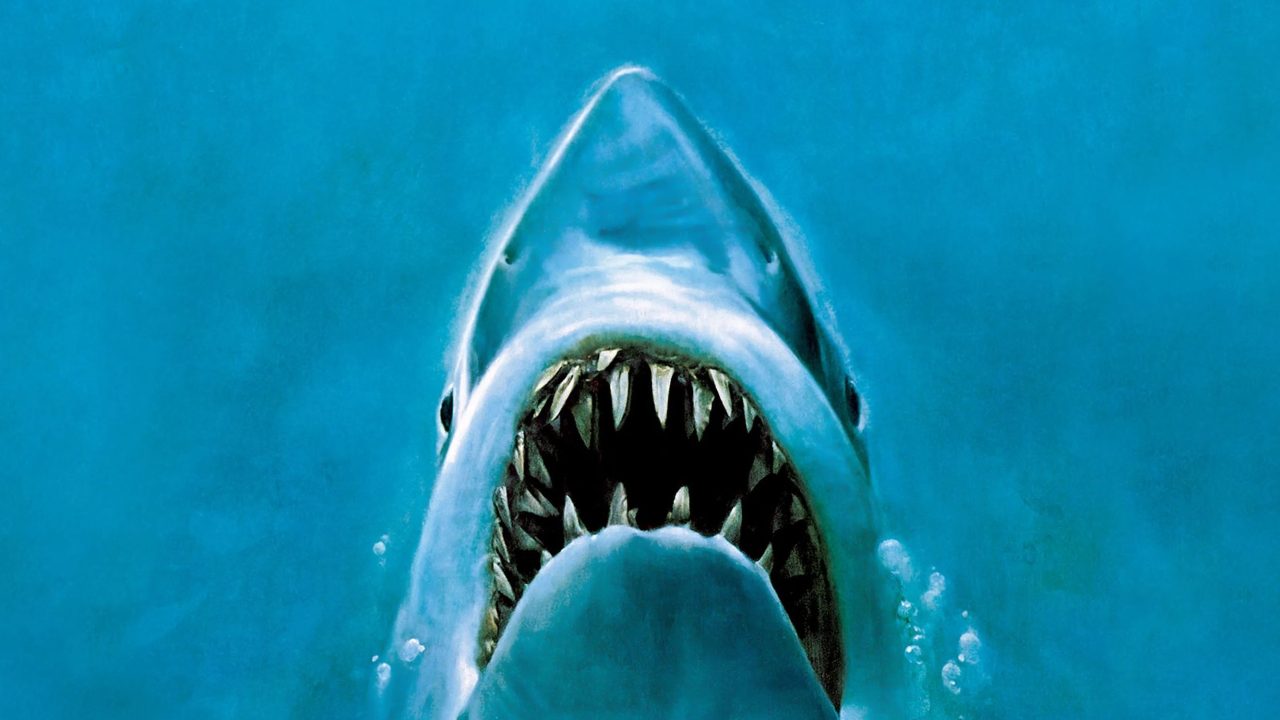
- Jaws (1975) — Based on Peter Benchley’s bestselling novel, this film is broadly credited with inventing the modern summer blockbuster.
- Jurassic Park (1993) — Michael Crichton’s novel became one of the highest-grossing films in history and redefined visual effects in cinema.
- The Color Purple (1985) — Alice Walker’s Pulitzer Prize-winning novel was adapted into an 11-time Academy Award-nominated film.
- Empire of the Sun (1987) — Based on J.G. Ballard’s autobiographical novel about a boy’s experience in a Japanese internment camp during World War II.
- Minority Report (2002) — Drawn from a Philip K. Dick short story, this science fiction thriller remains one of the most visually inventive films of the 2000s.
- Lincoln (2012) — Tony Kushner’s screenplay adapted Doris Kearns Goodwin’s Team of Rivals, earning Daniel Day-Lewis his third Academy Award.
- Bridge of Spies (2015) — Based on Giles Whittell’s book about Cold War spy exchange negotiations.
- Amistad (1997) — Drawn from historical accounts of the 1839 slave ship rebellion and subsequent legal case.
- War Horse (2011) — Adapted from Michael Morpurgo’s beloved novel about a horse and his owner separated by World War I.
A Closer Look at the Source Books Behind the Films
| Film | Year | Source Book | Author |
|---|---|---|---|
| Schindler’s List | 1993 | Schindler’s Ark | Thomas Keneally |
| Jaws | 1975 | Jaws | Peter Benchley |
| Jurassic Park | 1993 | Jurassic Park | Michael Crichton |
| The Color Purple | 1985 | The Color Purple | Alice Walker |
| Empire of the Sun | 1987 | Empire of the Sun | J.G. Ballard |
| Minority Report | 2002 | The Minority Report (short story) | Philip K. Dick |
| Lincoln | 2012 | Team of Rivals | Doris Kearns Goodwin |
| Bridge of Spies | 2015 | Bridge of Spies | Giles Whittell |
| War Horse | 2011 | War Horse | Michael Morpurgo |
What Makes a Spielberg Adaptation Work
Looking across these films, a few patterns emerge. Spielberg tends to gravitate toward stories with a strong moral center — survival, justice, human dignity under pressure. Whether it’s Oskar Schindler saving Jewish lives in occupied Poland or a boy navigating a Japanese internment camp in wartime Shanghai, the emotional stakes are always grounded in something real and human.
He also has a gift for translating the internal world of a novel — the inner voice, the psychological texture — into pure visual storytelling. The famous opening sequence of Schindler’s List, shot in black and white with one devastating splash of red, communicates what pages of prose might struggle to convey. That ability to find the cinematic equivalent of a literary moment is what separates his best adaptations from merely competent ones.
Critics have also noted that Spielberg is unusually willing to honor difficult source material rather than soften it. The Color Purple and Schindler’s List both deal with historical trauma in ways that could easily have been sanitized for mainstream audiences. He largely refused to do that.
The Legacy These Films Leave Behind
Taken together, Spielberg’s literary adaptations form one of the most impressive bodies of work in American cinema. Several of them — Jaws, Jurassic Park, Schindler’s List — are not just great films but cultural landmarks that changed what movies could be and do.
For readers who love the source books, these adaptations offer something rare: the sense that a filmmaker genuinely engaged with the material rather than simply using it as a blueprint. And for audiences who came to the books through the films, they represent an invitation — to go back to the page and find what Spielberg found there in the first place.
Frequently Asked Questions
Which Steven Spielberg film based on a book won the most Academy Awards?
Schindler’s List (1993), adapted from Thomas Keneally’s Schindler’s Ark, won seven Academy Awards including Best Picture and Best Director.
What was the source book for Jurassic Park?
The 1993 film was adapted from Michael Crichton’s novel of the same name.
Did Spielberg adapt any short stories, or only novels?
Yes — Minority Report (2002) was adapted from a short story by Philip K. Dick titled “The Minority Report.”
Which Spielberg literary adaptation received 11 Academy Award nominations?
The Color Purple (1985), based on Alice Walker’s Pulitzer Prize-winning novel, received 11 Academy Award nominations.
What nonfiction book did Lincoln draw from?
Lincoln (2012) was adapted from Doris Kearns Goodwin’s nonfiction book Team of Rivals, though Tony Kushner wrote the screenplay.
Is Jaws really based on a book?
Yes — Jaws (1975) was based on Peter Benchley’s bestselling novel of the same name, published in 1974.




Leave a Reply