
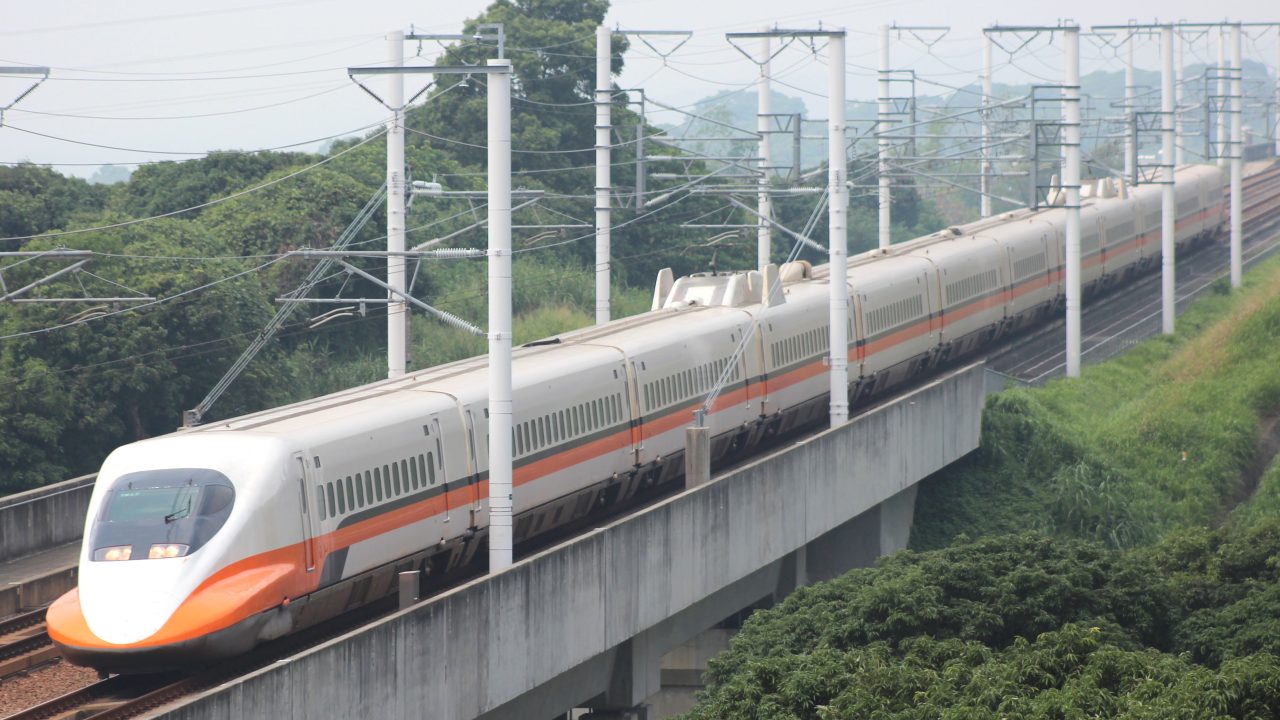
The window is closing fast. Mother’s Day weekend in Taiwan is days away, and Taiwan High Speed Rail (THSR) has already activated its surge playbook: additional trains, extended peak-hour seating, and targeted fare discounts to absorb the wave of travelers expected to flood the 350-kilometer corridor connecting Nangang in Taipei to Zuoying in Kaohsiung.
THSR has added 61 train services to its schedule, pushing total weekly services to 1,134. Six additional southbound late-night trains are also in play, specifically to handle evening return traffic. On paper, this looks like a well-oiled machine responding precisely to demand.
But a quieter debate is building among transit planners, economists, and frequent riders. Is this kind of reactive, holiday-by-holiday scheduling the smartest use of Taiwan’s high-speed infrastructure? Or is it a symptom of a network that has outgrown its original design?
The Setup: Two Visions of the Same Railway
Taiwan High Speed Rail launched in 2007 and transformed island travel. The single-line network covers roughly 350 kilometers and connects the island’s major western cities, cutting a Taipei-to-Kaohsiung trip from four hours by conventional rail to about 90 minutes.
The system carries tens of millions of passengers annually. On ordinary weekdays, it hums efficiently. But on major holidays — Lunar New Year, Dragon Boat Festival, Labor Day, and now Mother’s Day — the network strains visibly, with seats selling out days in advance and standing-room-only conditions in some cabins.
THSR’s response has been consistent: add temporary services, extend seat availability during peak windows, and offer discounted early-bird or off-peak tickets to spread demand. It works well enough that few passengers openly complain. But transit experts are divided on whether this approach is sustainable.
| Approach | Strengths | Weaknesses |
|---|---|---|
| Holiday Service Boosts | Fast to deploy, cost-effective, reversible | Treats symptoms, not underlying demand growth |
| Permanent Schedule Expansion | Reduces surge stress, builds ridership habits | Higher operating costs, requires fleet investment |
| Infrastructure Extensions | Long-term regional connectivity, economic uplift | Decade-long lead times, massive capital outlay |
Side A: Holiday Boosts Are the Right Tool for the Job
Proponents of THSR’s current approach argue that flexible, demand-responsive scheduling is exactly what modern rail networks should do. Adding 61 services for a single holiday weekend is not a stopgap; it is precision logistics.
The economics support this view. Running additional trains only when demand justifies it keeps operating costs lower than maintaining a permanently expanded timetable. Off-peak trains running half-empty are a financial drag on any rail operator. THSR has built a model that avoids that waste.
The discount strategy also matters here. By offering reduced fares on off-peak services during holiday windows, THSR actively redistributes demand across the timetable. Travelers who can be flexible often take the discounted train. This smooths the load curve without requiring new rolling stock or additional track capacity.
Taiwan’s high-speed rail also benefits from a relatively simple network topology. A single main line means scheduling flexibility is high. Adding trains does not require complex rerouting or cross-platform coordination with branching services. The operational lift is manageable.
Frequent THSR riders who plan ahead generally have few complaints about holiday travel. The system’s punctuality record remains strong, and the added late-night southbound services specifically address the post-dinner return crush that frustrates travelers most.
Side B: Taiwan’s Rail Network Has Outgrown This Strategy
Critics of the holiday-boost model point to a deeper issue. THSR’s surge response may be efficient today, but it is not a long-term answer to growing structural demand. Taiwan’s population is aging, urbanizing, and increasingly reliant on intercity rail as car ownership among younger generations declines.
Taiwan’s government has already acknowledged this in policy terms. Planned HSR extensions, discussed in early 2025, would expand the network to create four regional 90-minute commute blocs across Taiwan proper, facilitating regional economic integration that the current single-line corridor cannot achieve. That vision requires permanent capacity, not seasonal tinkering.
“Planned high-speed rail extensions would blanket Taiwan proper in four 90-minute commute blocs to facilitate regional economic development.”
— Taipei Times, January 2025
There is also a traveler equity argument. Special discounts and early-bird fares reward flexibility. But many of the people traveling for Mother’s Day cannot be flexible. They are visiting elderly parents, coordinating multi-family meals, traveling with young children. These passengers are not choosing the peak train out of stubbornness; they have no other option.
When 61 extra services sell out quickly and late-night trains become the only available option, the system is revealing a mismatch between supply and genuine demand. Adding more trains for holidays is a workaround, not a solution. The underlying question is whether THSR needs more direct trains on its standard timetable year-round, not just on holidays.
THSR has already signaled awareness of this. The operator has discussed plans to add more direct trains and adjust schedules to accommodate growing passenger numbers, a recognition that holiday spikes are partly a symptom of constrained regular-service capacity.
The Data: What the Numbers Actually Tell Us
The objective picture is nuanced. THSR has added services repeatedly over recent years, including 61 extra trains for this Mother’s Day weekend and similar expansions for Labor Day and other holidays. Total weekly services reaching 1,134 is a meaningful number; the original timetable operated far fewer weekly runs.
The six additional southbound late-night trains are particularly telling. Evening return traffic is the hardest surge to manage; adding late-night options acknowledges that the standard evening timetable cannot absorb it. This is reactive, but it is also evidence-based scheduling.
On the infrastructure side, planned extensions remain in the proposal and planning phase. The four-region 90-minute coverage framework represents a long-horizon vision, not an imminent reality. For the next several years, the existing 350-kilometer corridor will continue to bear the full weight of Taiwan’s high-speed passenger demand.
The data suggests THSR is managing well today, but the trajectory of passenger growth and the ambition of planned extensions both point to a network approaching an inflection point. Holiday boosts work now. They may not be sufficient in five years.
Verdict: The Right Strategy for the Wrong Timeline
THSR’s Mother’s Day expansion is defensible, well-executed, and genuinely useful for travelers this weekend. The 61 additional services, extended peak seating, and fare discounts represent a competent operational response to a predictable demand spike.
But the debate reveals something the headline numbers obscure. Taiwan’s high-speed rail is performing well precisely because it is being pushed hard. The holiday boosts are not evidence of a system operating comfortably within its limits. They are evidence of a system that has learned to sprint on command.
The smarter long-term play is a combination: maintain the flexible holiday-scheduling model while accelerating permanent timetable expansion and progressing the HSR extension plans that would transform the network from a single corridor into a true regional web. Doing only one without the other leaves Taiwan’s rail future unnecessarily fragile.
Implications: What This Holiday Debate Means Going Forward
The Mother’s Day surge is not a crisis; it is a preview. Taiwan’s population patterns, urbanization trends, and environmental policy direction all point toward more rail travel, not less. Each successive holiday expansion quietly raises the ceiling on what THSR treats as a normal operational load.
If planned HSR extensions move forward and the four-region 90-minute framework becomes reality, the nature of holiday surges will change dramatically. A more distributed network means demand spreads across more nodes, reducing the concentration on any single corridor. The Mother’s Day rush from Taipei to Kaohsiung becomes less of a chokepoint when eastern and southern routes offer genuine alternatives.
Until that future arrives, Taiwan’s travelers will keep watching the booking window with a mixture of loyalty and mild anxiety, grateful for the extra trains and quietly aware that the system is one major holiday away from testing its actual limits.
The real question is not whether THSR added enough trains for Mother’s Day. It is whether the people planning Taiwan’s next 20 years of rail infrastructure are treating these holiday surges as the warning signal they clearly are.


Leave a Reply