
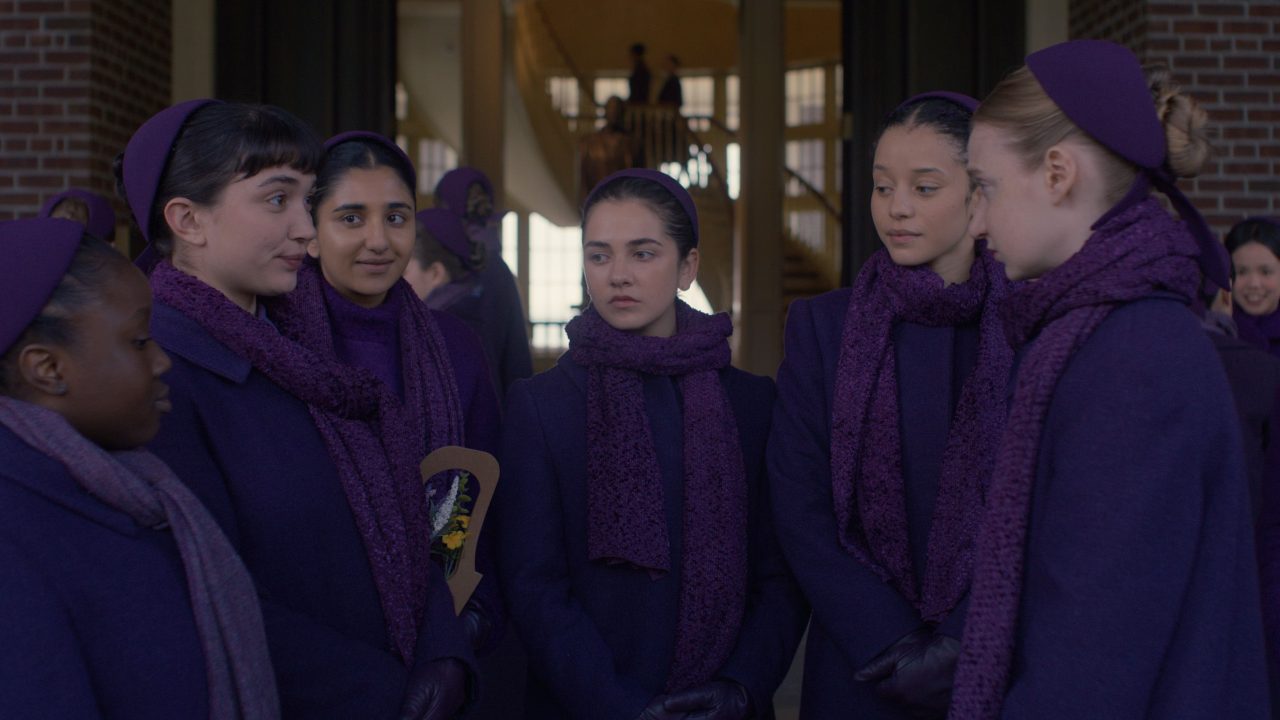
One of the most talked-about dystopian universes in modern television is returning — and this time, it looks very different from what fans have come to expect. The Testaments, the sequel series to The Handmaid’s Tale, is set to bring viewers back to Gilead, but creator Bruce Miller has made clear that this new chapter will show a side of that world the original series never fully explored.
Margaret Atwood’s source novels were first adapted for television in 2017, introducing audiences to June — played by Elisabeth Moss — a woman forced to navigate the brutal, totalitarian society of Gilead as a Handmaid. That story was visceral, claustrophobic, and told almost entirely from the ground level of oppression. The Testaments promises something structurally and tonally distinct.
For fans who have spent years watching Gilead through June’s eyes, the shift could be both disorienting and revelatory. Here is what we know about how the sequel series differs — and why those differences matter.
What The Testaments Is and How It Connects to The Handmaid’s Tale
The Testaments is a sequel — both to Atwood’s original novel and to the television series that expanded far beyond it. Atwood published her follow-up novel The Testaments in 2019, and the upcoming series is based on that book, which picks up the story of Gilead fifteen years after the events of the first novel.
Where The Handmaid’s Tale was anchored almost entirely in June’s first-person survival story, The Testaments shifts perspective dramatically. The sequel novel follows three women with very different relationships to Gilead’s power structure — including Aunt Lydia, one of the most morally complex figures in the entire franchise.
That shift in perspective is not just a narrative choice. It fundamentally changes what kind of story can be told, and what aspects of Gilead’s inner workings can finally be examined.
How This Sequel Series Shows a New Side of Gilead
The original series kept viewers at the margins of Gilead’s power — we saw its consequences, its cruelty, and its daily machinery of control, but rarely its inner corridors. The Testaments is positioned to change that.
By following characters who exist closer to the center of Gilead’s hierarchy, the sequel can explore how the regime actually functions from the inside. That includes the compromises, the ambitions, and the quiet acts of resistance or complicity that keep a system like Gilead running.
This is a meaningful creative departure. Rather than showing Gilead as an external force bearing down on one woman, the sequel examines the machinery itself — who operates it, who benefits from it, and who might ultimately dismantle it from within.
Key Differences Between The Handmaid’s Tale and The Testaments
The two series are connected but are being developed as distinct viewing experiences. Here is a breakdown of the most significant differences based on what has been confirmed:
| Element | The Handmaid’s Tale | The Testaments |
|---|---|---|
| Source Material | Margaret Atwood’s 1985 novel | Margaret Atwood’s 2019 sequel novel |
| Original Premiere | 2017 | Upcoming sequel series |
| Central Character | June (Elisabeth Moss) | New and returning characters |
| Perspective | Ground-level, survival-focused | Multiple viewpoints, including those closer to power |
| Tone | Claustrophobic, first-person oppression | Broader view of Gilead’s internal structure |
| Creator | Bruce Miller | Bruce Miller |
Bruce Miller, who created the original adaptation, is also behind The Testaments. That continuity of creative leadership suggests the sequel will maintain thematic consistency even as it explores new narrative territory.
Why Showing Gilead From the Inside Changes Everything
There is a reason audiences found The Handmaid’s Tale so affecting — and also, at times, so relentlessly grim. Telling the story entirely from the position of the oppressed is powerful, but it can also leave certain questions unanswered. How does a regime like Gilead sustain itself? Who are the true believers, and who are the opportunists? What does resistance look like when it comes from within the system rather than from outside it?
The Testaments is built to answer some of those questions. By moving into spaces the original series could not access, it has the potential to be not just a sequel but a genuine expansion of what the Gilead story can mean.
Aunt Lydia’s inclusion as a central figure is particularly significant. She has been one of the most debated characters in the franchise — simultaneously an enforcer of Gilead’s brutality and, in Atwood’s sequel novel, something far more complicated. Bringing her to the center of a television narrative opens up moral territory that the original series only gestured toward.
What Fans of the Original Series Should Expect
If you watched all five seasons of The Handmaid’s Tale expecting more of the same, The Testaments may genuinely surprise you — and that appears to be intentional.
The shift in tone, perspective, and character focus is not a departure from what made the original great. It is an extension of it. Atwood’s sequel novel was praised precisely because it did not simply retread familiar ground. The television adaptation appears to be following that same instinct.
Whether you are a devoted fan of the series or someone who found the original too bleak to continue, The Testaments is shaping up to be a different kind of entry point into this world — one that asks harder questions about power, complicity, and what it actually takes to bring a system like Gilead down.
Frequently Asked Questions
What is The Testaments about?
The Testaments is a sequel series to The Handmaid’s Tale, based on Margaret Atwood’s 2019 follow-up novel of the same name, which explores Gilead from new perspectives including characters closer to its power structure.
Is Elisabeth Moss returning for The Testaments?
Who is creating The Testaments series?
Bruce Miller, who created the original The Handmaid’s Tale television adaptation, is also the creator behind The Testaments.
How is The Testaments different from The Handmaid’s Tale?
Where the original series told the story from June’s ground-level perspective as a Handmaid, The Testaments shifts to multiple viewpoints and explores Gilead’s inner workings from characters positioned closer to the regime’s power structure.
Is The Testaments based on a book?
Yes. It is based on Margaret Atwood’s sequel novel The Testaments, published in 2019, which picks up the story of Gilead fifteen years after the events of the first novel.
When did the original Handmaid’s Tale series premiere?
The Handmaid’s Tale television series first premiered in 2017, adapting Atwood’s original 1985 novel.


Leave a Reply