
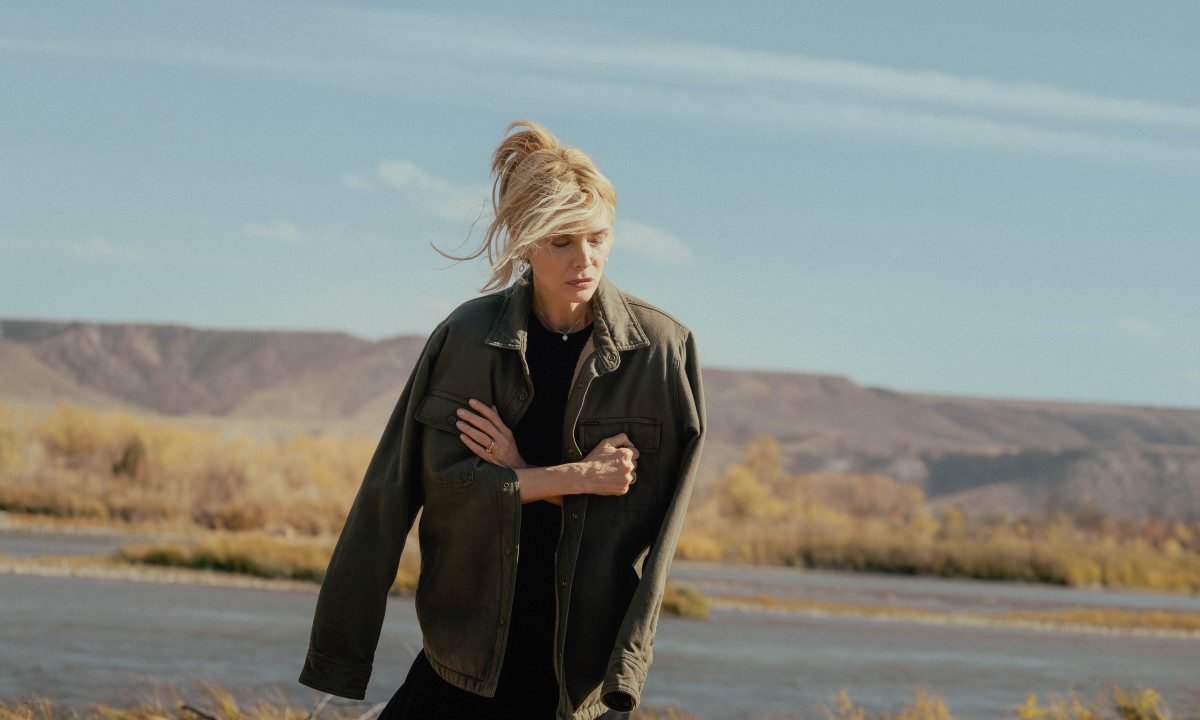
As of late March 2026, Taylor Sheridan’s newest Paramount+ drama, The Madison, has been drawing crowds to downtown Bozeman, Montana, during active filming days — a visible sign that the Yellowstone creator’s latest project is planting deep roots in the state he has made synonymous with prestige Western television. The show, which reunites Michelle Pfeiffer and Kurt Russell for the first time since the 1988 film Tequila Sunrise, has been described by RogerEbert.com as an “urban-rural romance” that is “rock-solid, gripping television with multi-generational appeal.”
Unlike several other Sheridan productions that quietly migrate to cheaper filming states, The Madison has made a notable effort to keep significant portions of its production in Montana — specifically in Gallatin County, the city of Three Forks, and along the Madison River Valley corridor. That choice is generating tangible local economic activity and drawing the kind of set-tourism interest that towns like Darby and Missoula saw during peak Yellowstone production years.
The KG Ranch and Three Forks: The Clyburn Family’s Home on Screen
The geographic anchor of The Madison is the KG Ranch in Gallatin County, Montana, located close to the city of Three Forks. According to Town & Country, scenes featuring the Clyburn family home — the fictional ranch at the center of the show’s drama — were filmed at this property. Three Forks sits at the confluence of the Jefferson, Madison, and Gallatin rivers, approximately 30 miles west of Bozeman along U.S. Route 287.
Production did not confine itself to the ranch property. The show’s crew filmed additional scenes at Three Forks’ municipal airport and at the local rodeo grounds, both of which appear in the series. The rodeo location in particular fits the show’s themes; The Madison tracks multi-generational ranching conflict in a valley where land-use pressures and family loyalty collide.
Three Forks, a city of approximately 2,000 residents, has historically attracted visitors for its proximity to the headwaters of the Missouri River and Lewis and Clark National Historic Trail sites. The addition of an active film production using its airport and fairgrounds introduces a new layer of visibility for a community that sits outside the typical Montana tourism circuit.
Downtown Bozeman: Crowd Control and Camera Crews
Bozeman, the seat of Gallatin County with a population of roughly 57,000, has seen the most visible public disruption from the production. Filming in downtown Bozeman drew crowds and required coordination with local authorities to manage street closures and pedestrian access, according to reporting on the production’s Montana footprint.
Bozeman has become a recurring backdrop for Montana-set productions partly due to its infrastructure: the Bozeman Yellowstone International Airport offers direct flights from major hubs, and the city’s service industry can support large film crews. Its Main Street corridor and surrounding historic neighborhoods provide the kind of walkable Western-town aesthetic that location scouts frequently target.
The economic ripple from a Sheridan production is not abstract. During the years Yellowstone filmed heavily in the state, Montana’s film office reported tens of millions of dollars in direct production spending annually. The Madison represents a continuation of that pipeline at a time when Montana has been actively competing with Utah and New Mexico for major streaming productions.
The Madison River Valley: Where the Show’s Name Lives on the Ground
For sequences requiring more expansive, rugged terrain, production moved into the Madison River Valley itself — a roughly 50-mile corridor running southwest from Ennis, Montana, toward Yellowstone National Park’s northwest corner. The valley, carved by the Madison River, is flanked by the Madison Range to the east and the Gravelly Range to the west.
The Madison River is federally designated as a Blue Ribbon fishery, drawing roughly 60,000 angler-days of use per year according to Montana Fish, Wildlife & Parks estimates. The show’s use of this landscape as a backdrop introduces it to a much broader audience than the fly-fishing community that has long regarded the valley as one of the country’s premier trout destinations.
This is a notable divergence from the pattern set by some of Sheridan’s other productions. According to People, Paramount+’s Landman is set in West Texas but films primarily in a different part of the state — a common production compromise driven by tax incentives and infrastructure. The Madison‘s decision to film in the actual valley it depicts gives it a geographic authenticity that distinguishes it within Sheridan’s catalog.
The Pfeiffer-Russell Reunion and What Critics Are Saying
Beyond the location strategy, the casting of The Madison has been a significant draw. Michelle Pfeiffer and Kurt Russell last appeared on screen together in Tequila Sunrise (1988), a crime thriller directed by Robert Towne. Their pairing in The Madison — described by Time Out as “the Tequila Sunrise reunion we didn’t know we needed” — has driven significant audience anticipation.
Critical reception has been favorable in early assessments. RogerEbert.com’s review characterized the series as offering genuine multi-generational appeal, with Pfeiffer and Russell anchoring a story that examines the tension between rural inheritance and outside economic pressure — a theme Sheridan has returned to across his body of work, from Hell or High Water to Yellowstone.
The Western genre has maintained a continuous presence on American television since the medium’s earliest broadcast years, as documented by TVLine’s rankings of the best Western TV series. What distinguishes the current Sheridan wave is the scale of production budgets and the deliberate use of real landscapes as narrative elements rather than generic backdrops.
What Comes Next for the Montana Communities Involved
For Three Forks and the broader Madison River Valley corridor, the long-term question is whether The Madison generates the same sustained tourism surge that Yellowstone brought to Park County and Stillwater County. The Yellowstone effect in Livingston, Montana — the town most associated with that show’s filming — included new restaurant openings, rising property values, and an estimated increase in summer visitation of 30 to 40 percent over pre-show baselines, according to local business association figures cited by regional news outlets.
Ennis, the largest town in the Madison River Valley with a population of roughly 900, sits closest to the most scenic stretches of river the show depicts. It currently draws visitors primarily through its Blue Ribbon fishery designation and proximity to Yellowstone’s west entrance. A successful run for The Madison on Paramount+ could meaningfully expand that visitor base beyond the angling and hunting demographics that currently define the valley’s tourism economy.
Production on The Madison is ongoing as of March 31, 2026. Paramount+ has not publicly announced an episode count or season renewal status for the first season.
Related: The Mussoorie That Package Tours Never Show You: Local Trails, Garhwali Food, and Real Views

Leave a Reply